
Sailing and Navigation
Turkish Sailing Terms You'll Hear on Board: Vira, Funda and Friends
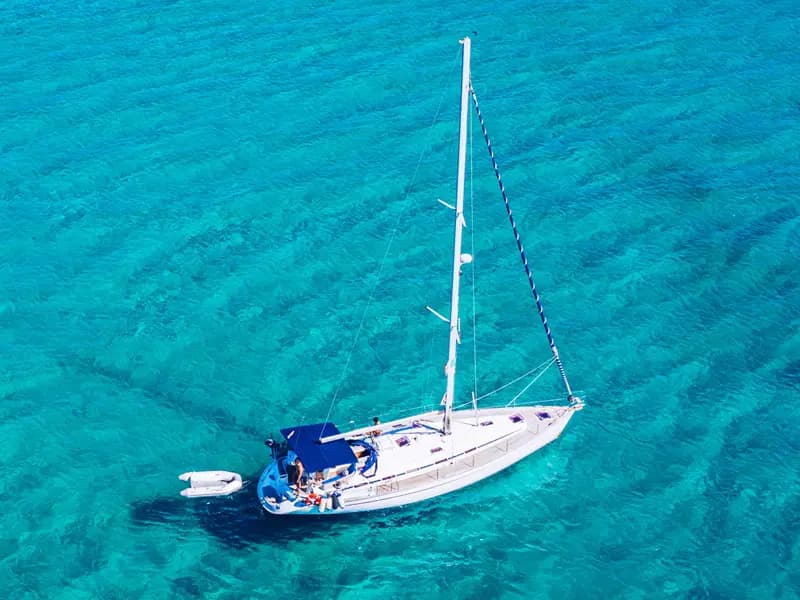
Within an hour of boarding a gulet in Göcek you'll hear the captain call something like 'Vira demir!' — and the crew will spring into motion. Turkish nautical language is old, loud and wonderfully consistent, much of it inherited from Mediterranean seafaring Italian centuries ago. You don't need any of it to enjoy a charter; knowing a handful of words simply makes the whole theatre of it more fun.
Here's our short glossary: the Turkish terms you'll actually hear on board, with their English equivalents.
Vira and funda: the two anchor commands
Vira means 'heave' or 'haul up' — 'vira demir' is the order to weigh anchor, so it signals departure. Turks even use 'vira Bismillah' ashore to mean 'right, let's begin'. Funda is its opposite: 'let go'. 'Funda demir' drops the anchor — the boat is settling in for the night. Departure and arrival, in two words.
Directions: iskele, sancak, pruva, pupa
Sancak is starboard, iskele is port — same green and red lights at night as everywhere in the world. Pruva is the bow and the direction ahead; pupa is the stern — 'pupa yelken', sailing dead downwind, is the Turkish image of smooth progress. The beam, the widest point of the hull, is the kemere.
Anchoring and mooring words
A marina needs no translation; a koy is a cove. Demir taramak — 'dragging anchor' — is the one phrase no captain wants to say at 3 a.m. Fenders are usturmaça, lines are halat, and kıçtankara is the classic Göcek mooring: stern-to the shore with a long line to a pine tree and the anchor set ahead. Once you've swum from a boat moored kıçtankara in a silent cove, you'll understand this coast.
Blue cruise and distance terms
The mavi yolculuk — 'blue voyage' — is the Turkish name for a cove-to-cove cruising holiday. Distances come in nautical miles (deniz mili, 1,852 m), speed in knots. Your rota is the route. If you're still choosing the boat to sail it on, our guide to yacht types compares gulets, sailing yachts, motor yachts and catamarans.
The crew
The kaptan runs the boat and makes the calls; the gemici (deckhand) handles lines, anchor and mooring; larger gulets add an aşçı — a cook, and often the most popular person aboard. Curious what licence Turkish skippers hold, or what you'd need to charter bareboat yourself? That's covered in our guide to Turkey's boat licence.
Ten commands you'll actually hear
1) 'Vira demir' — weigh anchor, we're off. 2) 'Funda demir' — let go the anchor. 3) 'İskeleye / sancağa yanaşıyoruz' — coming alongside port / starboard. 4) 'Usturmaçaları sarkıt' — fenders out. 5) 'Halatı mola et' — let go the line. 6) 'Halatı vira et' — haul in the line. 7) 'Aganta' — hold it there. 8) 'Alesta' — stand by. 9) 'Neta' — squared away, tidy. 10) 'Orsa / pupa gidiyoruz' — sailing close-hauled / downwind. Guests who know these ten get grins from the crew all week.
The best classroom is, of course, a deck: on a crewed charter in Göcek you'll hear every word above in its natural habitat — and be saying 'vira' yourself by day three.