Antifouling Guide: Types, Process and the Right Timing
Antifouling is your boat’s annual protective shield - but the wrong product or poor surface prep will waste it in a single season. This guide explains how antifouling works, the differences between types, the step-by-step application process, and the criteria for deciding 'not needed this year'.
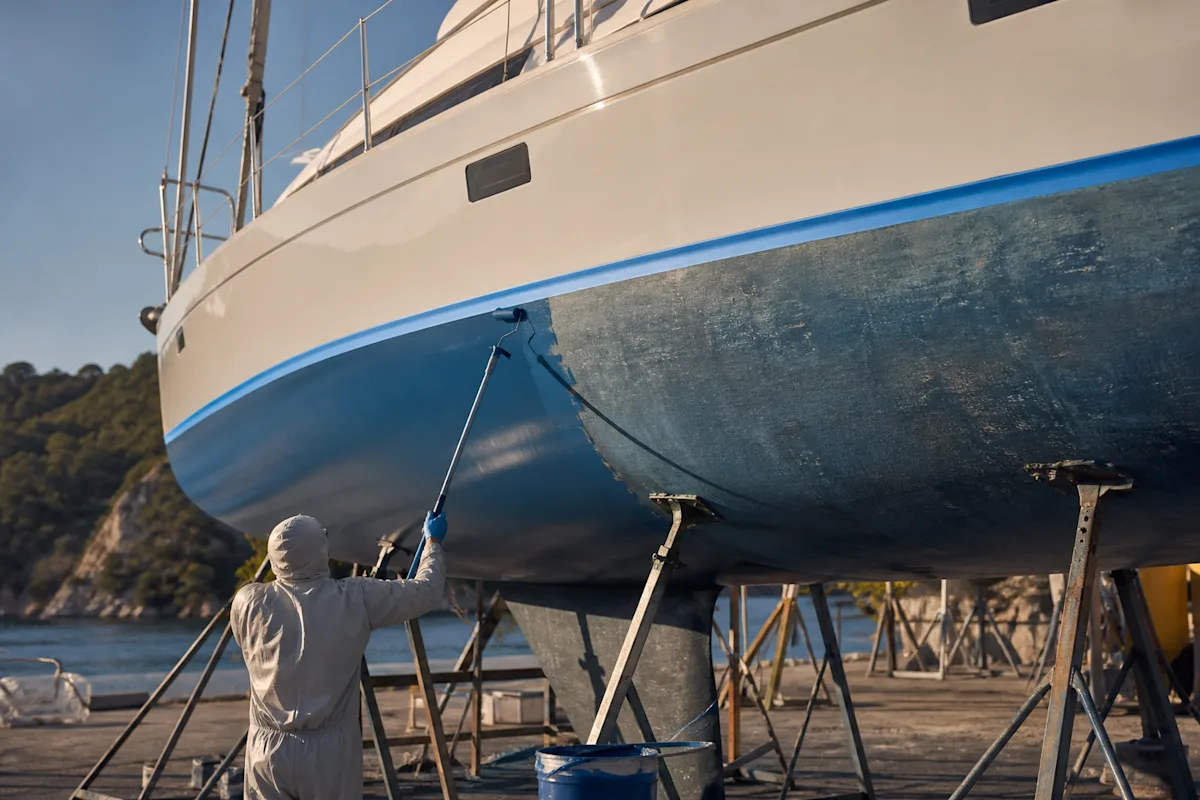
Antifouling is a protective coating applied to the hull to slow the build-up of algae, barnacles and shell growth. The aim is not zero fouling, but to keep fouling manageable throughout the season. The right coating is chosen according to how the boat is used.
The table below shows the main coating families, how they work and who they suit. The key distinction is whether the boat is used hard and often, or spends most of its time tied up.
Types of antifouling
Coating type | How it works | Best suited to |
|---|---|---|
Hard matrix | Stays in place, does not wear away; biocide is released from the surface | Fast, frequently used boat, racing |
Ablative | Wears away gradually with movement, always exposing a fresh surface | Moderate use, owners wanting a self-renewing layer |
Hybrid | A middle ground, balanced | Mixed use profile |
Silicone coating (biocide-free) | Slippery surface, makes it harder for growth to stick | Frequent use, environmentally conscious, high budget |
Copper-based coating must NOT be used on sail drives and underwater aluminium parts; it causes galvanic damage, so an aluminium-compatible coating must be chosen. The sequence in application is equally clear: even the most expensive coating will not last a season without proper surface preparation.
The three pillars of managing antifouling
Correct choice: hard or ablative depending on how often the boat is used; a boat that stays tied up needs a different coating from one that cruises regularly.
In-season diver check: In Göcek, a 6-8 week inspection interval is reasonable in busy periods.
Use is also the treatment: a boat that moves regularly fouls least; most coatings work through movement.
Frequently asked questions
Is antifouling really needed every year?+
No — the decision is based on the hull’s condition, not the calendar. With ablative coatings, annual renewal is normal on heavily used boats; on lightly used boats, or where film thickness is still good, a wash-down plus local touch-ups may be enough in some years. An inspection with photo evidence turns guesswork into a proper decision.
Can it be applied directly over the old coating?+
Yes, if the old coating is sound and compatible with the new product; if there is blistering or flaking, or incompatible types have been layered, sanding/scraping is needed first. Taking the 'just go over it' shortcut comes back next year as double the cost, along with the coating that falls off.
How many coats should be applied?+
The manufacturer’s recommendation is the key guide (for most products, 2 coats plus extra on high-wear areas). Drying time between coats and the launch window are just as important as the number of coats.
Do the propeller and shaft need coating too?+
Standard antifouling will not adhere properly to metal and can create galvanic problems; special formulations are used for the propeller and shaft. And one more point: anodes must not be painted over — a painted anode is an anode that cannot do its job.