Antifouling and hull: the right product, documented application
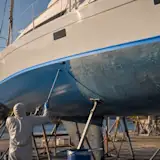
Antifouling is a boat's annual shield - the wrong product or poor surface preparation means paint shedding within a season and fuel bills climbing. At Care the job starts with a hull report: the current paint condition is photographed, the product and number of coats are settled in a written quote, and the application is documented layer by layer. If it isn't needed, we say so plainly: no paint this year.

Scope
Antifouling application
Hard / ablative type selection, coat plan and antifouling with a layer log
Surface preparation
Stripping, sanding, primer - the real craftsmanship that decides how long the paint lasts
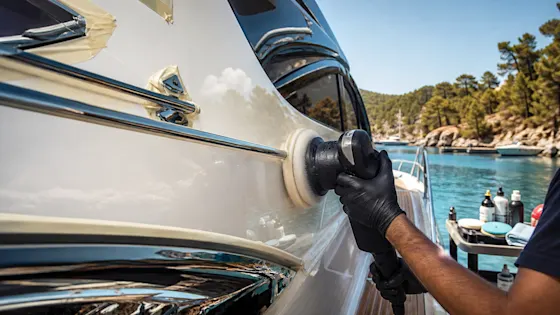
Cut & polish
Topside shine, oxidation removal, seasonal protection
Gelcoat repair
Scratch, crack and impact repair; colour matching
Osmosis check & treatment
Moisture reading, blister assessment, an epoxy barrier where needed
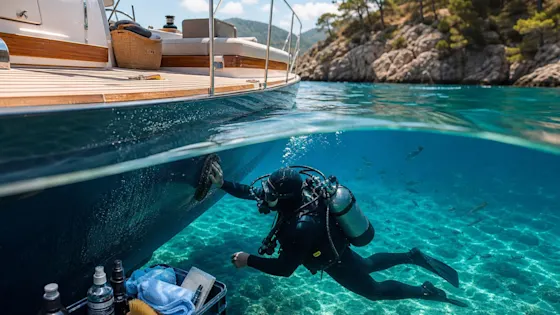
Hull cleaning
In-season diver cleaning - performance without harming the paint
Brands we work with
Which antifouling do we use?
The brand decision depends on the boat: how many hours a year you run, where you are berthed and the history of the existing paint. These are the families we apply regularly in Göcek.
Jotun
We apply itThe most widely used family in Göcek, with both hard and ablative (SPC) products. It sits well over existing layers, so it is our first option on boats with a mixed paint history.
Hempel
We apply itStrong on the ablative side. It gives good results in delaying fouling on boats that stay berthed for most of the season and run rarely.
International
We apply itCommon on the hard-coating side. It comes up on boats that run often, make speed, and want a washable surface.
We do not recommend a brand without seeing a hull report; a wrong changeover can end with stripping the old layers. Products are supplied from the dealer with an invoice, and the brand and number of coats appear in the written quote.
Specialist pages
How it works
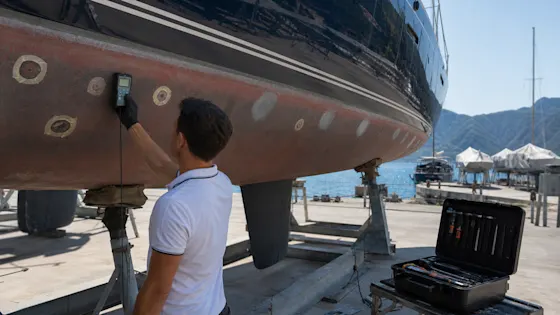
Hull report
A photographed condition survey at the yard; the old paint, anodes and hull moisture readings are logged.
Written quote
Product brand, litres and number of coats in writing; haul-out and launch is a separate line item. Work that isn't needed isn't recommended.
Documented application
Every layer is photographed; the product invoice is added to your file and carried forward for the next season.
Tools
Choose the right paint
Hull area & paint consumption
Estimate the wetted area and the paint you'll need from your boat length. The exact figure firms up in the yard with a hull report (surface condition, coat plan); if it isn't needed, we say 'no antifouling this year'.
28m²
Estimated wetted area
6L
2 coats of paint
Example material range: 210-330 € (paint only, primer and labour excluded). The real driver is surface prep: the gap between a light sand and a full strip is large, and it appears as a separate line in the quote.
The wetted area is an estimate; exact consumption and price firm up with the hull report.
Send the result on WhatsAppComparison
| Feature | Hard | Ablative |
|---|---|---|
| How it works | Stays on the surface, doesn't wear away | Slowly erodes and renews itself |
| Speed | Good for high speed / racing | Ideal for low-medium speed |
| Build-up / sanding | Builds up over time, needs sanding | Little build-up |
| Frequently hauled boat | Suitable | Very suitable |
| Overcoating compatibility | Doesn't suit every paint | Needs a system check |
See the proof
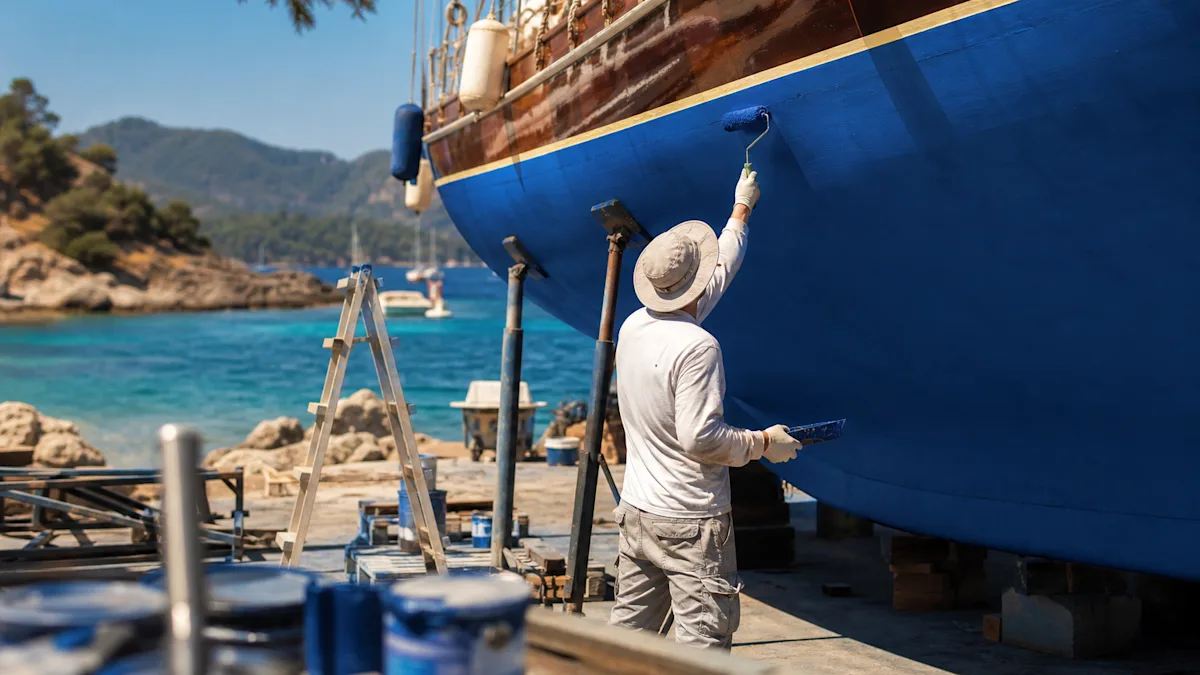
Example job: 10.5 m yacht - switching from ablative to hard antifouling
The old paint was stripped, primer + 2 coats of hard antifouling applied; every layer was photographed and the product invoice added to the file. (Real case photos will feed this card at launch.)
FAQ
How often should antifouling be done?+
Depending on how heavily the boat is used and the paint type, usually every 1-2 years. At every haul-out the hull condition is reported with photos; if the paint is still doing its job we say plainly 'not needed this year' - and you see it logged in the quote.
Hard paint or ablative?+
It depends on speed, how often the boat is used and the existing paint history; the two types don't always sit over one another. In the hull report we identify the current system and, if a switch is needed, explain the reason in writing.
Which brands do you work with?+
Manufacturer-approved systems, chiefly Jotun, International and Hempel. Brand choice is made to suit the boat; the quote states the product name, litres and number of coats - and if we recommend a product we have a supply arrangement with, we say so openly.
How is the price determined?+
By boat length, the scope of surface preparation (the gap between a light sand and a full strip is large) and the number of coats. The haul-out and launch fee belongs to the yard and appears as a separate line item in the quote.
What happens if antifouling isn't done?+
A fouled hull first costs you speed and fuel; over time mussels and weed damage the gelcoat, and the cleaning bill overtakes the cost of paint. An in-season diver check catches this risk early.
Won't diver cleaning harm the paint?+
Not with the right technique: a soft pad on ablative paint, and hard paint is easier to work. The wrong (stiff brush) cleaning shortens paint life - which is why we do the cleaning on record and with photos too.
On this topic: guides & glossary
For those wondering about the terms: the guide and glossary entries below explain this service in depth.

Let us see your boat on site
Start with a free introductory check; both the quote and the decision in writing.
⭐ Google 4.9 · 82 reviewsTÜRSAB memberSame-day for emergencies
Takes 30 seconds