What Is the Hull Below the Waterline?
The hull surface below the waterline — easy to neglect because you can’t see it, but the real driver of performance and fuel burn.
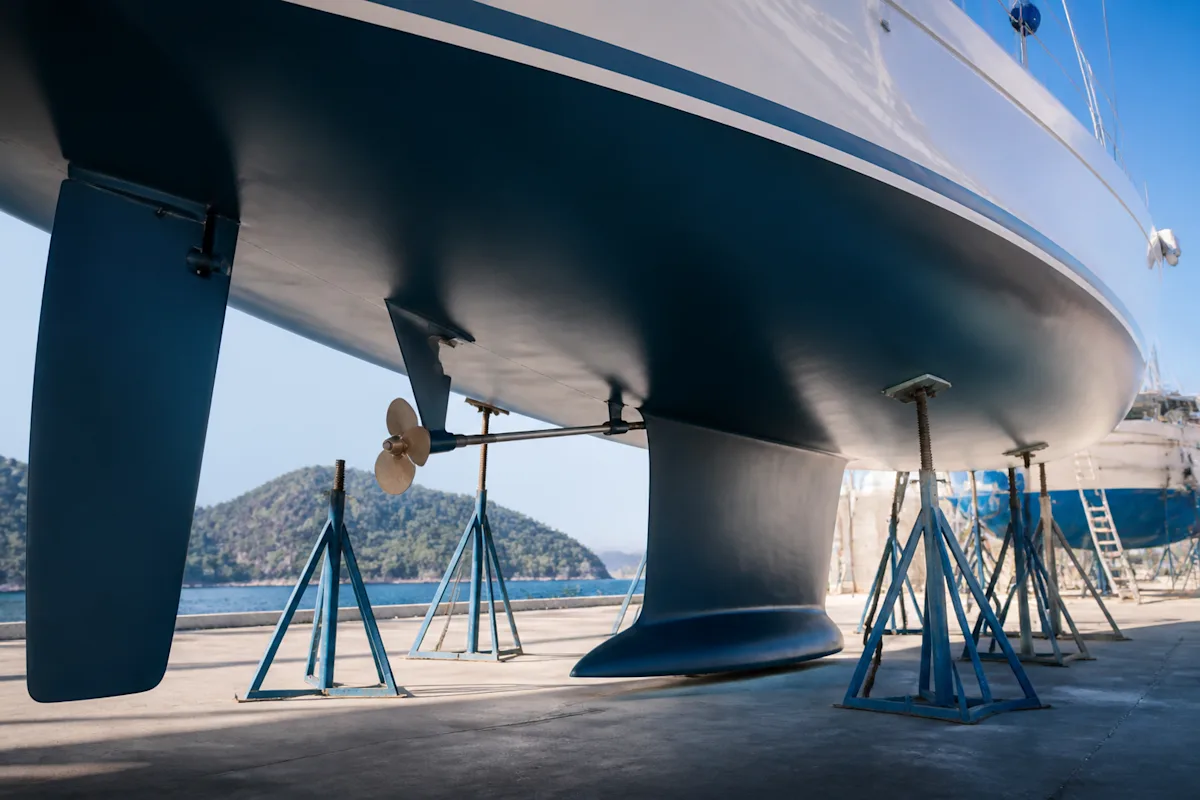
The hull below the waterline is the entire external hull surface beneath the boat’s waterline. Antifouling is applied to this area; algae, barnacles and shell build-up (fouling) all happen here. As the only surface in constant contact with the water, it is where drag lives: a fouled hull reduces speed, noticeably increases fuel consumption for the same pace, and puts extra strain on the engine.
Because it cannot be seen, it is often neglected — yet it is the main factor behind performance and fuel burn. Issues such as osmosis, paint condition and anode arrangement, which are among the most costly topics on a yacht, all come together on the hull below the waterline.
Managing the hull below the waterline
Fouling: the number one cause of speed loss and increased fuel use; monitored during the season by diver inspections.
Paint ageing: flaking or peeling determines how much preparation is needed at the next haul-out/yard period.
Blisters: not every blister is osmosis, but every blister deserves a moisture check.
The hull below the waterline should be photographed at least once a year at haul-out/yard: year-on-year comparison turns paint decisions and osmosis monitoring from guesswork into facts. A record of the unseen surface is the yacht’s most valuable archive. See our antifouling page for more detail.