Bird Problems on Boats and How to Deal with Them
From masthead to sunpad, practical measures that really help against gull and pigeon invasion — and why the mess needs clearing up straight away.
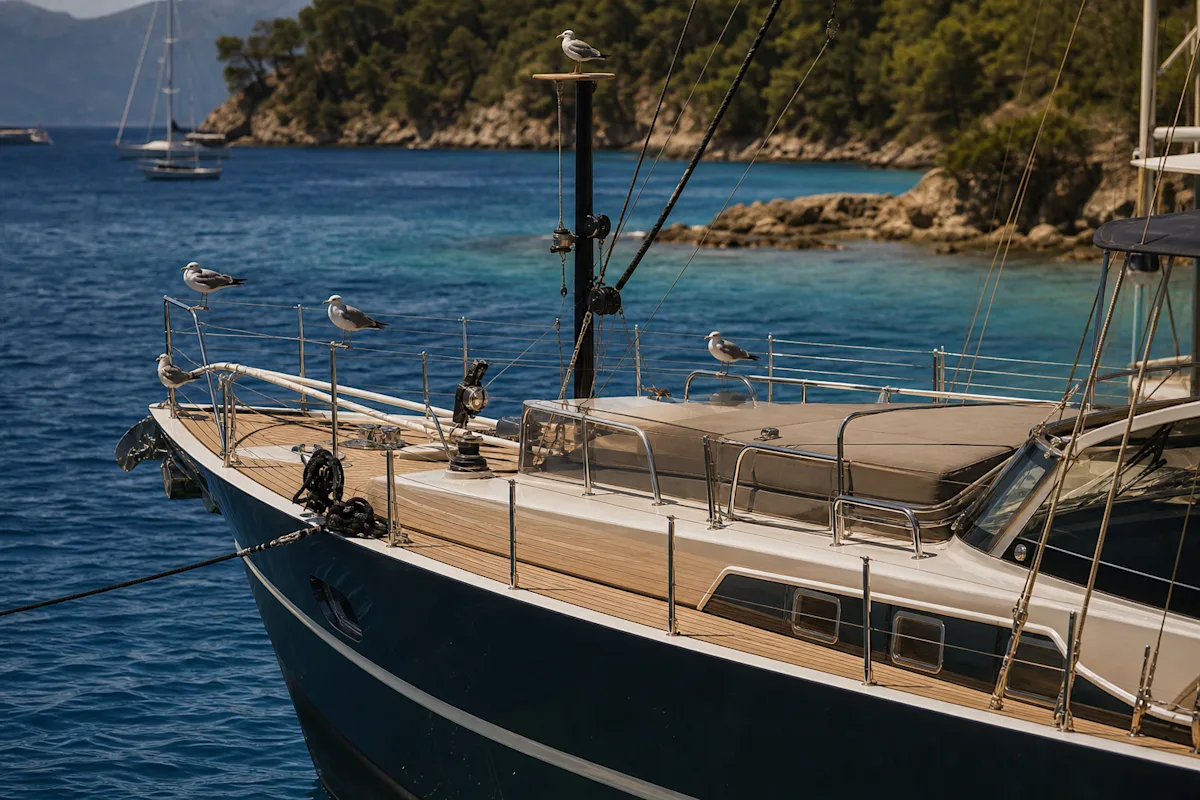
Gulls and cormorants are the silent intruders of an anchored or moored boat. The problem is not just cosmetic, it is chemical: bird droppings are acidic and can stain, then eat into, gelcoat, teak decks, bimini fabric and stainless steel over time. The longer they are left, the harder they are to clean and the more likely they are to leave permanent marks.
This is a deterrence war; there is no single magic fix, but a layered approach wins. The table below shows the methods and how well they really work.
Deterrent methods
Method | Effect |
|---|---|
Blocking landing spots (wire, slats) | Most lasting; masthead, radar arch, guardrails/stanchions |
Moving/shiny deterrents (tape, CDs) | Cheap; once birds get used to them, the effect drops, so move them around |
Balloon/plastic predator decoy | Partial; needs regular repositioning |
Bimini/cover protection | Protects the surface; shades the main target |
The most effective strategy is to physically make the birds’ favourite high perches unusable — such as the masthead, radar arch and guardrails/stanchions. Any deterrent that birds start to ignore should be changed around from time to time, because they soon get used to a fixed threat.
There is also a timing rule: fresh droppings are easy to remove straight away with plenty of water, while dried-on deposits that have bitten into the gelcoat are much harder to shift and need abrasives. On a boat left unused for long periods, that ‘straight away’ becomes impossible; that is precisely why regular visits (Care rounds) are both a deterrent and a way of keeping things clean, because a boat that is active and well looked after is less attractive to birds too.