Boat Electronics Accessories: What’s Essential, What’s a Luxury?
A practical discipline for prioritising purchases against the lure of the electronics catalogue — a realistic shopping list, ordered from safety to comfort.
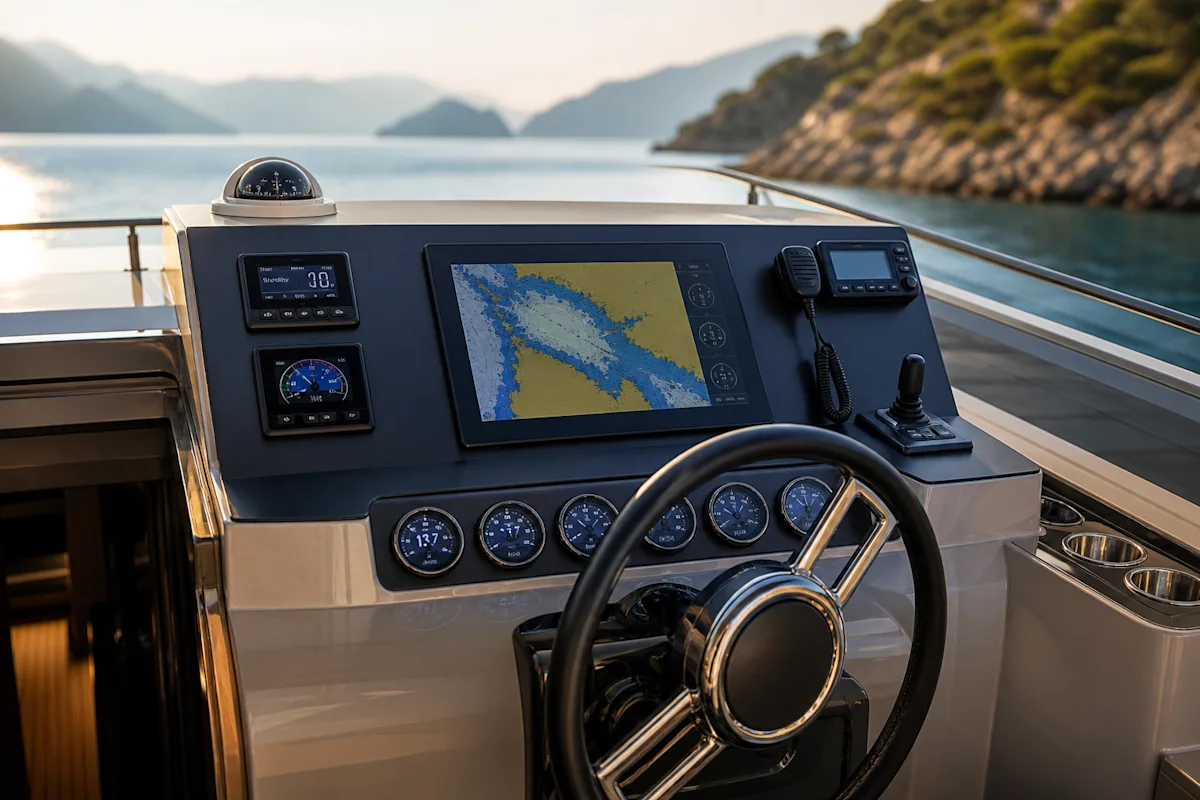
For a new boater or a skipper upgrading their electronics, the question is always the same: with a limited budget, what should you buy first? The right order is based not on flashiness, but on safety and real need. The table below is a sensible map for spending the budget in the right sequence.
Purchase priority
Priority | Equipment | Why |
|---|---|---|
1 | DSC VHF radio | Safety of life; instant distress calling, the top priority |
2 | Depth + speed sounder | Essential safety in shallow bays and when coming alongside |
3 | Plotter / chart (GPS) | Position and route; a phone can be a backup, but not the only system |
4 | AIS (at least receive-only) | Seeing larger vessels; safety in traffic |
5 | Radar / autopilot / NAVTEX | Depending on how you use the boat; for night passages and longer routes |
The most common mistake is breaking this order: buying a large plotter and leaving the DSC radio until last is putting display value before safety. A phone is a useful backup, but it is not a navigation system on its own (battery life, getting wet, unreadable in bright sun).
There is also an invisible priority: stable 12V supply and proper cabling feeding all of this kit. Even the most expensive plotter is unreliable on a weak battery and loose connections; the electrical installation must be sound before the electronics are upgraded. Building a NMEA 2000 backbone from the start ensures the equipment can talk to each other.