Engine Cooling Systems: What Are Direct and Indirect Cooling?
The difference between seawater running through the engine itself, or cooling a closed circuit — a design choice that determines how long an engine is likely to last.
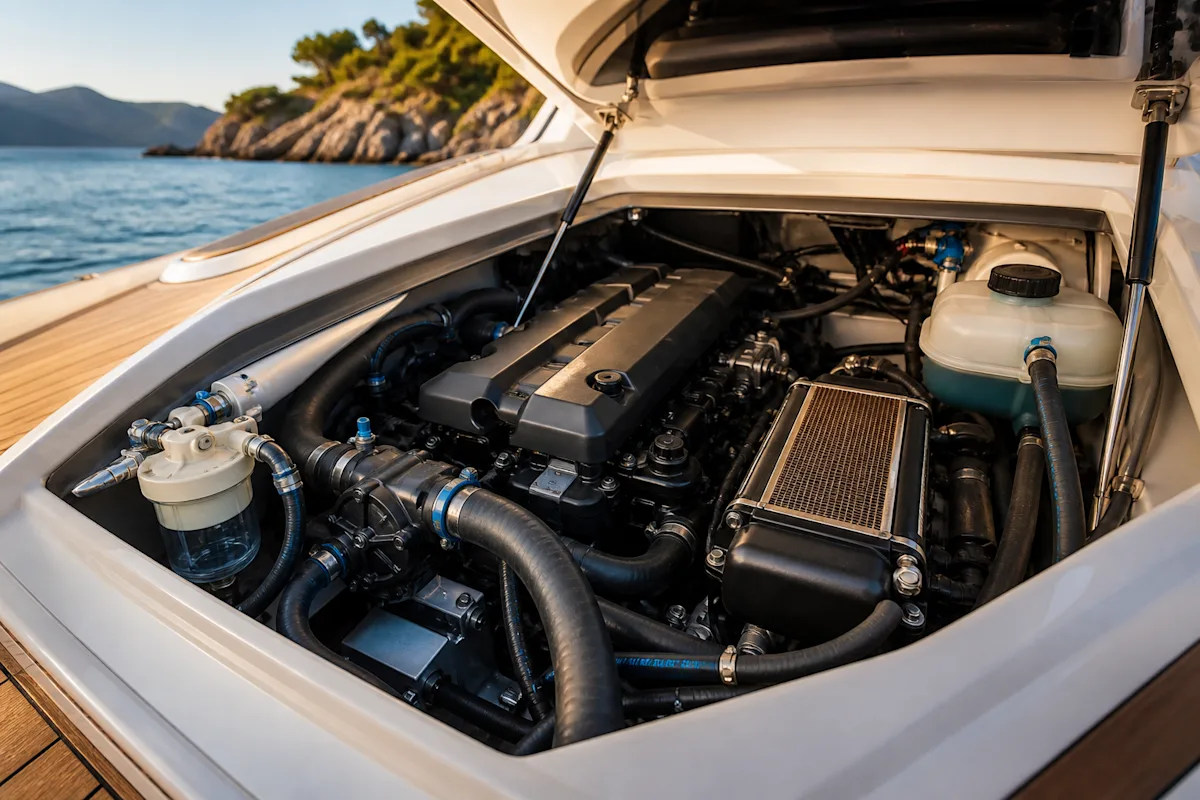
Marine engines are cooled in two different ways, and that choice directly affects expected engine life. The key difference is where the saltwater goes: through the engine itself, or only through a heat exchanger?
The table below compares the two systems. When looking at a used engine, asking 'which cooling system?' is just as important as age.
Direct - indirect cooling
Feature | Direct (raw water) | Indirect (fresh water) |
|---|---|---|
Where the saltwater goes | It goes into the engine block | It only passes through the heat exchanger |
Engine life | Passages scale up and shorten life | The block lives with clean antifreeze |
Where you’ll find it | Small/older engines, most outboards | Standard on modern inboard engines |
Main maintenance | Freshwater flushing, periodic chemical cleaning | Antifreeze changes, heat exchanger/anode |
In a direct-cooled system, saltwater lives inside the block, so over the years the waterways narrow with salt and lime scale. The engine corrodes from within and its life is noticeably shortened. In an indirect system, the block lives with clean antifreeze, and the saltwater’s damage is limited to the heat exchanger and elbow.
For anyone running a direct-cooled engine (including most outboards), there is really one key habit: freshwater flush after every saltwater use where possible. For indirect systems, there are two service items to keep on the calendar: antifreeze changes and heat exchanger/anode maintenance. The one thing they still have in common is familiar enough: the impeller is an annual job.