Mooring Lines: Polyester or Nylon?
The material science behind the ropes that hold a boat alongside the quay: stretchy nylon, hard-wearing polyester, and the common enemy of both - a sharp edge.
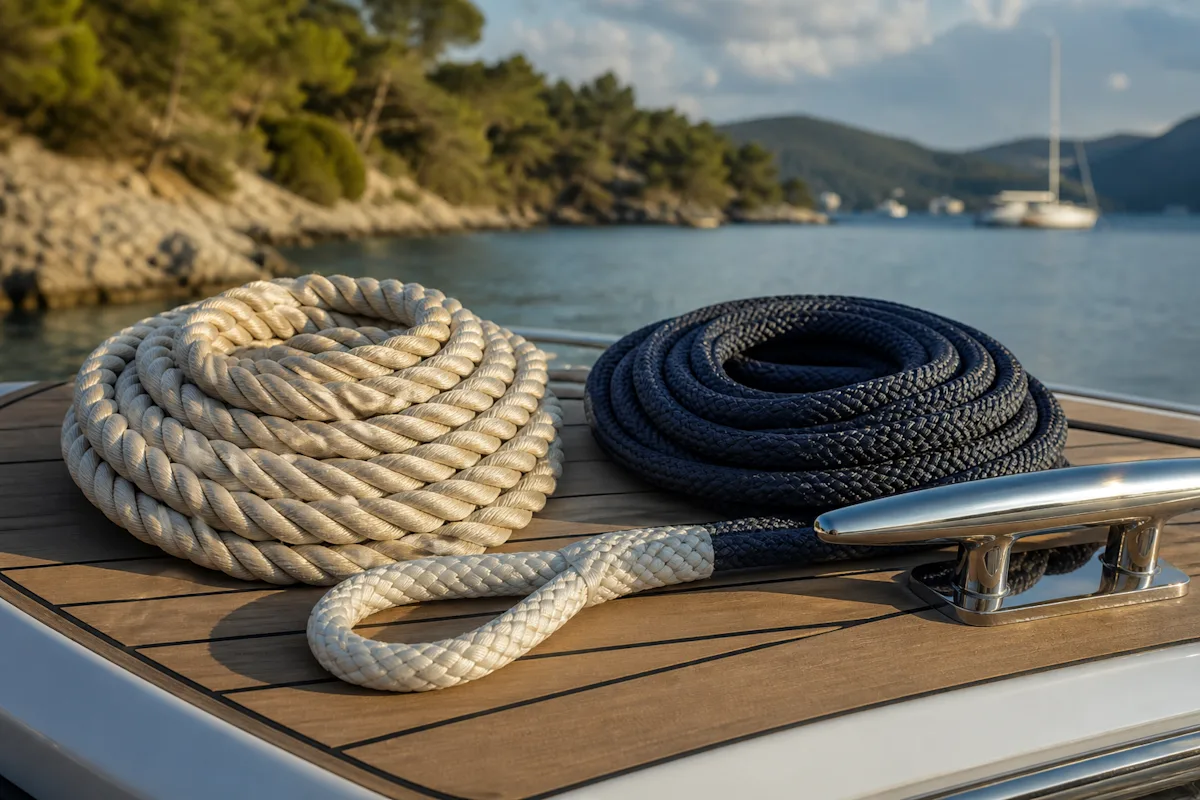
Palamar is the general term for mooring lines. In a blow, the last link holding the boat is the rope, and the right material helps protect her from parting. Two materials compete, and the choice depends on how the line is used.
The table below compares nylon and polyester.
Nylon - polyester
Feature | Nylon (polyamide) | Polyester |
|---|---|---|
Stretch | High, absorbs shock loads | Strength when wet |
Slightly reduced | Same wet or dry | UV / abrasion |
Good | More durable | Ideal use |
Storm lines and buoy moorings | Permanent marina berthing | What most often parts a line is not a straight pull, but two other things: being cut on a sharp edge (bollard, cleat, padeye) and aged fibres giving way suddenly under load. |
Fitting chafe guards at wear points cuts out the classic start of storm damage.
Practical rule: for permanent mooring, use UV-resistant polyester plus chafe guards; for storm and mooring-buoy lines, use nylon where its stretch helps. Don’t skimp on diameter; one size up from the table is the cheapest insurance for a good night's sleep. A set that is over five years old and lives in the sun should be retired by the calendar, not because it hasn't broken yet.