Boat Winterising Guide: Ashore or Afloat?
The key decision in winterising a boat comes down to one question: ashore or afloat? This guide compares the real advantages, risks and cost items of both options, bringing together the full winter plan in one article, from lay-up maintenance to storm precautions and the spring recommissioning list.
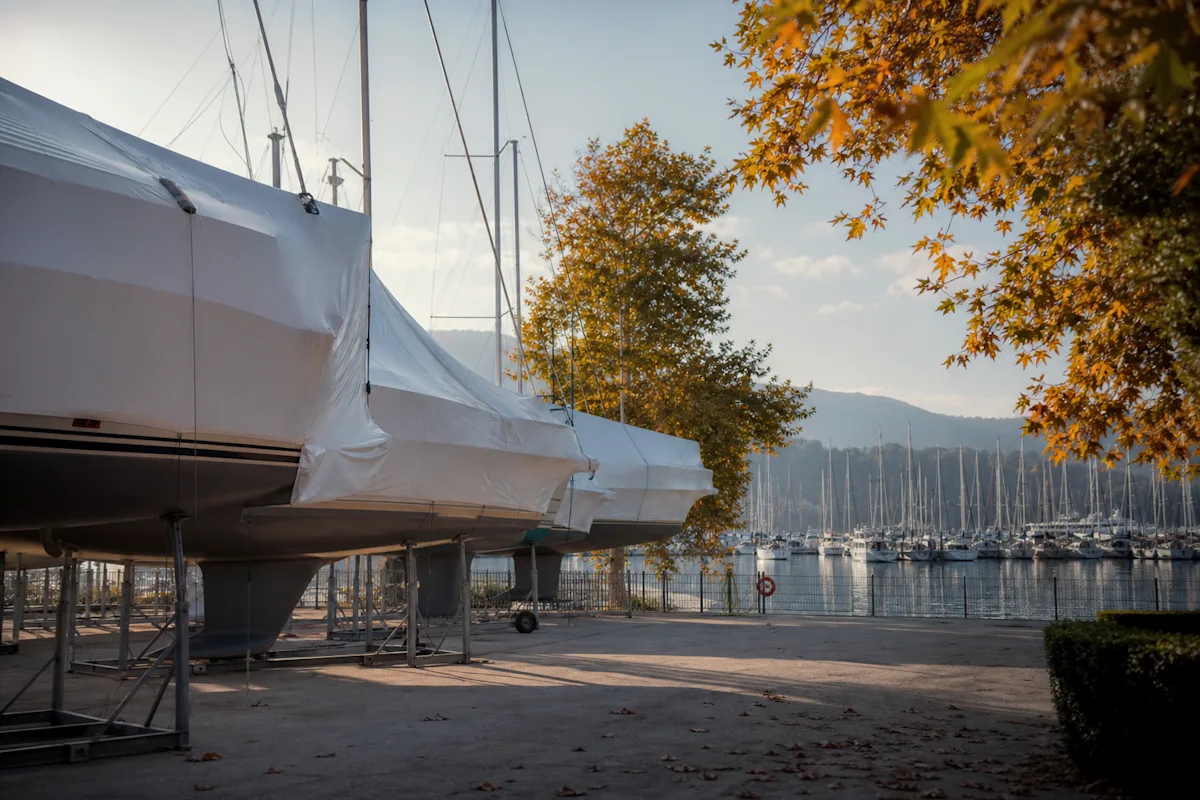
The heart of the winterising decision comes down to one question: ashore or afloat? Each option has its own advantages, costs and maintenance needs, and the right choice depends on your boat, how you use it and your budget.
The table below compares the two options.
Ashore or afloat
Feature | Ashore (haul-out) | Afloat (kept in berth) |
|---|---|---|
Hull | Dries out, easier for paint/repairs | Stays in the water, fouling continues |
Below-water access | Anode, seal and propeller are easy to reach | Diver required |
Cost | Haul-out + winter berth | Ongoing mooring fees |
Risk | Shores, cover, knock-over risk | Mooring lines, bilge, storm damage |
Monitoring | Static ashore, easy to access | Risk of taking on water, regular checks essential |
Winterising ashore is ideal for hull and below-waterline work, but you still need to manage shores, cover and knock-over risk. Winterising afloat needs less lifting and moving, but it makes bilge, mooring and storm monitoring essential.
Whichever route you choose, winter is not a season to neglect: ashore, the shores and cover need regular checks; afloat, the bilge and moorings do. A monthly inspection, plus an extra check after storms, catches most problems while they are still small enough to fix easily.
Frequently asked questions
When should I start preparing for winterising?+
October is the ideal time: as soon as the season ends, carry out lay-up maintenance and tie down the winter plan and any winter jobs such as painting, teak work or repairs. By the time the November gales arrive, the mooring or storage arrangement should already be in place.
Should the boat be left untouched all winter?+
Quite the opposite: a monthly inspection routine is one of the most important parts of winterising. The bilge, battery voltage, mooring lines, hatch seals and moisture levels should all be checked every month, and again after any storm.
Is a winter cover really necessary?+
For a boat wintering afloat, a breathable full cover is the cheapest protection against damp and UV damage; a bimini is not winter protection. Ashore, you need a properly tensioned cover arrangement that will not hold standing water.
What is the most common damage during winter afloat?+
Storm damage to the topsides or guardrails caused by tired mooring lines and poor fendering, plus small leaks that go unnoticed and become bigger problems. The answer to both is the same: regular checks and extra securing before a storm.
How should the engine be protected on a boat wintering ashore?+
Lay-up maintenance is essential: oil and filter change, protection of the cooling circuit, and filling and treating the fuel tank. Before the first start in spring, a short checklist will ensure the engine enters the season safely.