What Are the Different Types of Anchor?
From ploughs to next-gen designs, there is no single 'best anchor' - only the right anchor for the seabed and the boat.
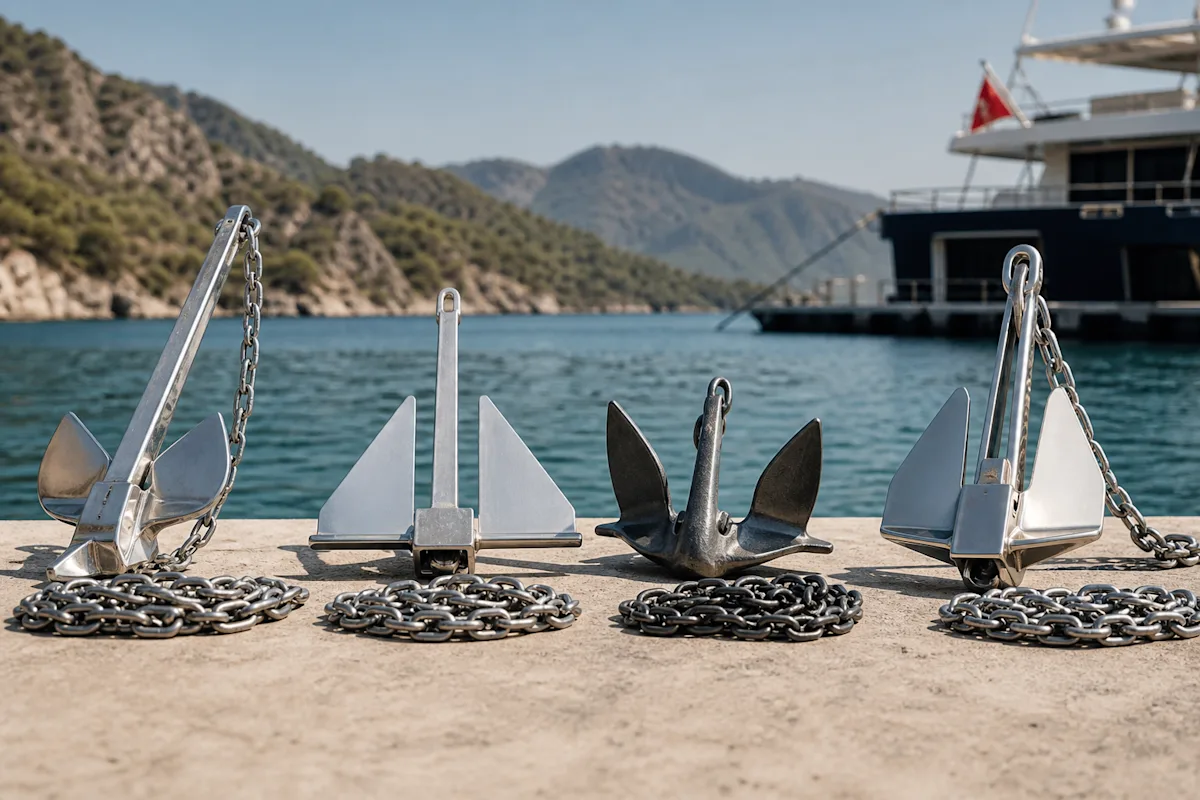
An anchor is the metal version of a home insurance policy: it is the one thing holding the boat through a windy night. But there is no single 'best anchor'; at best, there is an anchor chosen correctly for the seabed and the boat. Different bottoms - sand, mud, weed, rock - favour different anchors.
The table below sets out the main anchor families, together with the seabeds where they hold best and the ones where they struggle. The real difference with modern next-generation anchors is not brute force but resetting: when the wind veers 180 degrees, older styles may break out and drag, whereas a good next-generation anchor will dig back in.
Anchor families
Anchor type | Best seabed | Struggles on | Key feature |
|---|---|---|---|
Plough (CQR / Delta) | Sand, mud | Weed, rock | Classic, versatile use |
Scoop / next-generation (Rocna, Mantus, Spade) | Sand, mud, most conditions | Dense weed | Fast, deep set; resets well |
Danforth | Sand, soft seabed | Rock, weed | High holding power for its weight, light |
Mushroom / folding | Small boat, secondary | Heavy weather | Compact and handy, not a main anchor |
The Aegean seabed map tests this difference every season: sand strips, weed-covered areas (Posidonia) and muddy coves all sit side by side. A weed-covered bottom is most anchors' nightmare because the flukes sit on top of the weed rather than biting into the bottom; that's why finding a patch of sand is worth more than the anchor itself.
A practical Aegean setup
Main anchor: one size up from the boat's length, a next-generation anchor and a full chain or a long-chain leader.
Backup: a light Danforth or folding anchor for stern mooring.
Chain matters: the chain is what gives the anchor its horizontal pull; an anchor deployed on rope alone works at half strength.
And with every anchorage, the same routine applies: back down under power to test the set before shutting the engine down. Don't skimp on size either; one size up is the cheapest night's sleep you'll ever buy.