What Is a Barometer?
A classic instrument for measuring atmospheric pressure — the old hand that answers ‘will the weather turn?’ even in a bay with no signal.
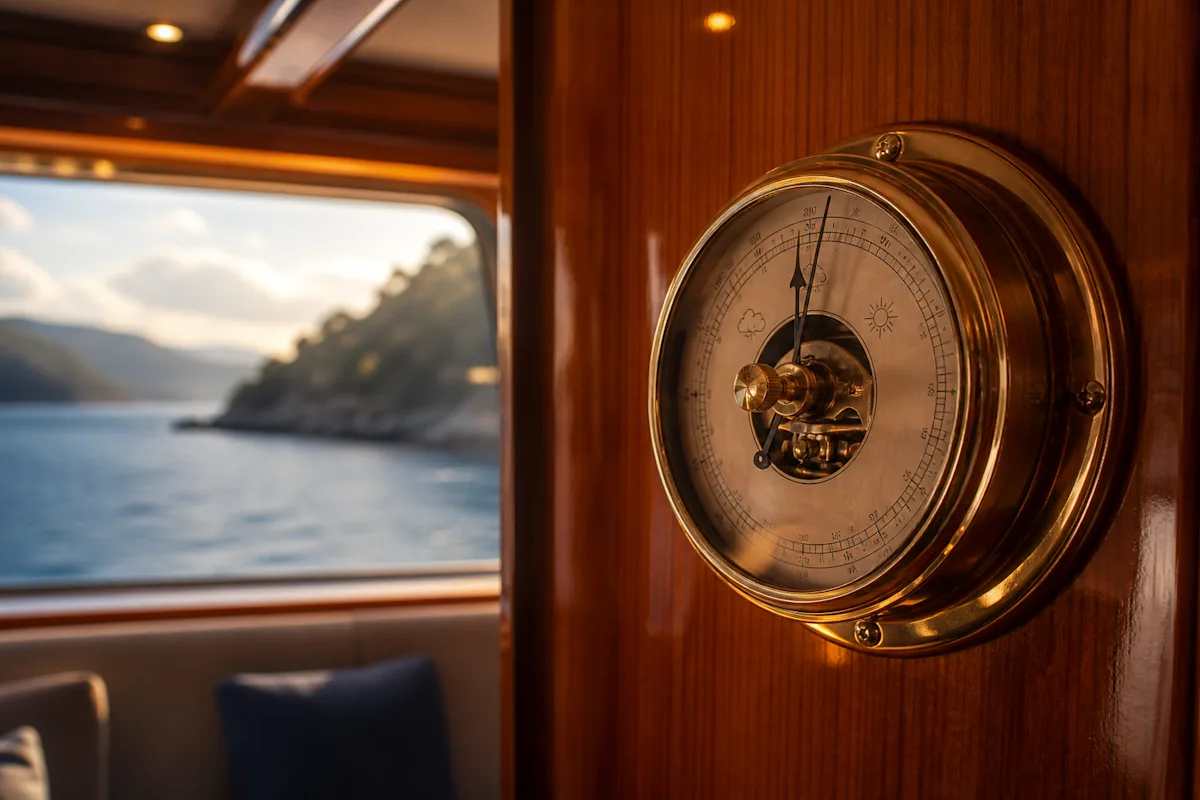
A barometer measures atmospheric pressure. For a skipper, the real value is not the absolute figure but the rate of change. Even in the GRIB era, it is still indispensable in two situations: in a bay with no internet, and when local conditions slip through the model’s net.
The table below shows what changes in pressure tend to mean.
What pressure changes tell you
Change | What it means |
|---|---|
Slow fall | A low-pressure system approaching, weather turning |
Rapid fall (2-3+ hPa in 3 hours) | A serious system is on the way |
Rapid rise | Conditions may stiffen, but skies should clear |
The old sailor’s rule still holds: it is not what the pressure is, but where it is going. That is why a single reading is of little use; a three-hour trend is what matters. In a bay with no signal, the pressure curve is your only forecast model.
Basic anchoring routine: compare the evening and morning readings; a drop of 3-4 hPa overnight should make you rethink the day’s plan. Aegean shorthand: falling pressure, plus a strengthening southerly, plus a ring around the moon — that is the classic opening to a lodos spell.