What Are the Basic Seaman’s Knots?
Five knots that genuinely matter on a boat out of the hundreds there are - each one solves a real job, and all can be learnt in ten minutes.
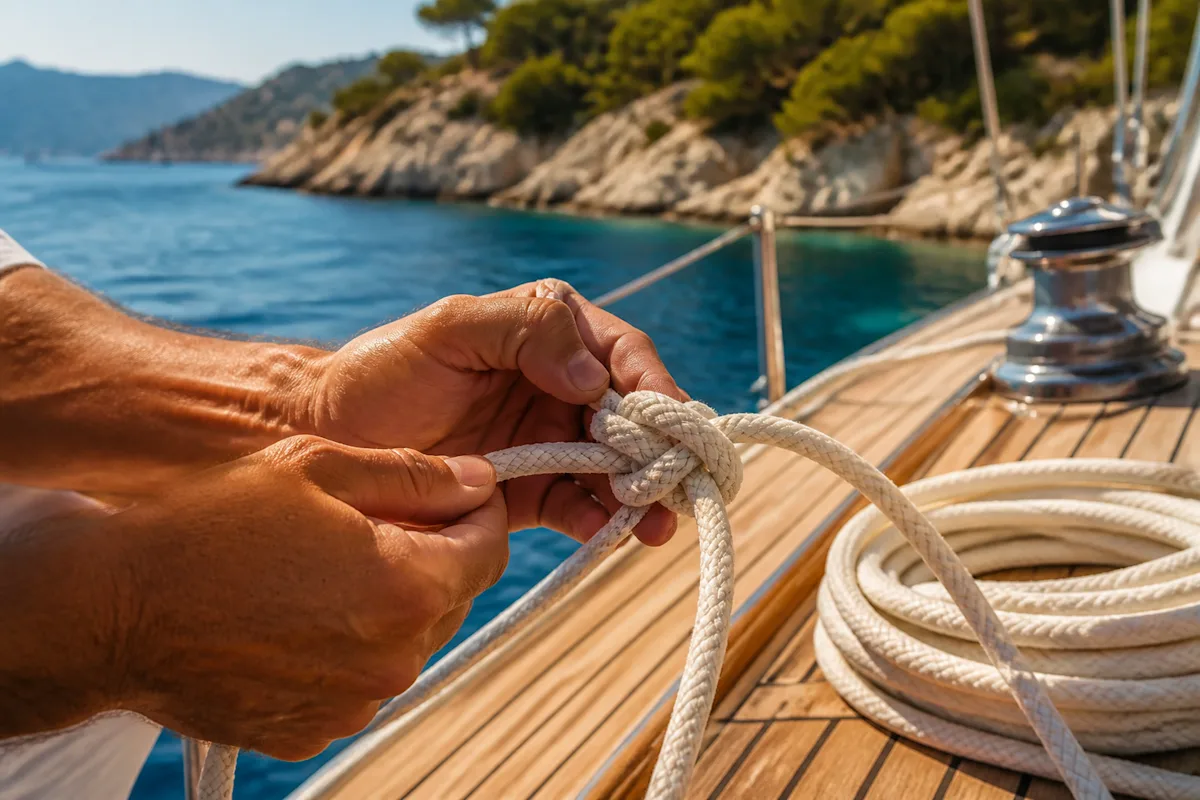
There are hundreds of seaman’s knots, but on a boat you only really need five. A proper knot does two things at once: it will not come undone under load, and it can be released when needed. A granny knot does the exact opposite, and in an emergency it means reaching for a knife.
The table below sets out this practical five with what each is for and its standout feature. All can be learnt in ten minutes.
The five knots you need on board
Knot | What it is for | Feature |
|---|---|---|
Bowline | A reliable loop at the end of a line | Does not jam under load, easy to undo, a classic go-to |
Clove hitch | Hanging a fender on a guardrail/stanchion | Quick, but can slip; secure with a half-hitch |
Reef knot | Joining two equal lines end to end | Flat and secure when tied correctly |
Figure-of-eight | A stopper knot on the end of a line | Prevents the line running through a block or fitting |
Final securing turn | The last securing move on a tie-up | Holds under load, can be released in one movement |
The real value of the bowline lies here: at night, on wet line, under load, it still goes in the same way and comes undone with two moves. Some classic knots will not hold on slippery modern synthetic line; if in doubt, bowline plus an extra turn.
The learning routine is old-school: keep a short length of line in the cockpit and practise until you can tie a bowline blindfolded while the kettle boils. Teach guests just one knot as well - the bowline; if they can say “make a loop here with this line”, they have already become crew.