What Is a Bilge Pump?
The pump that throws water out of the bilge - the bit everyone assumes they have, everyone overstates the capacity of, and the one-minute test that can save a boat.
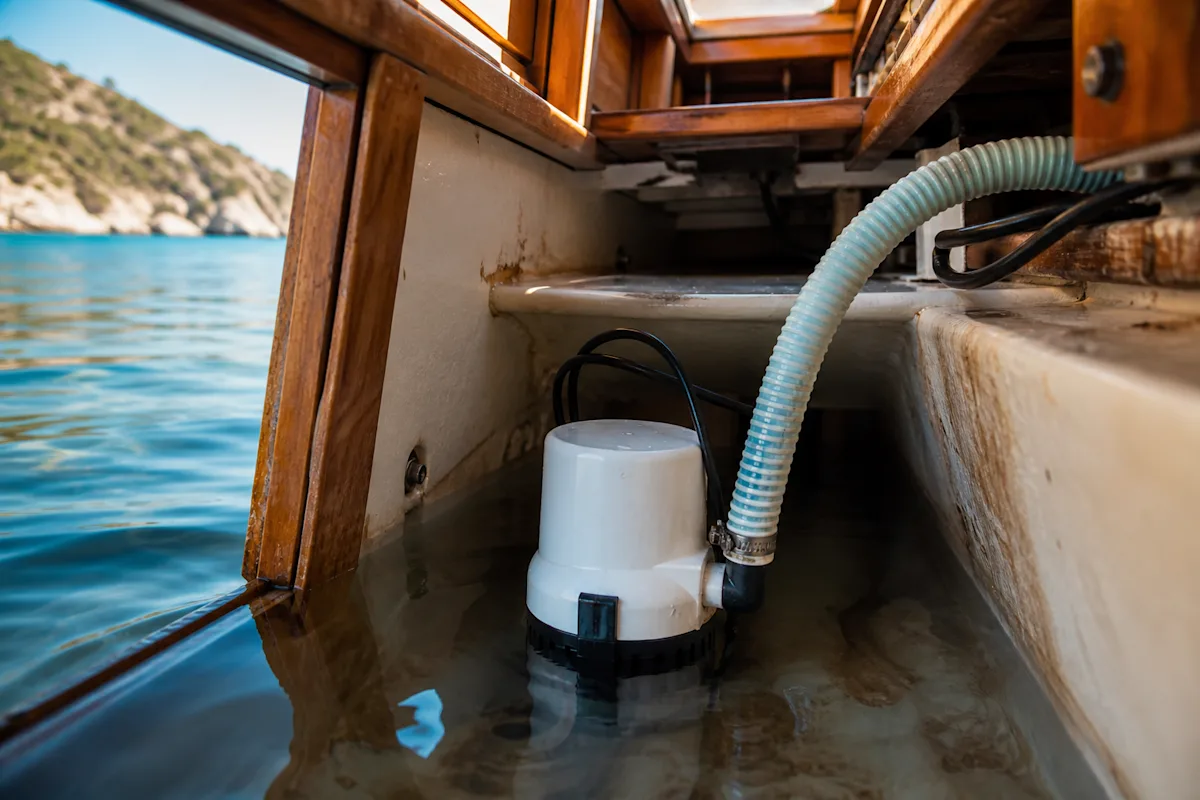
A bilge pump is the pump that throws water from the bilge overboard through a discharge outlet. A sensible set-up is layered: a small automatic pump, a second high-capacity pump, and a manual back-up all used together.
The table below sets out the types.
Pump types
Type | Feature |
|---|---|
Submersible centrifugal | Automatic (float switch), quiet, poor tolerance for solids |
Diaphragm | Can run dry, handles solids, manual or automatic |
Manual (hand-operated bellows) | The final back-up that still works when there is no electricity |
Two facts need to be understood: the quoted capacity is a laboratory figure, and real flow drops sharply once lift height and hose losses are taken into account; and no bilge pump can cope with a proper breach or a major flooding rate. Pumps buy time, but only a plug and a valve stop the leak.
The biggest risk is the silent death: a pump that has not been tested for years will fail to run on the night it is needed most. A monthly one-minute test (lift the float switch, listen for the sound) is the only real insurance. That is why pump testing is built into every Care visit.