What Are Boat Cleaning Chemicals?
A guide to the jobs different boat chemicals do, from acids to alkalis - a compass for a job where the wrong product does more damage to the surface than it does to the dirt.
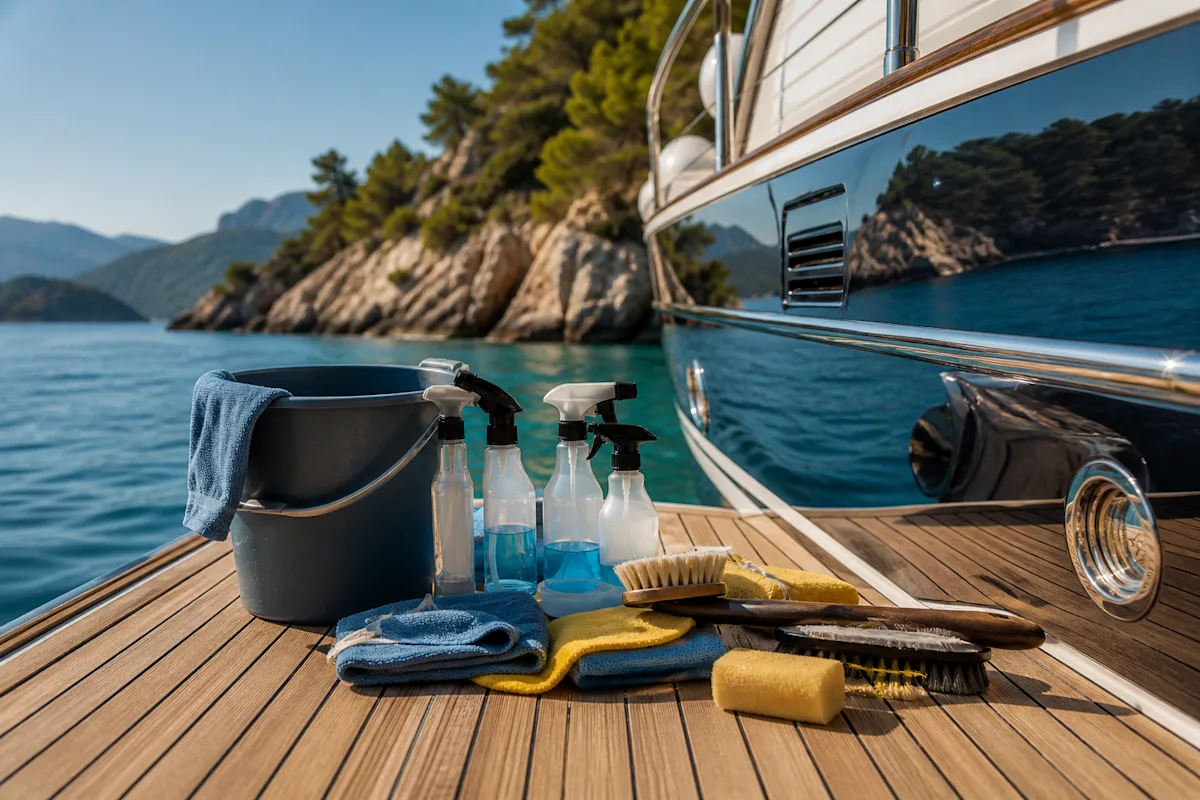
The most common mistake in boat cleaning is using the same product on every surface. The right chemical works according to pH, and the wrong one damages the surface more than it removes the dirt. The table below gives the job map.
pH and job
pH | What it removes | Example |
|---|---|---|
Acidic | Mineral deposits: marine growth, limescale, rust marks | Waterline stain remover |
Alkaline | Organic dirt: grease, soot, general grime | All-purpose spray |
Neutral | Daily washing | Boat shampoo |
Boat surfaces do not all react the same way to chemicals: an acidic marine growth remover is excellent on the waterline, but dangerous on some metals; a chlorine mould spray works in a heads compartment, but will ruin canopy stitching and rubber. The first answer to 'what should I clean it with?' is always the same: start with the mildest product, then go stronger if needed.
Environmental awareness matters too: foamy wash-downs done in a bay end up in the sea; in the Göcek protected area, biodegradable products and marina wash-down facilities are preferred. Always test any new product on an out-of-sight spot first, and rinse thoroughly with plenty of fresh water after every chemical use.