What Are Boat Security Systems?
Layered protection for the valuables aboard, from outboards to electronics: deter, delay, and detect.
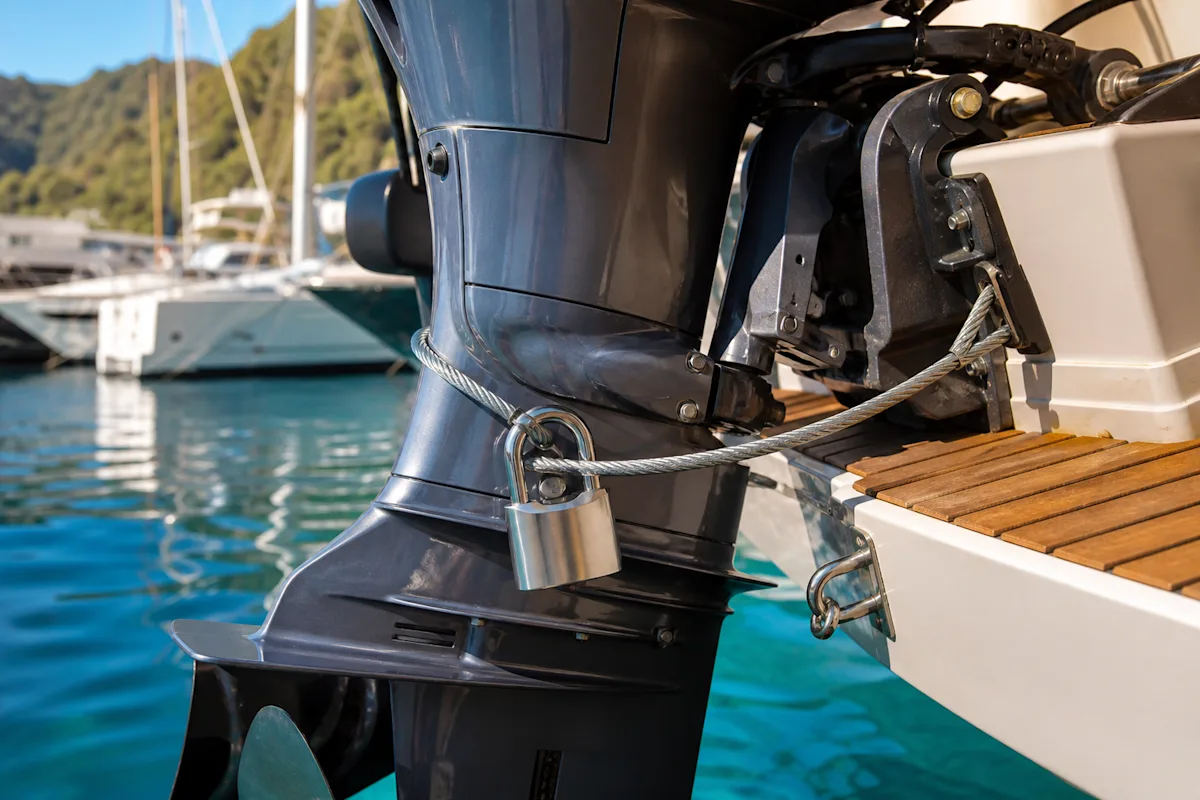
Boat security is built in three layers, and the aim is not absolute protection but simply not being an easy target; opportunist theft happens at sea as well. In a realistic risk map, the primary target is the outboard engine and tender, followed by deck electronics and valuables left on board.
The three layers are as follows.
Layered defence
Deter: visible locks, alarm stickers, lighting, a closed-up look.
Delay: engine bracket lock, steel cables, locked hatches, and removing electronics to a locked locker (especially in winter).
Detect: alarm with motion/door sensors and a GPS tracker; it should have an independent, insured power supply and must not be silenced by the main switch.
The risk rises at isolated anchorages and in haul-out yards (in winter); for a boat laid up for the season, removing the electronics and taking them home is the single most effective measure. A tender left unlocked, with the engine still on it, is an open invitation.
The cheapest safeguard is social: knowing the owners of the neighbouring boats is often worth more than most camera systems. Care's regular check rounds are simply the professional version of the same idea: a boat that is moving and being watched is no longer an easy target.