Points of Sail: What Are Close-Hauled, Beam Reach and Running?
The names for the angle between wind and course — the alphabet of sailing and the character of each point of sail.
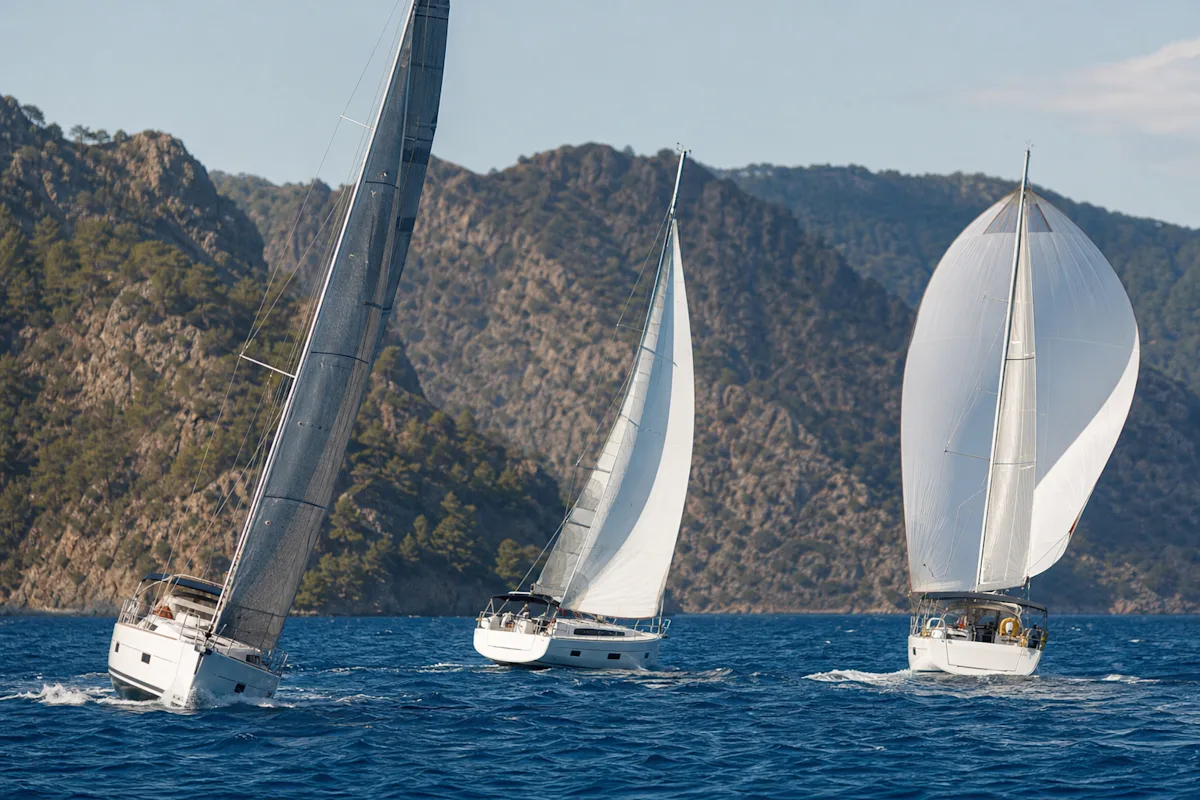
Points of sail by wind angle are the alphabet of sailing, and each angle has its own character. The roughly 40-degree cone where the wind is coming from is the ‘no-go zone’ — you cannot sail directly into it; if the mark lies there, you tack up in zigzags.
The table below sets out the angles.
Points of sail
Angle | Wind | Character |
|---|---|---|
Close-hauled | As close to the wind as you can get, ~40-45 degrees | A balance of speed and angle; forcing it kills speed |
Beam reach | Across the beam, ~90 degrees | The fastest and most comfortable angle for most boats |
Broad reach | Aft of the beam | Pleasant and fast |
Running | Dead astern | Looks calm, but the risk of an accidental gybe is always there |
Running can be the most deceptive: the wind feels light (boat speed drops and your judgement is fooled), and the risk of a gybe is always there. Handy rule of thumb: a reach is your friend — on leisurely days with guests aboard, set your course to a reach.
On a run there are two rules: keep the preventer on, and keep crew out of the boom’s sweep. On a boat without a wind instrument, your best indicators are the back of your neck and the burgee.