What Are Displacement and Planing Hulls?
The basic divide between a boat that parts the water and one that rides over it — and the DNA of speed, fuel burn and comfort.
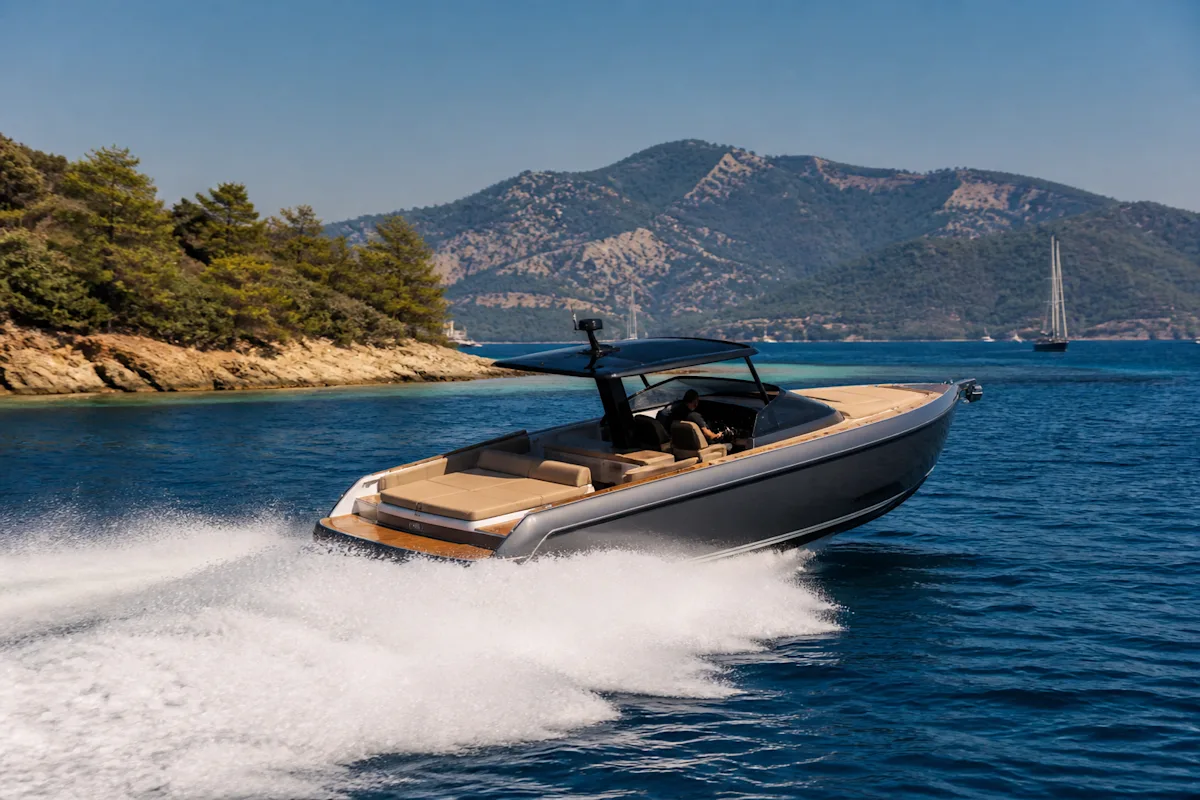
Whether a boat parts the water or rides over it is a fundamental distinction, and it defines the boat’s economy. A displacement hull pushes through the water and is limited by hull speed; a planing hull, with enough power, lifts onto the surface and skims.
The table below compares the two hull types.
Displacement - planing
Feature | Displacement | Planing |
|---|---|---|
Speed | Slow, limited by hull speed | Fast, skims over the water |
Fuel | Kind on fuel, economical | An inefficient band until it gets onto the plane |
Example | Trawler, classic sailing yacht | Speedboat, most modern motor yachts |
The answer to engine selection, propeller matching, and the question “why does this boat burn so much fuel?” lies in this distinction. Running a planing boat just below the threshold for planing — with the bow half-lifted — is the least efficient and least comfortable place to be.
When buying a boat, two questions matter more than “how many knots will she do?”: what hull type is it, and at what revs does she make cruising speed on how many litres an hour? The hull sets the character; brochure speed is often the most expensive speed of all.