What Is Electrolysis? (Common Term)
The common catch-all for any underwater metal wasting away in a marina — an editorial note explaining that two different problems usually sit behind it: galvanic corrosion and stray current.
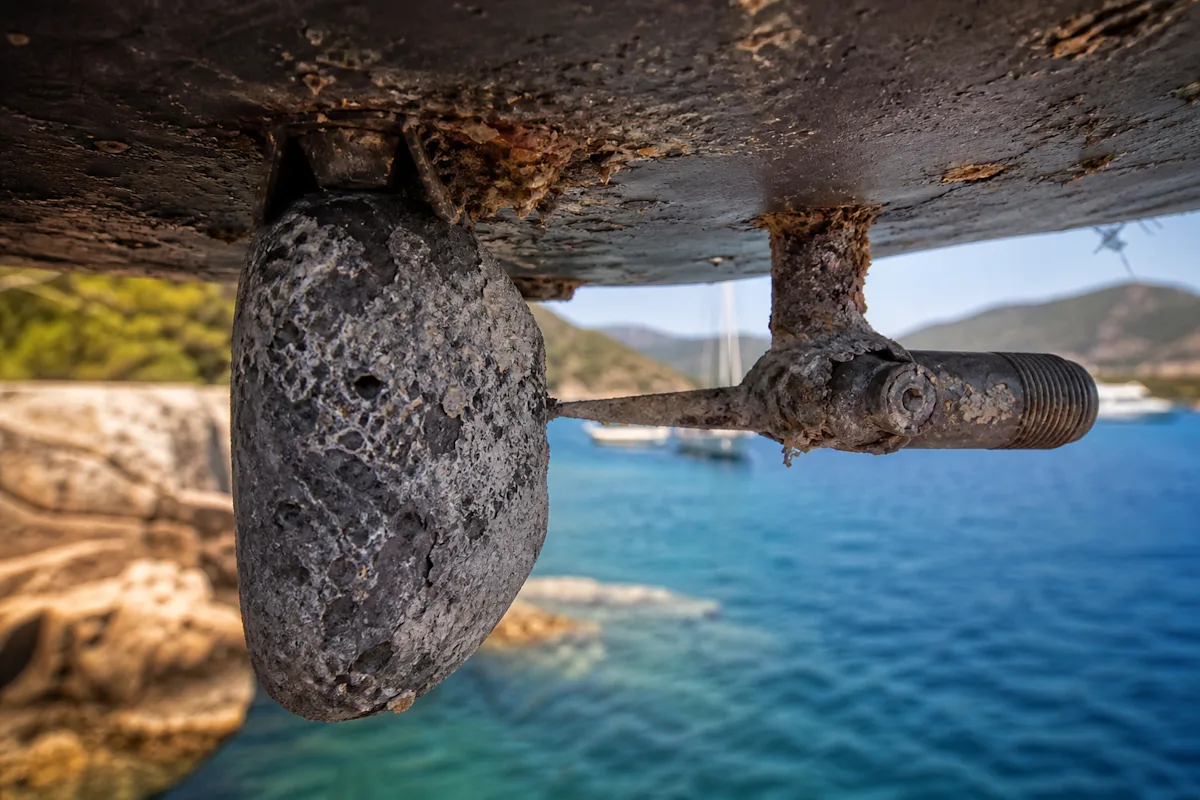
The phrase ‘there’s electrolysis on the boat’ is the common way of describing underwater metals wasting away; technically, though, it usually mixes up two separate issues. Names matter, because the cure is different. The table below separates the two hidden problems.
‘Electrolysis’ is really two different issues
Issue | Characteristic | Treatment |
|---|---|---|
Galvanic corrosion | Different metals effectively make their own battery; slow (years) | Anodes, bonding, galvanic isolator |
Stray current | Current leaking from a DC system; rapid (weeks to months) | Find the source and isolate it (urgent) |
If we boil this piece down to one line: when you hear ‘electrolysis’, the first question is how quickly is it happening? If it’s slow, check the anodes, bonding and isolator arrangement; if it’s fast, start tracing stray current. Saying ‘it’s electrolysis, fit new anodes’ is the classic mistake that wastes time when the real fault is stray current.
Sometimes the next boat along really is to blame too (through the marina’s shared earth), but you should measure your own boat first. A hull potential reading with a reference electrode settles the argument in 10 minutes. For more detail, see our notes on galvanic isolators, bonding and stray current.