What Are Epoxy and Polyester Resins?
Two core chemicals in yacht building and repair — production starts with polyester, while lasting repairs are usually done with epoxy.
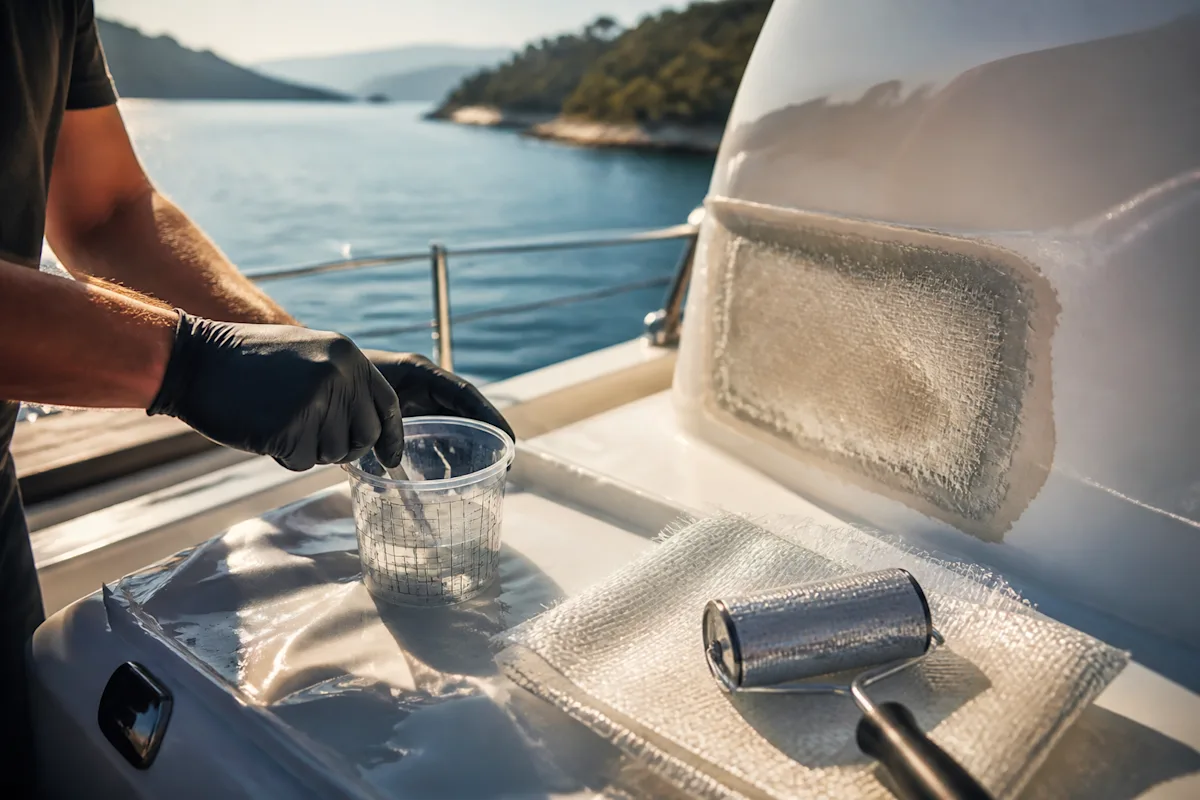
There are two basic chemistries in yacht building and repair: production starts with polyester, while lasting repairs are usually done with epoxy. In repair work, the material you choose decides how long the result will last; the real question is not 'which is better', but 'which job is this material meant for'.
The table below compares the two.
Epoxy - polyester
Property | Polyester | Epoxy |
|---|---|---|
Cost | Cheap, quick to work | More expensive, needs careful application |
Bonding | Good (compatible with gelcoat) | Very strong, over old laminate |
Water permeability | Higher | Very low (osmosis barrier) |
Use | Gelcoat repairs, cosmetic filling | Structural patching, permanent below-waterline repair |
There is one critical compatibility rule: putting polyester or gelcoat over epoxy is problematic (it will not cure or bond properly); the reverse—epoxy over polyester—is fine. The laminate schedule is planned from the outset. Vinylester sits between the two and is the classic choice for osmosis barrier coats.
A simple field guide: structural patching and permanent below-waterline repairs with epoxy; gelcoat repairs and cosmetic filling with the polyester family; an osmosis barrier with an epoxy or vinylester system. The cure times on the label are for the lab; in the yard, the actual temperature dictates the plan.