What Is Fog Navigation?
A survival routine at sea when visibility drops to a few hundred metres - slow down, make sound, and keep radar, AIS and your ears working together.
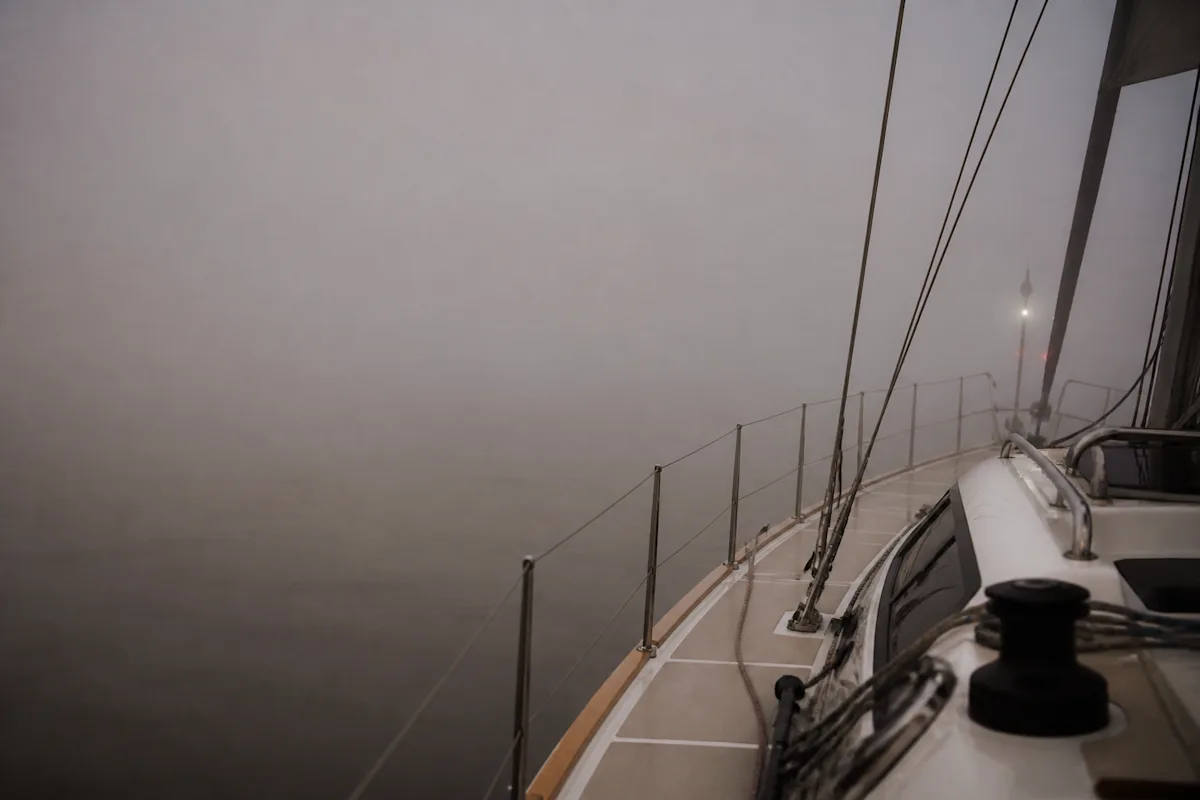
Fog navigation is the special routine used when visibility drops seriously. The maths of fog is ruthless: with 200 metres of visibility, two boats closing at 12 knots each have only seconds to react. That is why the first rule is not speed, but the lack of it.
The routine to follow is clear.
Fog routine
Reduce to a safe speed: The classic rule is to keep your speed to one at which you can stop within half the distance you can see.
See and be heard: navigation lights are switched on, and sound signals are made (under way by power, one prolonged blast every two minutes).
Electronics + ears: keep radar and AIS under active watch; but boats without an AIS signal - such as small craft and rowing boats - can only be picked up by ear, so ease the engine back to idle from time to time and listen.
Radar and AIS are great levellers, but they do not replace a proper lookout. In thick fog, the smartest move is often not to carry on navigating, but to anchor in shallow water away from traffic and wait it out; fog, like a squall, is usually temporary.
One task sentence for everyone on board: 'if you hear something, kill the noise and say so.' In fog, the most valuable information is who heard what.