What Is a Freshwater Tank and How Is It Maintained?
The boat’s potable and domestic water tank — the source of the “water smells bad” complaint, and a problem solved by one day’s maintenance each year.
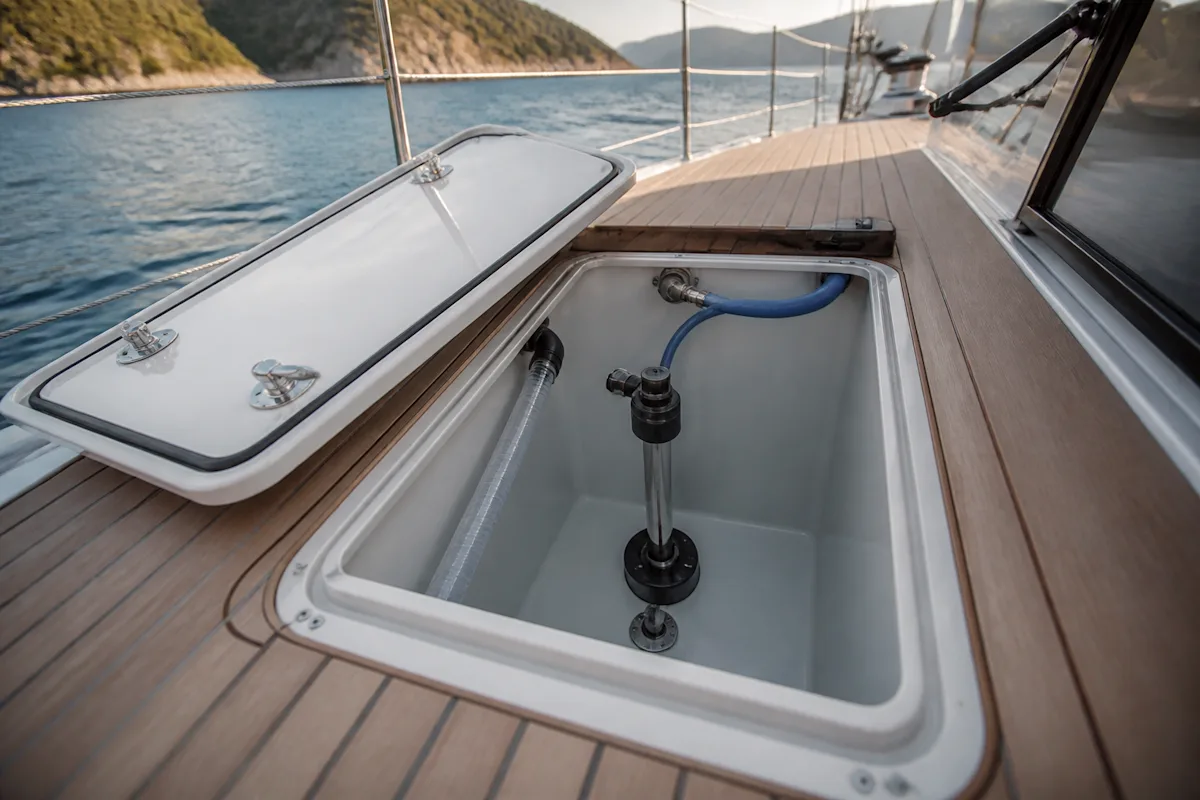
A freshwater tank stores the boat’s drinking and domestic water. Because it is out of sight, it is often neglected, but the taste and safety of the water from the tap depend directly on the tank’s condition. A dark, warm and damp tank can turn into a small laboratory producing biofilm and odour if it is not looked after.
The most common complaint is that the water smells of plastic or a swamp, and almost always the source is the tank or the hoses, not the water supply itself.
Maintenance programme
At the start of the season: drain the tank, fill it with a suitable disinfectant (tank cleaner), leave it to work, then rinse thoroughly; do not drink the first water.
Hoses and filter: the smell is often not in the tank but in ageing hoses or a blocked filter; the drinking-water filter should be replaced regularly.
Winter lay-up: the tank and pipework should be drained, or protected with drinkable (propylene) antifreeze; any stagnant water left over can both freeze and smell over winter.
Practical habit: always fill the tank from the same source, do not let the hose end touch the ground, and keep the filling funnel clean; contamination usually gets in during filling, not through fumes in the tank. On a boat left unused for a long time, “standing water” is the biggest cause of smell; draining the tank before you leave is the secret to fresh water on your return.