What Are Genoa and Jib?
The family of sails set forward of the mast — the larger one is called a genoa, the smaller one a jib; the numbers show the difference between them.
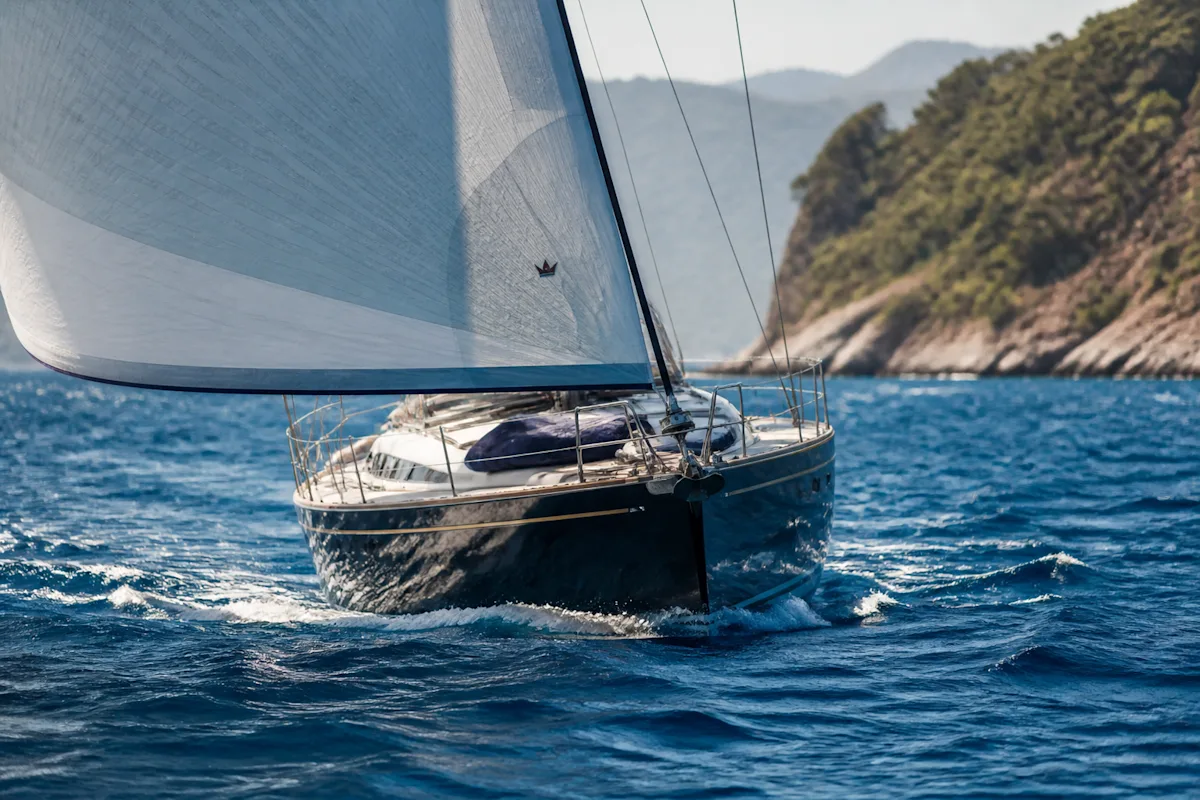
The headsail is the sail carried on the forestay, and it is named by size: the smaller cut that does not pass the mast line is called a jib, while the larger sail that extends aft of the mast is called a genoa. On a modern cruising yacht, the headsail is the equivalent of the engine; more often than not, it is the main driving force.
The percentage figure shows the sail’s size relative to the foretriangle. The table below sets this out.
Headsail percentages
Percentage | What it means |
|---|---|
%100 and under | Jib, small; for heavy weather and storm configuration |
%105-120 | Medium genoa; the right balance for most cruising boats |
%135 | Large genoa; power in light airs, reefing trouble in stronger winds |
%150 | Huge genoa; the territory of the light-wind racer |
The right size depends on where you sail: in the Aegean, with its fresh afternoon wind after a calm morning, a huge genoa soon turns comfort into constant reefing by the afternoon. Aegean practice: a genoa in the %105-120 range, plus a good furling system, is the right balance for most cruising boats.
UV strip wear is often overlooked: the strip that protects the exposed edge of a furled sail from the sun has a finite life, and once it fails, UV starts eating into the sailcloth itself. A headsail that has lost its shape and bags badly heels the boat over but does not drive it properly — like an engine with no fuel.