What Is an Isolation Transformer?
A transformer that transfers shore power to the boat without a direct physical link, using a magnetic field - the complete cure for galvanic corrosion and stray current issues.
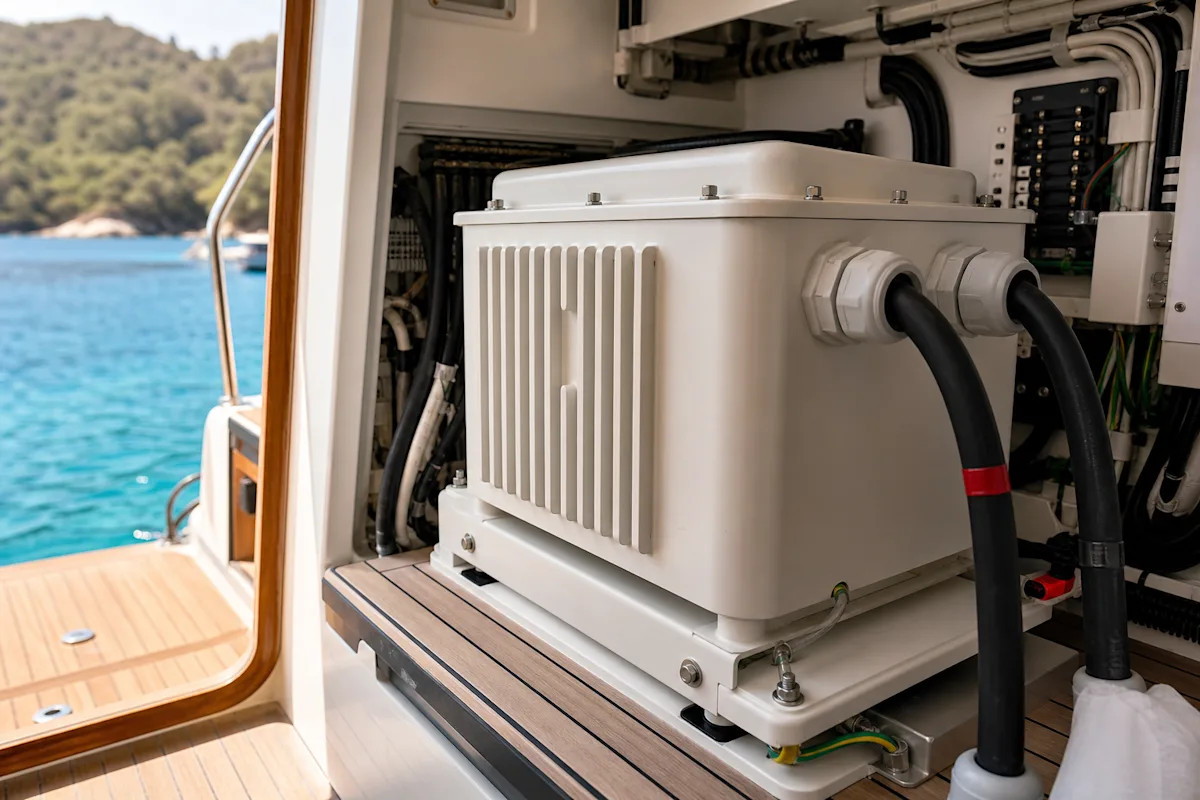
An isolation transformer completely separates the shore power supply from the boat’s own electrical system: power is transferred magnetically between two windings, so the shore earth never enters the boat. It is the next step up from a galvanic isolator.
The table below compares the two. Which one you need depends on how the boat is used.
Galvanic isolator - isolation transformer
Feature | Galvanic isolator | Isolation transformer |
|---|---|---|
How it protects | Series diode pack in the earth line; blocks DC | Magnetic isolation; removes the connection |
Scope | Blocks galvanic current | Galvanic current plus polarity / supply differences |
Size | Small | Heavy and bulky |
Cost | Low | High |
Best for | Boat on a short-term / seasonal berth | Boat left on shore power year-round, eating anodes, or with sensitive metals |
For a boat left on a marina berth for long periods, a transformer is the easiest way to sleep at night: leaks from neighbouring boats, the quality of the marina earth and pedestal polarity faults stop being your problem. Anode life returns to normal.
The main cost of the conversion is often not the transformer itself, but where to install it (significant space and weight). Don’t fall into the trap of thinking ‘the transformer is in, job done’: any faults inside the boat are independent of the transformer, so RCD/leakage protection is still essential.