What Are Lifejackets and Safety Harnesses?
A lifejacket keeps you afloat if you go overboard, while a harness-and-line arrangement stops the fall in the first place — two separate, complementary layers of personal safety.
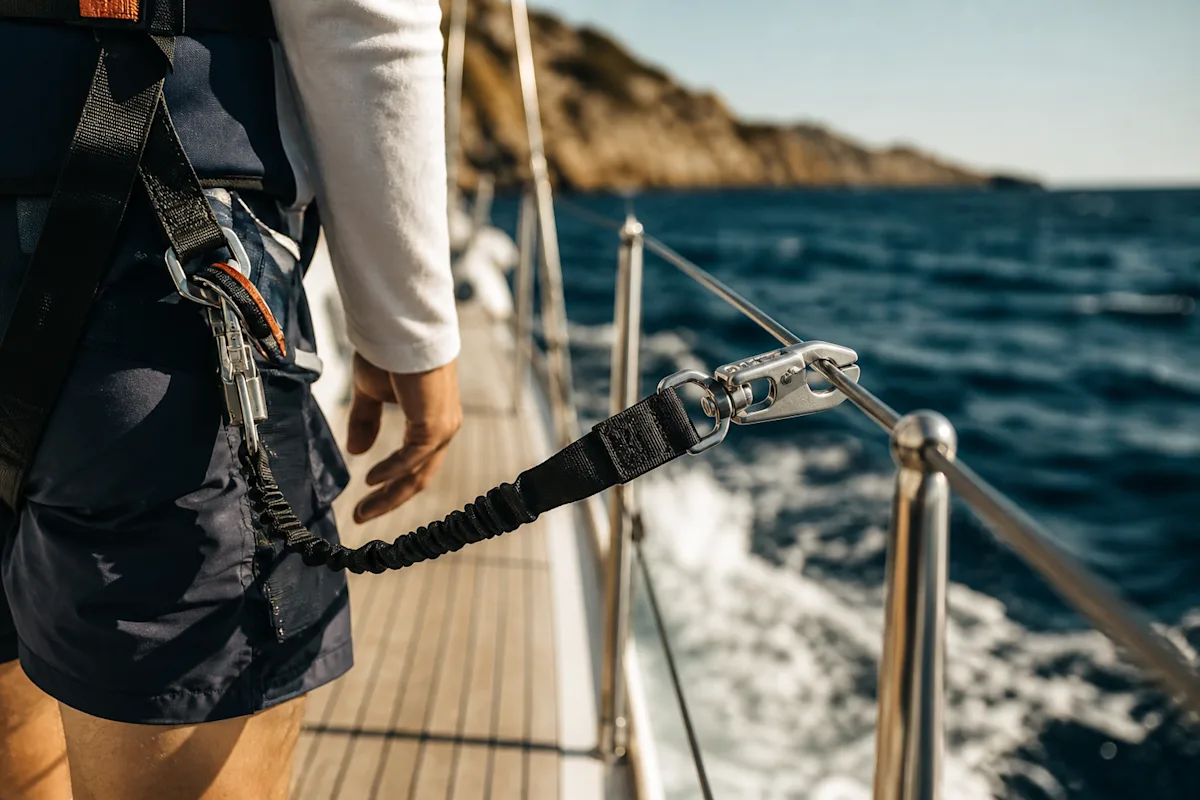
Personal safety has two separate layers: a lifejacket keeps you afloat if you go overboard, while a safety harness stops the fall in the first place. At sea, the order is clear: the best rescue is not falling in.
The table below sets out the gear.
Lifejacket and harness
Gear | Feature |
|---|---|
Foam lifejacket | No servicing, bulky, always ready |
Inflatable lifejacket | Comfortable, worn; CO2 cylinder and tablet need annual servicing |
Safety harness + jackline | Clips on and stops you going overboard |
Comfort equals use: the most expensive lifejacket in the locker is worth less than the simplest one that’s actually worn; that’s why inflatable lifejackets have become so common. But inflatable jackets do need servicing: check the CO2 cylinder weight, the tablet expiry date, and inflate it orally and leave it for 24 hours.
For cruising the Aegean, a realistic standard is: the right-sized inflatable lifejacket for everyone, harness plus rigged jackline for night watches and rough weather, and 'lifejacket always on deck' for children and non-swimmers. The most valuable habit costs nothing: everyone knows where the jackets are kept, and they’re shown during the guest briefing.