What Are Lighthouse Characteristics?
Each lighthouse has its own light rhythm - the language behind the chart code ‘Fl(2) 10s’ that tells you which light it is at night.
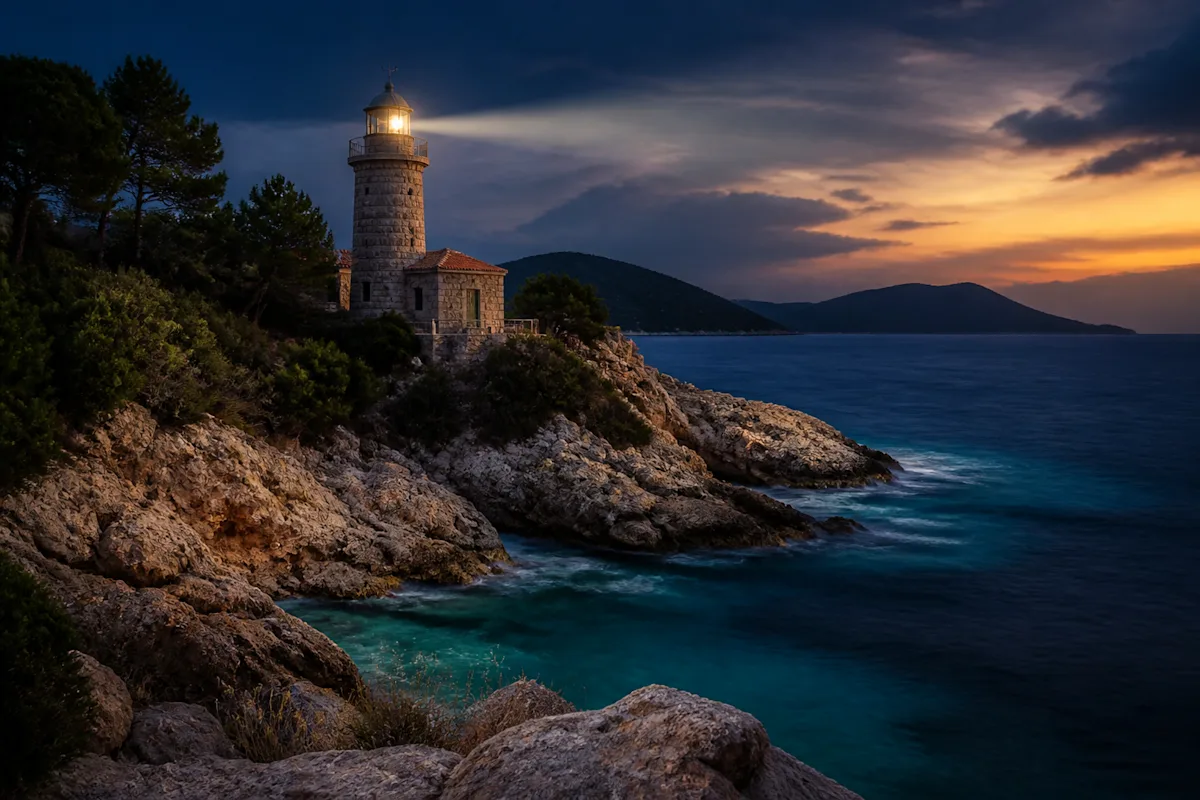
A lighthouse characteristic is the standard code for a navigational light’s rhythm. It appears beside each light on the chart and helps you identify it at night. Matching the rhythm you see on the horizon with the chart code gives you a definite answer to the question, 'which light is this?'
The table below sets out the most common codes.
Lighthouse codes
Code | Meaning |
|---|---|
Fl (flashing) | Flashing: brief light, long darkness |
Fl(2) 10s | Two flashes every 10 seconds |
Iso | Equal periods of light and darkness |
Oc (occulting) | Long light, brief darkness |
Q (quick) | Quick flashing; the language of cardinal buoys |
F | Fixed light |
Colour is part of the code too (R red, G green, W white). When GPS is wrong or unavailable, the lighthouse tells you where you are at night. Guessing without counting the rhythm is the classic mistake: two lights in the same area can have different patterns.
The memory hook: flashing warns, fixed guides, quick flashing indicates direction; the detail is always written on the chart. One evening, counting the rhythm of the marks at the entrance to Göcek Bay and matching them to the chart is half the confidence needed for night navigation.