What Is Marine Air Conditioning?
A compact air-conditioning system that dumps heat into seawater; unlike a house unit, it lives with the sea, and most faults happen on the water side.
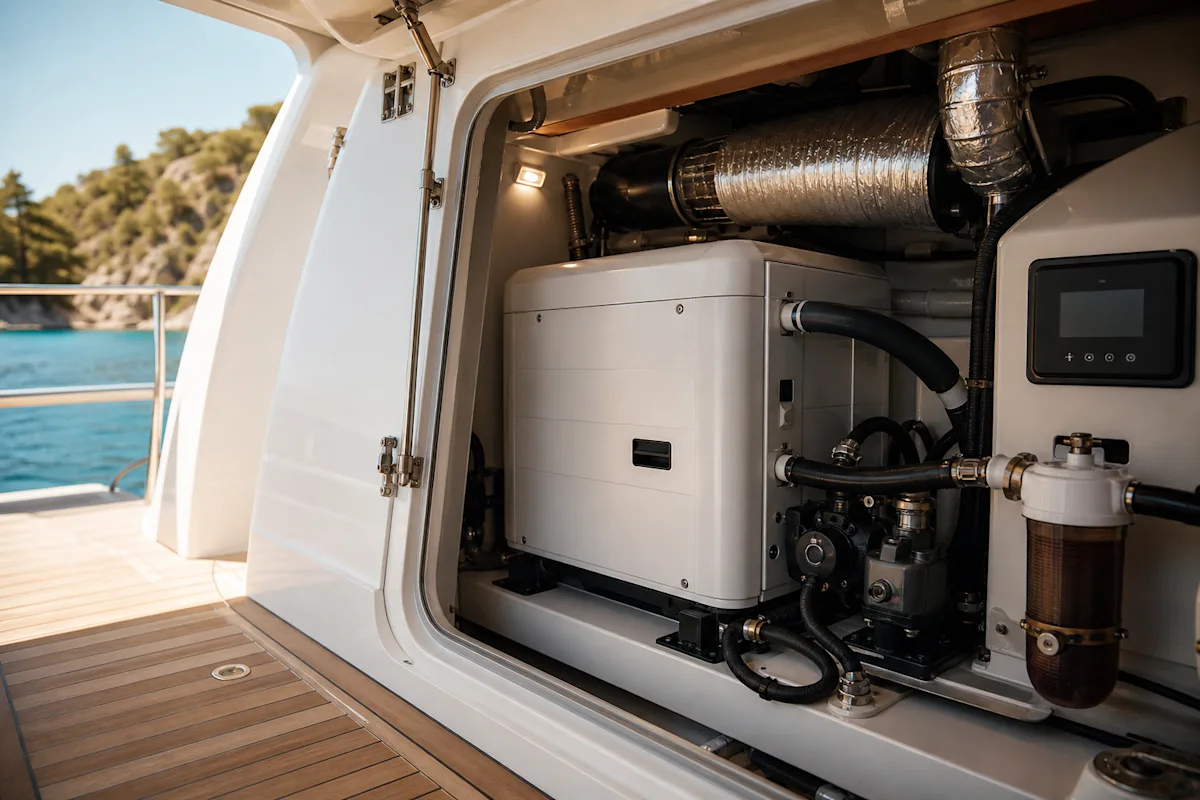
Marine air conditioning is a system that rejects the condenser heat to seawater circulated by a pump, rather than to air via an outdoor unit: it works through the seacock, strainer, circulation pump, A/C unit and overboard discharge line. In Göcek in July, it's the only real answer for cabin comfort.
The fault stats are clear: most complaints are on the seawater side, not the gas side. The table below shows the most common problems.
A/C faults (water side)
Symptom | Likely cause |
|---|---|
'High-pressure' trip | Reduced water flow: strainer basket, line, pump |
Drain overflow, water in the cabin | Condensate tray drain blocked |
Musty smell at the start of the season | Evaporator and ducting left wet and clogged through the winter |
At anchor, air conditioning effectively means a generator, or a sizeable lithium-inverter system; its appetite for power is significant. The seasonal routine is simple: clean the water strainer once a month, check the overboard flow every time you start it, and flush the system through with fresh water at the end of the season.
When winterising, draining the water circuit is essential in freezing conditions; more often than not, what fails before the compressor is the pump body frozen solid.