What Is Marine Antifreeze?
A story of two antifreezes, two different jobs — and why the pink liquid used to winterise water systems must never be confused with the chemistry in the engine’s closed circuit.
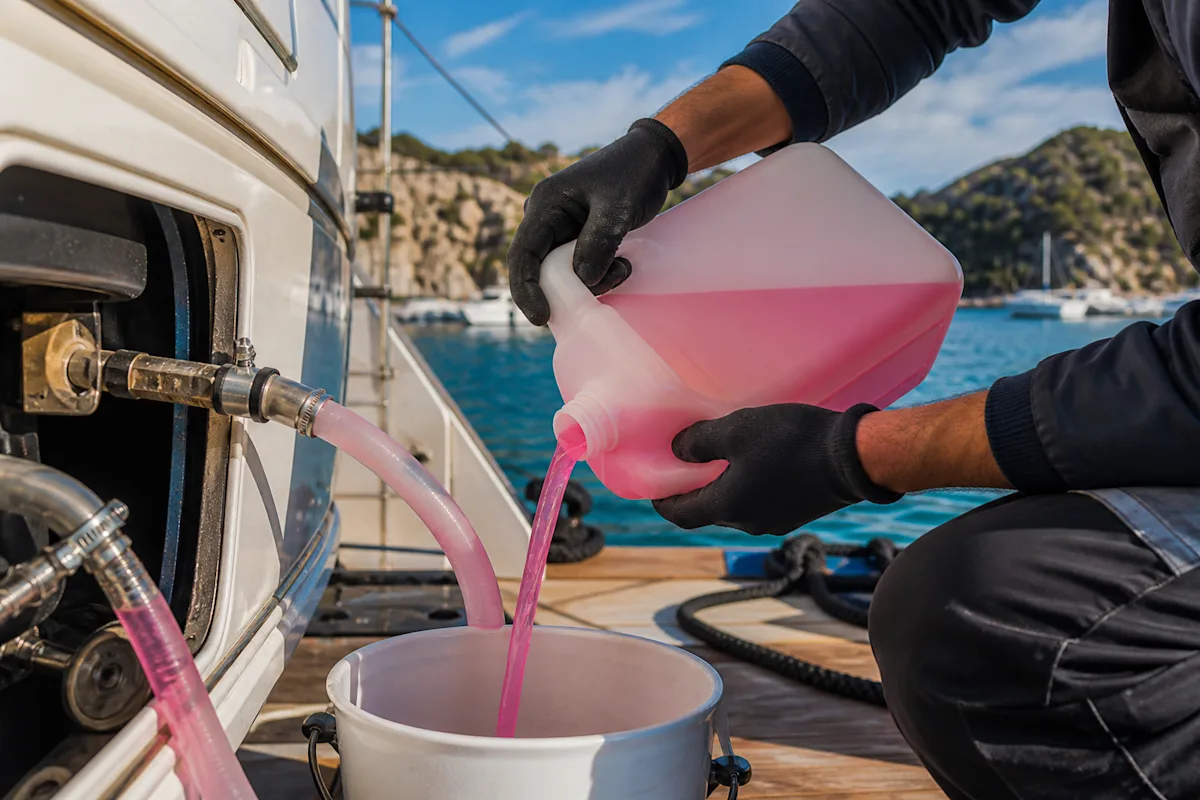
There are two different antifreezes on a boat, and mixing them up is expensive either way. The table below separates them.
Two antifreezes
Antifreeze | Where used | Notes |
|---|---|---|
Ethylene glycol (engine antifreeze) | Closed cooling circuit, year-round | Freeze and corrosion protection; toxic |
Propylene glycol (winterising, pink) | Fresh water, toilet, seawater circuits | Food-contact grade; used for winter lay-up |
Mixing them is harmful in both directions: putting ethylene glycol into a drinking water line is a health hazard, while putting the “pink” product into a closed engine circuit weakens corrosion protection. Engine antifreeze mixes with water in a set ratio (typically 50%); the idea that “neat is better” reduces heat transfer.
Winterising antifreeze, on the other hand, is pumped through undiluted until all water has been displaced from the system; if it is diluted by any remaining water, the level of protection drops. Colours vary by manufacturer — read the label, not the colour. The additive package in engine antifreeze also depletes over time; it is changed on a calendar basis (typically 2-5 years).