What Is Marine Engine Oil?
A short, practical guide to choosing oil for a marine engine — from viscosity numbers to change intervals.
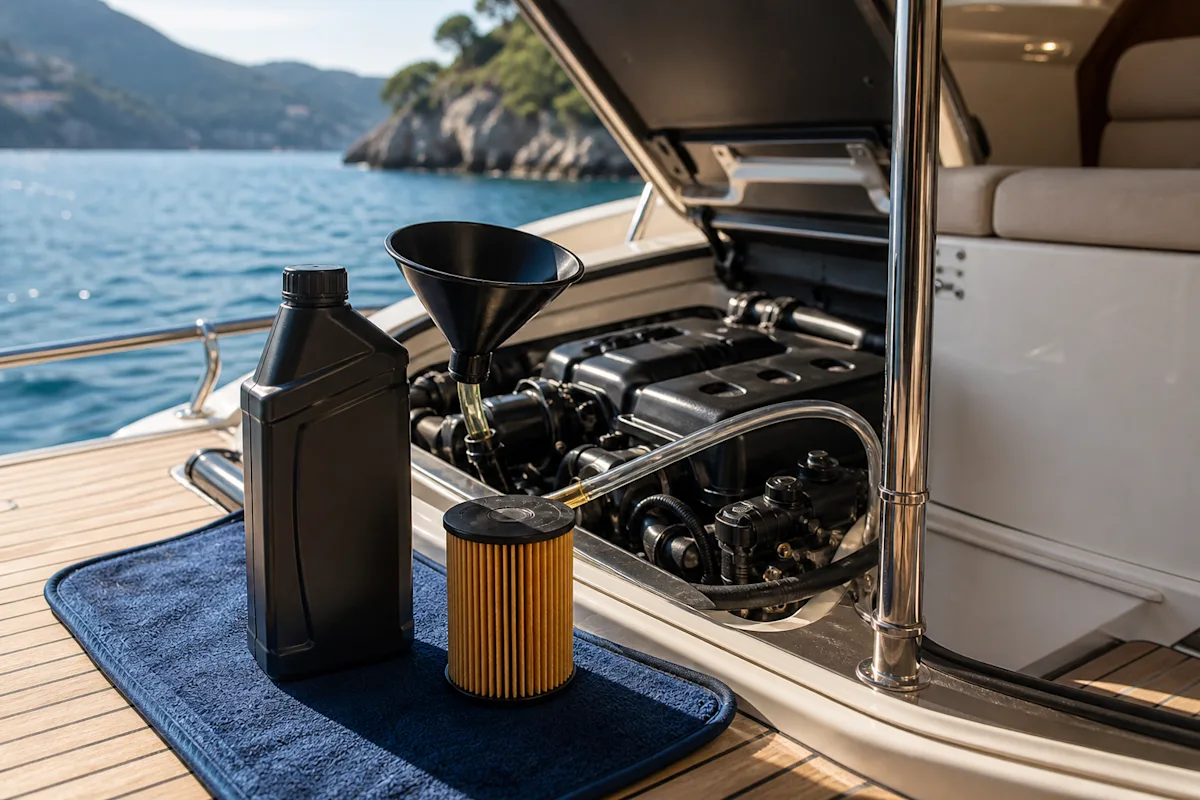
Oil choice comes down to three labels: viscosity (e.g. 15W-40, how freely it flows in cold and hot conditions), service class (API/ACEA, with C-rated classes for diesels) and the maker’s own approval. Marine diesels mostly live in the 15W-40 range; petrol outboards, on the other hand, need their own FC-W certified oil.
A marine engine’s oil life is different from a land engine’s: it may run for few hours but stand idle for long months. It is not only hours that age the oil, but time itself (moisture and acid build-up).
Rules and habits
The marine rule is a simple pair: the manufacturer’s hour interval or once a year, whichever comes first.
The ‘we hardly used it’ fallacy: Oil that has only done 20 hours but is 14 months old is still spent; the calendar runs out before the clock does.
Oil level check: a dipstick check before every day’s passage takes 30 seconds; a rising level (fuel/water contamination) is just as important a warning as a falling one.
A change before winter is also well worth it: let the engine face the winter with clean oil, not acidic oil. Car oil does not go in an outboard. And at the annual change, keeping a bottle sample of the old oil for analysis gives you the engine’s health report for free.