What Is Marine Mastic (Sikaflex)?
The chemistry behind every sealing and flexible bonding job on a boat — a clear guide to “which tube goes where?”
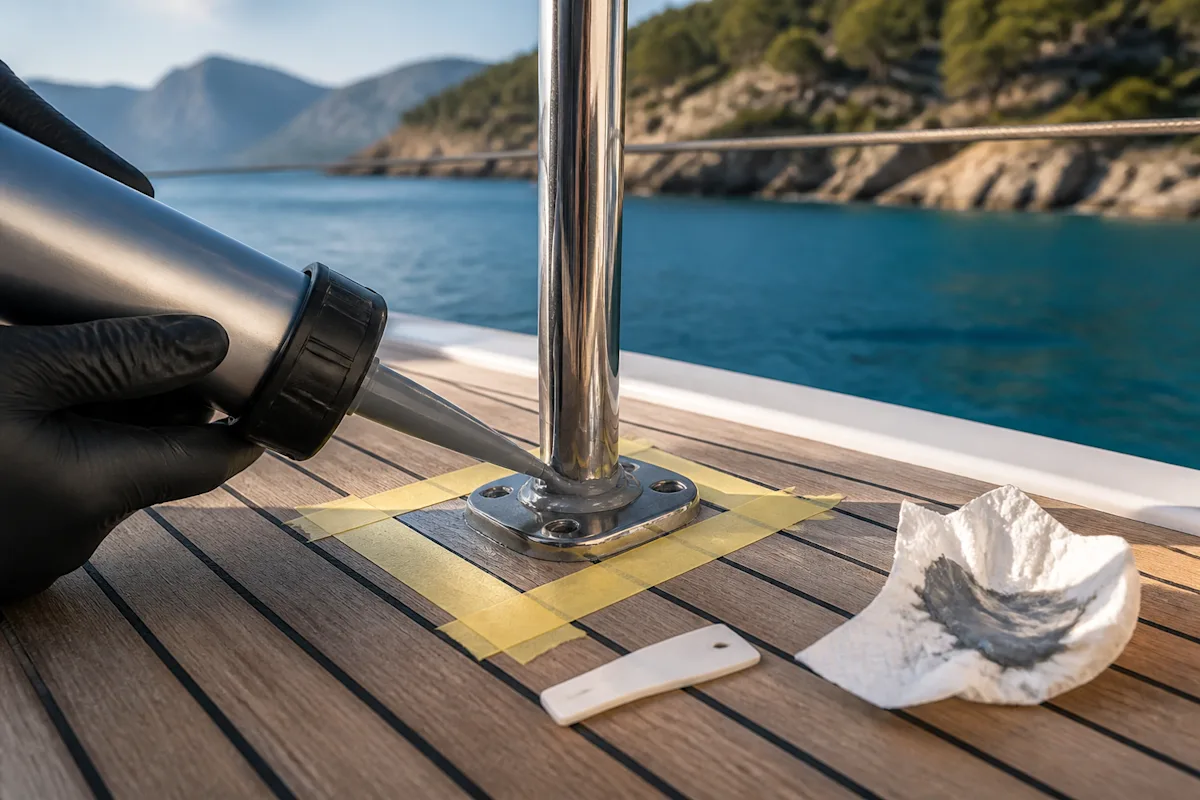
Every sealing and flexible bonding job on a boat has its own chemistry, and using the wrong tube causes problems both ways. The table below answers the question “which tube goes where?”.
Sealant types
Chemistry | Properties | Where to use |
|---|---|---|
Polyurethane (Sikaflex-type) | Strong adhesion, flexible | Fittings, hardware installation, structural flexible bonding |
MS polymer (hybrid) | Strong, easy to apply, UV-resistant | A modern all-round choice |
Marine silicone | Poor adhesion, friendly to plastics | Removable gasket-type jobs such as acrylic hatch glass |
The wrong tube creates two kinds of mistake: polyurethane where something needs to come apart later (and years on you end up breaking the hatch glass to remove it), or silicone where the joint carries load (and it leaks at the first winter). There is also an invisible rule: silicone leaves a “ghost film” on the surface, and afterwards neither paint nor any other sealant will stick properly.
Minimum three-tube kit for the locker: MS polymer (general use), polyurethane (hardware), marine silicone (plastic/glass gaskets); plus one simple rule: before you start, ask “will this need to come apart one day?” If the answer is yes, use polyurethane only where appropriate. Polyurethane reaches full strength over several days; “apply it and straight into the water” shortens its life.