What Is Towing at Sea?
The technique and etiquette of moving a disabled boat to harbour - from where the towline is secured to the talk about a 'salvage fee', everything you need to know.
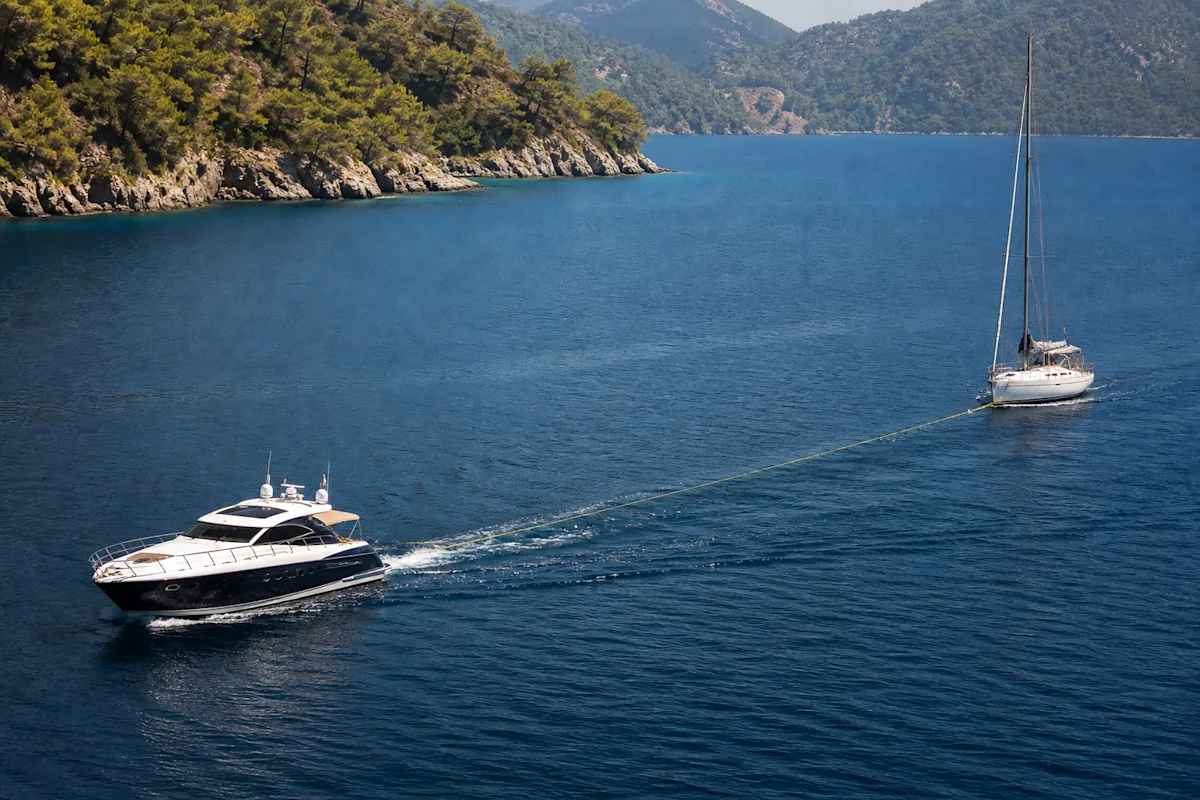
Towage is when one boat pulls another by a towline. It has two sides: the technical and the legal/financial. On the technical side, the key points are a long, stretchy line (nylon absorbs shock loads), secure attachment points, and slow, steady speed.
A badly secured towline can rip out a cleat; broken gear can fly back like a bullet, so no one should stand in the line of the tow.
Technique and law
Towline: long nylon, fastened to strong points (winch base, a pair of cleats, or on a yacht a proper harness at the mast step); in a seaway, length is set according to the wave period.
No-steering tow turns: someone must remain at the helm of the boat being towed and follow the towing boat’s track.
Salvage talk: offshore, 'salvage' can mean a serious fee; before the tow starts, agree clearly and briefly whether it is assistance or a paid tow.
Decision-making in engine failure: if it is a short distance in calm water, help from a neighbour is reasonable; offshore, in rough weather, or with a valuable boat, a professional service is safer and avoids arguments later. Keep on board: a long nylon towline, your insurance policy’s towing clause, and the local towing service number.