What Is a Morse Control Cable?
The steel-cored cable that carries the control lever’s movement to the engine - a part that stiffens over the years and always seems to fail at the worst possible moment.
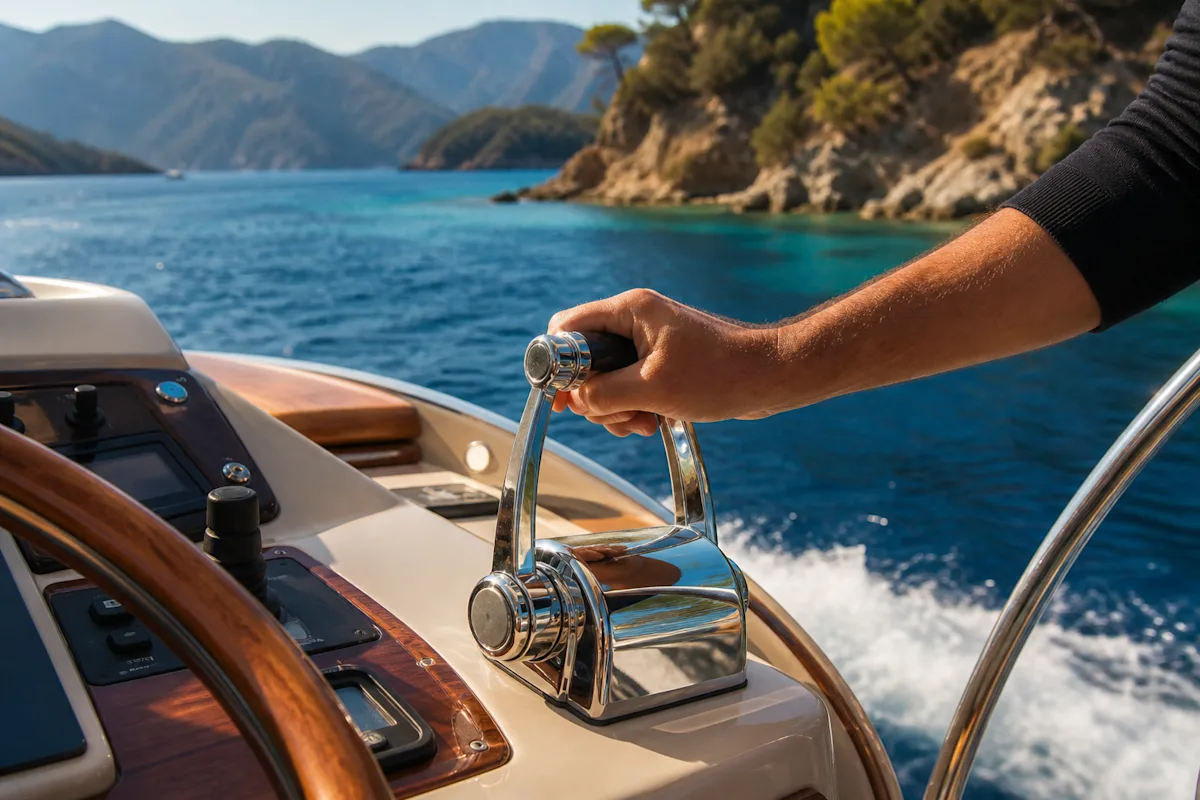
A Morse control (push-pull cable) is the mechanical system that transfers the movement of the cockpit lever to the engine throttle and gearbox via a steel core sliding inside an outer sheath. Although modern larger engines have moved over to electronic controls, the vast majority of boats still run on cable operation.
It is a quietly ageing part: moisture that seeps into the sheath over the years oxidises the core and makes movement heavy; the lever gets stiffer each year and you simply get used to it.
Stiffness and replacement
Increasing stiffness: internal corrosion in the cable; lubrication may buy you a short while, but the real fix is replacement - it is a cheap part that can cause an expensive failure.
Maneuvering risk: a cable that parts at the exact moment of manoeuvre can leave throttle or gear control lost suddenly, or a gear cable can jam and leave the boat unable to go astern in the marina.
Poor gear engagement: a clutch that only half engages will wear through friction; the adjustment must be perfectly in sync between the gearbox lever and the cable.
The season-start check is simple: with the engine off, does the full sweep of the lever feel smooth, and do the movements at the engine end match up properly? Cables over five years old should be treated with suspicion; the phrase 'the lever is a bit stiff but it works' is not a reason to put this one off, it is a reason to replace it.