What Are Navigation Lights?
A boat’s ID card at night at sea - the art of reading who is going where by red, green and white lights.
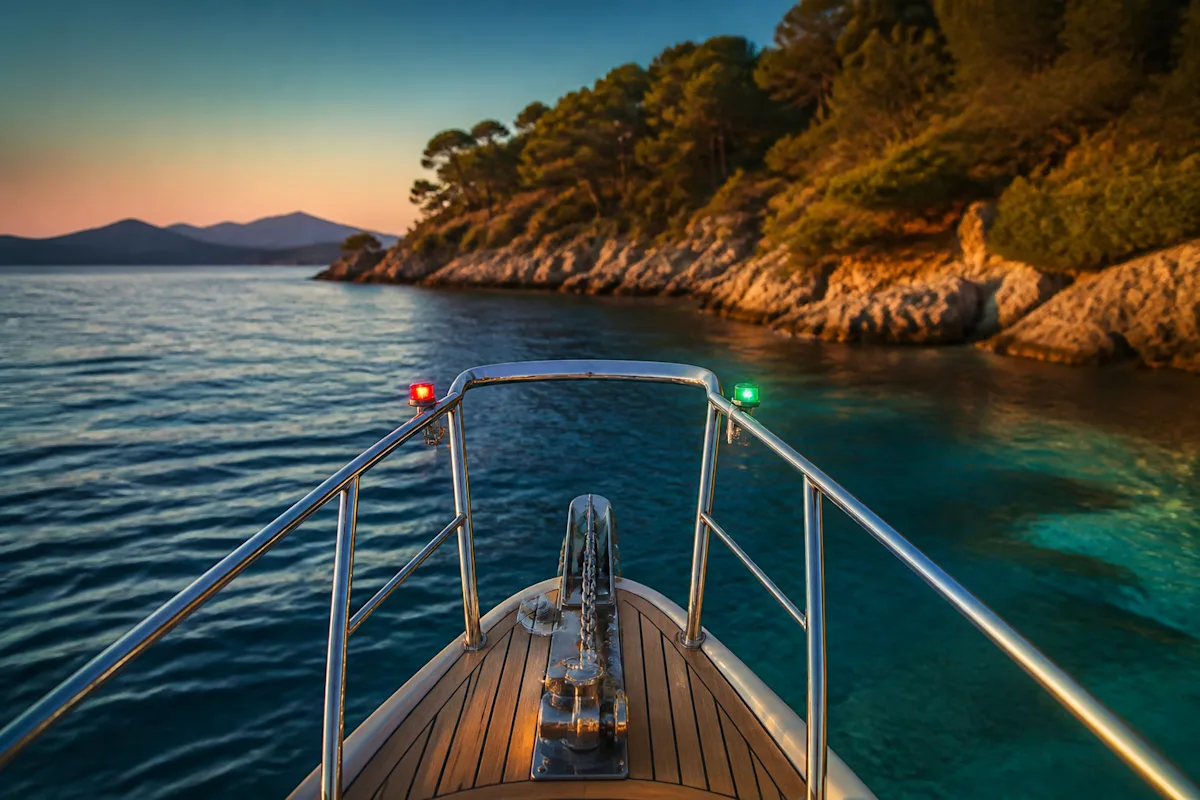
At night at sea, boats recognise each other by their lights. The basic setup is: red port and green starboard side lights, a white masthead light facing ahead when under power, and a white stern light facing astern. The combination tells you the type of vessel and the direction she is heading.
The table below shows what each light means; it is one of the most important things to memorise for night sailing.
Light-reading table
Light you see | What it means |
|---|---|
Single white | At anchor, or you are looking at the boat from astern |
Red + green together | The boat is heading straight towards you, so take it seriously |
Green | You are looking at her starboard side, and you will usually have the right of way |
Red | You are looking at her port side, so take the situation seriously |
Making sure your own lights are working properly is just as vital: the wrong light, or no light at all, can make you effectively invisible in someone else’s calculations, or look like 'something else'. Once a season, all lights should be switched on and checked visually from outside; a panel light coming on does not mean the light is actually working on deck.
For a boat lying overnight in a bay, a 360-degree white anchor light is both a legal requirement and a lifeline for neighbouring boats manoeuvring at night. A 30-second light check before heading out after dark is always cheaper than a midnight surprise.