What Is Oil Analysis?
Laboratory analysis of used engine oil - a powerful, little-known marine diagnostic that reads wear inside the engine without opening it.
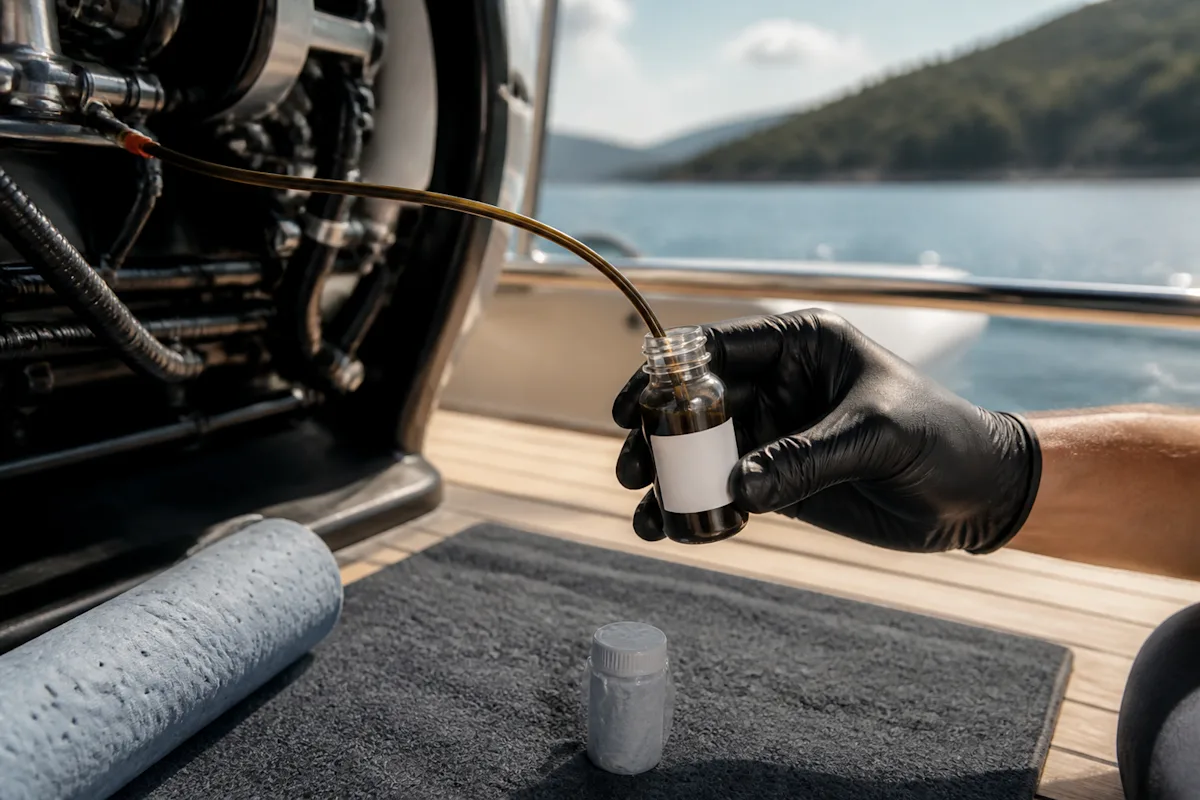
Oil analysis is the laboratory examination of a used oil sample taken from the engine: wear metals, contaminants and the condition of the oil itself are all reported. Each metal has a known source. It is the engine’s blood test: a compression test shows the mechanical state, while oil analysis shows the trend.
The table below explains what the metals and contaminants indicate.
What the analysis tells you
Finding | Source / meaning |
|---|---|
Iron | Cylinder and liner wear |
Copper | Bearing wear |
Aluminium | Piston |
Silicon | Dust ingress (air filter) |
Sodium | Seawater contamination (heat exchanger/elbow) |
Fuel dilution | Injector or combustion issue |
The two most valuable uses are a pre-purchase survey for a yacht (even a single sample can flag red issues such as water ingress) and annual monitoring of your own engine; the real value is in the trend, and a year-on-year rise in iron says “something is wearing” before a breakdown arrives.
A trace of seawater in the oil (sodium) is an early warning of a leaking heat exchanger or elbow; this is a finding that says “find it”, not “let’s keep an eye on it”. Keeping a bottle of oil from each change and having it analysed once a year builds a proper health record for the engine.