What Is Posidonia (Seagrass)?
The dark green meadows at the bottom of the bays — the Mediterranean’s oxygen factory, keeper of clear water, and a forest you must protect when anchoring.
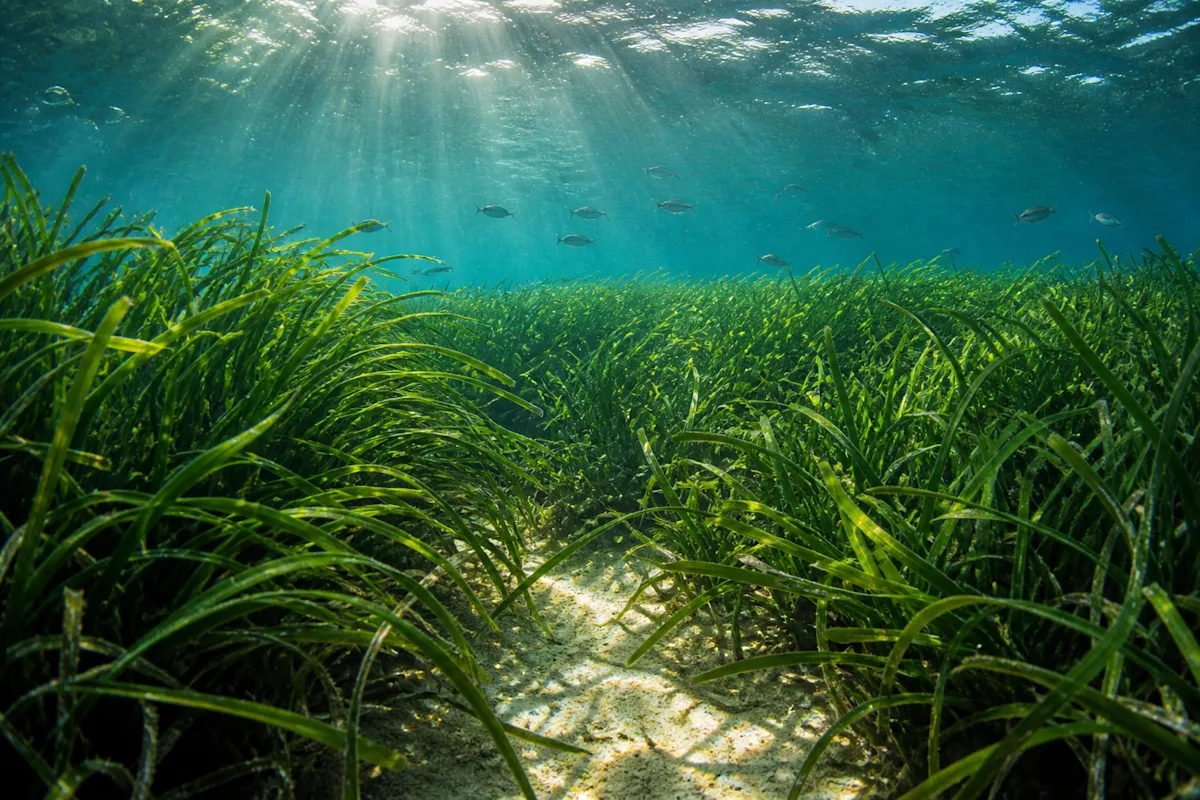
Posidonia is a seagrass species native to the Mediterranean (not seaweed): it forms broad meadows on shallow sandy seabeds. It is a cornerstone of the ecosystem, producing oxygen, providing nursery grounds for fish, and preventing seabed erosion. It grows very slowly; a square metre of meadow torn up can take decades to recover.
The main point of contact for boaters is anchoring: in Posidonia, an anchor and chain both hold badly (the roots stop the flukes biting into the sand, which is why dragging is so common) and leave a lasting scar.
Göcek practice
Read the colour: areas that look dark green-brown from the surface are usually seagrass, while pale turquoise bands are sand; anchor in the lighter patches (polarised sunglasses help).
Look for a sand patch: an anchor holds far better in sand; finding a sand patch is not just good environmental practice, it is good seamanship.
Use a mooring buoy if there is one: in protected bays where a buoy/mooring system has been set up, anchoring there out of habit is unnecessary and in some places is fined.
If you bring up a black, rooty clump on the anchor, it shows you were in seagrass; next time, remember the colour read. These three habits help protect both your anchor holding and the clarity of the water you swim in — both are in your interest.