What Is Right of Way at Sea (Collision Avoidance)?
A boat owner’s plain-English summary of the international collision-avoidance rules — and the key fact that the main rule is ‘don’t collide’, not ‘be right’.
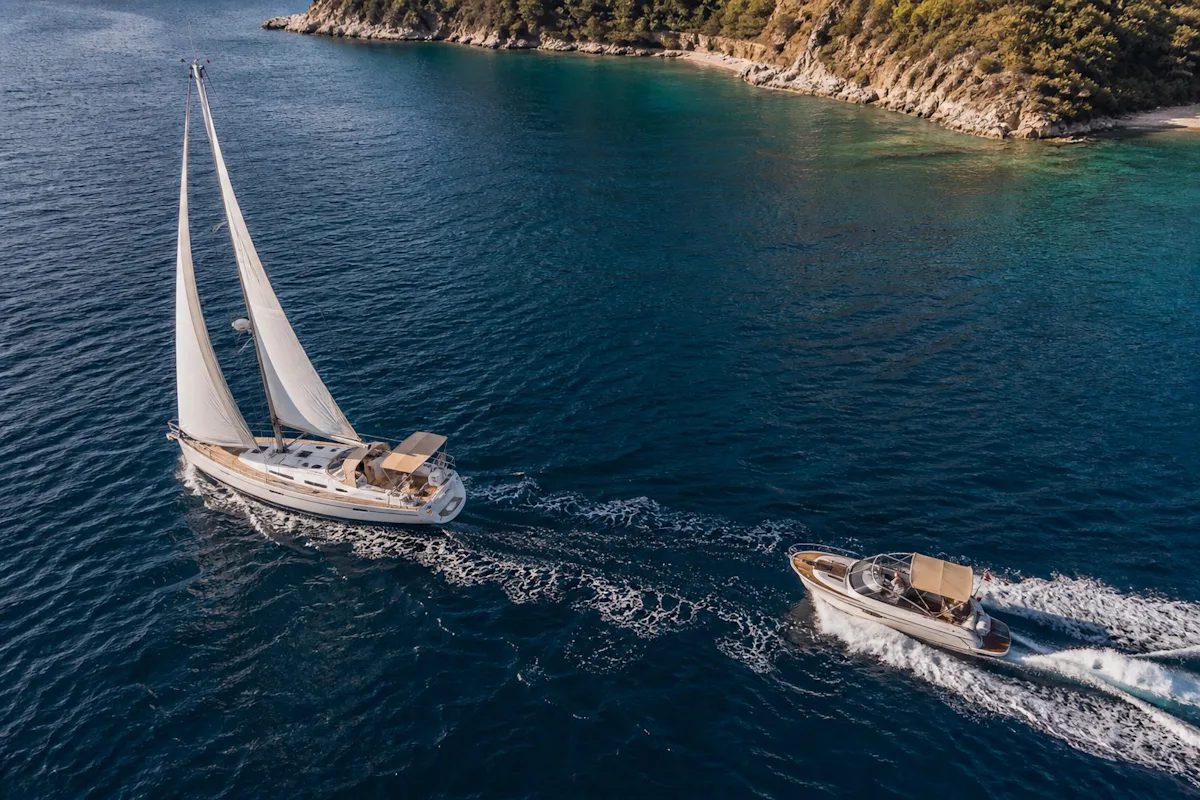
The rules of right of way at sea can look complicated, but for everyday boating you only need to know a few situations. Above all the rules sits one overriding principle: even if you have the right of way, you must do everything possible to avoid a collision. The words ‘I was in the right’ do not soften the blow in an accident report.
The table below shows the most common situations, who should give way, and the rule behind it.
Who gives way to whom
Situation | Who gives way | Rule |
|---|---|---|
Two power-driven boats meet | Both turn to starboard | Keep to the right |
A vessel is approaching from your starboard side | You give way | She is the ‘stand-on’ vessel; you are the give-way vessel |
You are overtaking from astern | The overtaking vessel gives way | Even a sailing boat must give way if it is overtaking a power-driven vessel |
Power-driven and sailing vessel | Normally the power-driven vessel gives way | But a sailing boat under engine is treated as power-driven |
Large vessel in a narrow channel | In practice, you keep clear | Ferries and tankers cannot easily manoeuvre |
The second principle, above the rules, is early and obvious action: when giving way, small late corrections only confuse the other skipper. A clear 20-30 degree turn made early takes the tension out of the situation.
The bearing rule is just as vital: if the bearing of an approaching vessel (the direction it lies from you) does not change over time, you are on a collision course. Decisions are made by bearing, not by looking. And the last word is always the same: the only case won at sea is the one that never goes to court.