Sailcloths: What Are Dacron and Laminate?
The answer to what a sail is made from - choosing between Dacron’s durability, laminate’s shape-holding, and membrane’s performance.
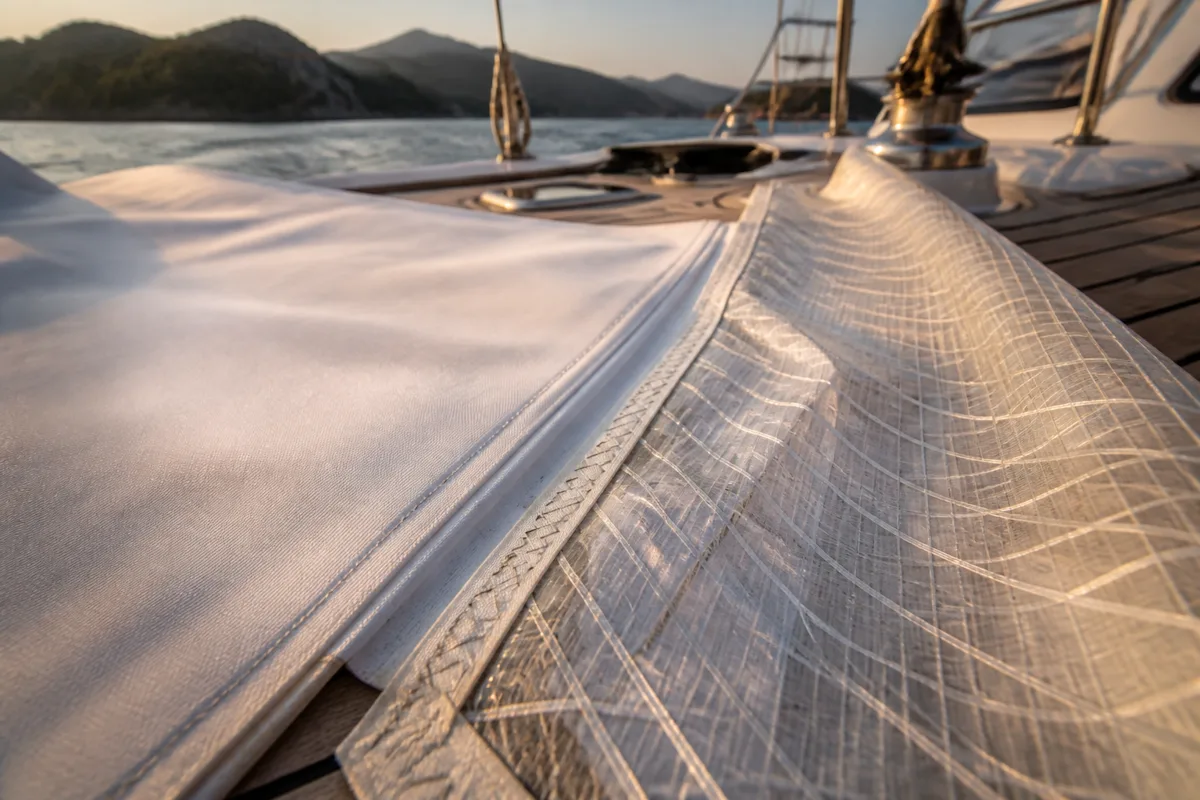
A sail is an aerofoil, and what it is made from determines its service life. As the cloth ages, the aerofoil shape goes out of trim and the sail becomes the classic case of ‘there, but not really there’: the boat heels over, speed never arrives, and the helm gets heavy.
The table below sets out the main cloth types.
Sailcloths
Cloth | Characteristics | Best for |
|---|---|---|
Dacron (woven polyester) | Hard-wearing, easy to repair, sensibly priced | The classic cruising sail |
Laminate | Light, holds its shape well; shorter life and limited UV tolerance | Cruising/club racing owners chasing performance |
Membrane | Built as one piece to a load path map | Top-end, serious performance |
Watch shape death: a sail with a bagged-out foot and a full luff may still look sound, but aerodynamically it’s effectively retired. Dacron can look ‘fine’ for years, yet lose its shape long before that; laminate holds shape better, but ages with the calendar.
For cruising, the balance is straightforward: a well-cut medium-weight Dacron sail, or a cruising-grade laminate, plus regular sailmaker checks. Buying note: judge a boat’s age by the engine hours, but judge a sail’s age by its shape; a 15-year-old original sail described as ‘hardly used’ is often a replacement item waiting to happen.