What Is a Sandwich Hull?
A structure with a light core (balsa/foam) sandwiched between two fibreglass skins - the secret to stiffness and low weight, and the hiding place of the most insidious problem if water gets in.
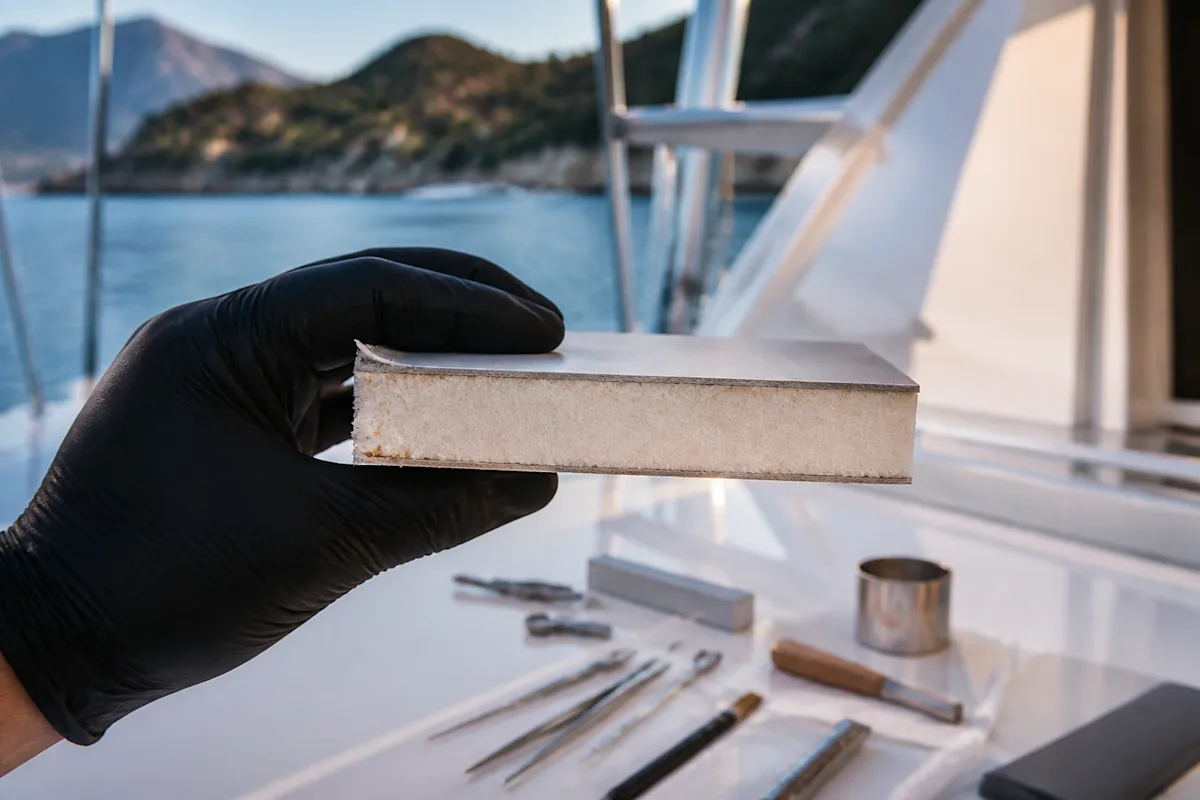
A sandwich structure bonds a light core (balsa wood, PVC or PET foam) between two layers of glassfibre: you get a much stiffer panel for the same weight. Decks are sandwich on almost every boat; on many modern boats, the hull above the waterline is too.
It is elegant engineering, but it has one major weakness: water getting into the core. If any hole in the deck (screw, fitting, winch base) is not properly sealed, water reaches the core and the balsa quietly rots away over the years.
Signs and protection
Softening deck: an area that flexes under pressure and creaks is the classic late sign of a wet core.
Moisture ring around fittings: a rising reading on the moisture meter around a fitting points to the leak.
Correct drilling practice: any screw put into a sandwich panel without the core being sealed with epoxy first becomes next year’s moisture spot (drill, fill, re-drill).
Nothing is visible from outside; once the deck starts to soften, the job is already serious. For a purchase, a deck moisture map is one of the strongest bargaining tools, because repairing a wet core is among the most demanding items on a boat.