What Is a Shunt and Battery Monitor?
A measuring shunt and display that count every amp in and out of the battery — answering “how full is the battery?” with figures, not guesses.
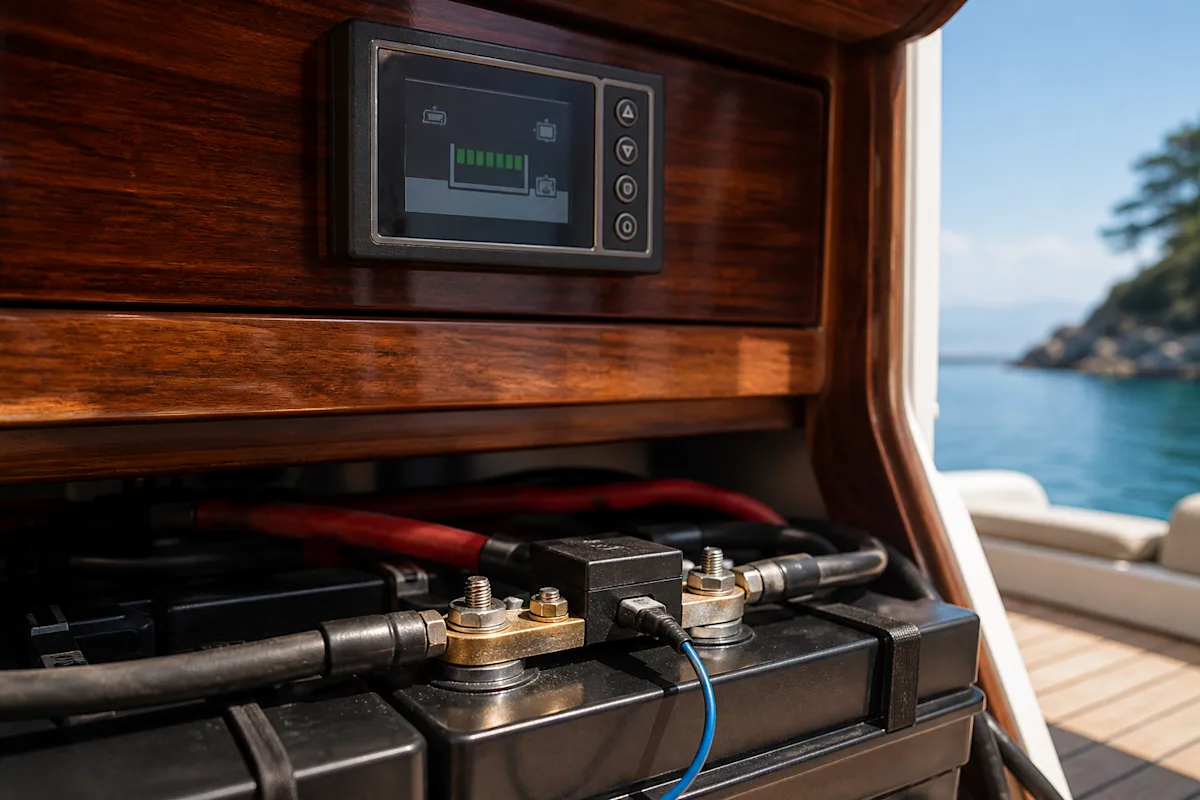
A shunt is a precision resistor fitted in series on the battery negative terminal; all current passing through it is measured. Using this data, the battery monitor counts amp-hours in and out, and shows the true state of charge, live consumption and estimated remaining time.
That is the key difference from a voltmeter: voltage is instant and can be misleading under load, whereas a monitor keeps the books. It is the device that settles the argument over energy; “is the fridge drawing too much, or the solar not putting enough back?” is shown on the screen in numbers.
Installation and habits
Everything must pass through the shunt: any stray consumer connected directly to the battery (classic example: an automatic bilge pump) sits outside the count and creates “mystery” discharge; every negative cable must route through the shunt.
Synchronisation: if the monitor’s 100% reference is not regularly reset with a full charge, the percentage reading will drift.
Correct capacity: the amp-hour figure entered into the unit should reflect the bank’s real, aged capacity.
On a boat with a monitor, everyone starts living by the percentage. Best habit: a quick check with the morning coffee, then again at night — how many amp-hours have gone? That single number is the daily pulse of battery health. On lithium installations, a monitor is not optional; it is a natural part of the system.