What Is Stainless Steel Maintenance?
The science behind brown marks on guardrails and fittings - why stainless steel is really ‘stain-resistant’ and stays bright with proper care.
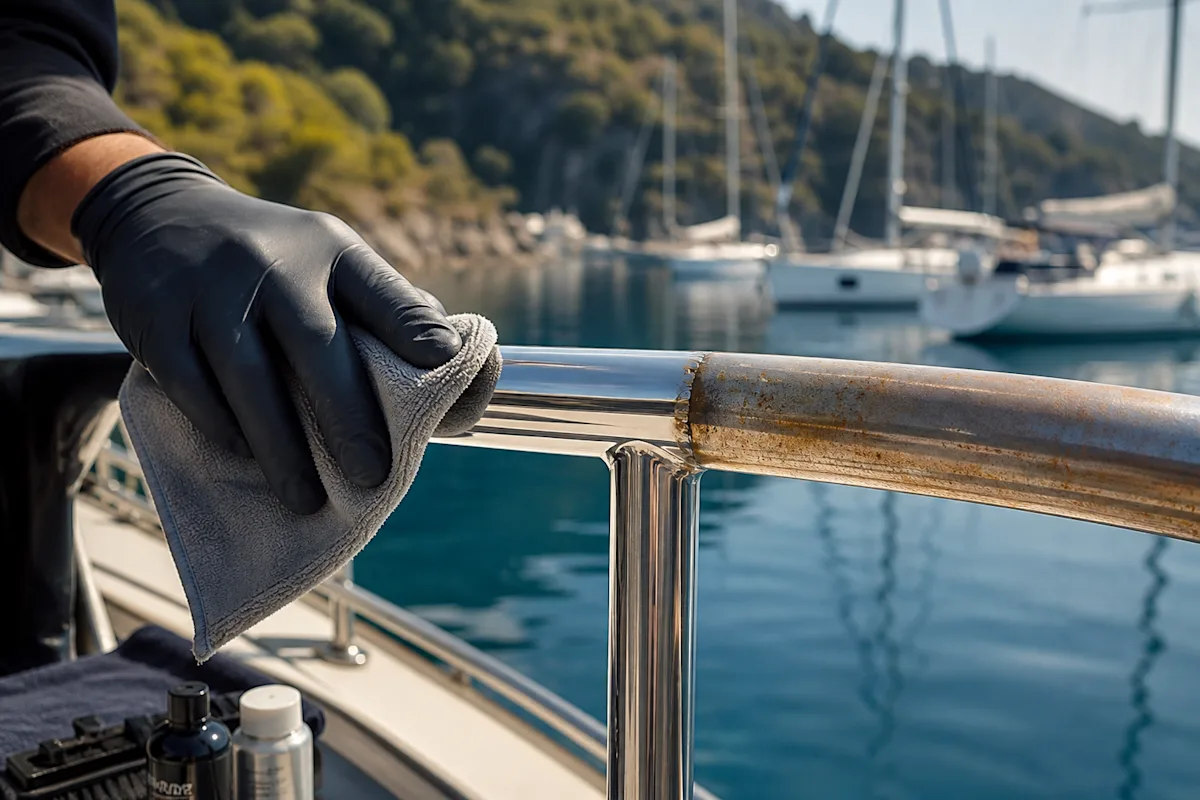
Stainless steel is protected by an invisible chromium oxide film on the surface; in the marine environment this film is broken down in places, and surface brown staining known as tea staining begins. 316 grade is standard on a yacht.
Two different issues sit under one heading. The table below separates them.
Cosmetic or structural
Issue | What |
|---|---|
Tea staining (surface brown marks) | Cosmetic: dealt with using fresh water and a passivation gel |
Pitting, crevice corrosion | Structural: around clamps, under fittings and at welds; to be taken seriously |
Poor-quality fitting | 304 / unknown-grade accessories can bleed rust into the surrounding area |
The cosmetic side is straightforward: do not let salt dry on the surface. Never use wire wool, as it contaminates with carbon steel and makes the staining worse. On the structural side, wherever you see a rust ‘run’, do not stop at wiping the mark away - find the source.
The routine is twofold: regular fresh-water washing down, especially after southerly wind days, and once or twice a season a stainless-steel cleaner and protector. Safety exception: rust marks around guardrail terminals are not cosmetic; inspect closely and, if in doubt, replace.