What Are Stays, Forestays and Shrouds?
Steel wires that hold the mast up from fore, aft and sideways — if even one gives way, the mast can come down.
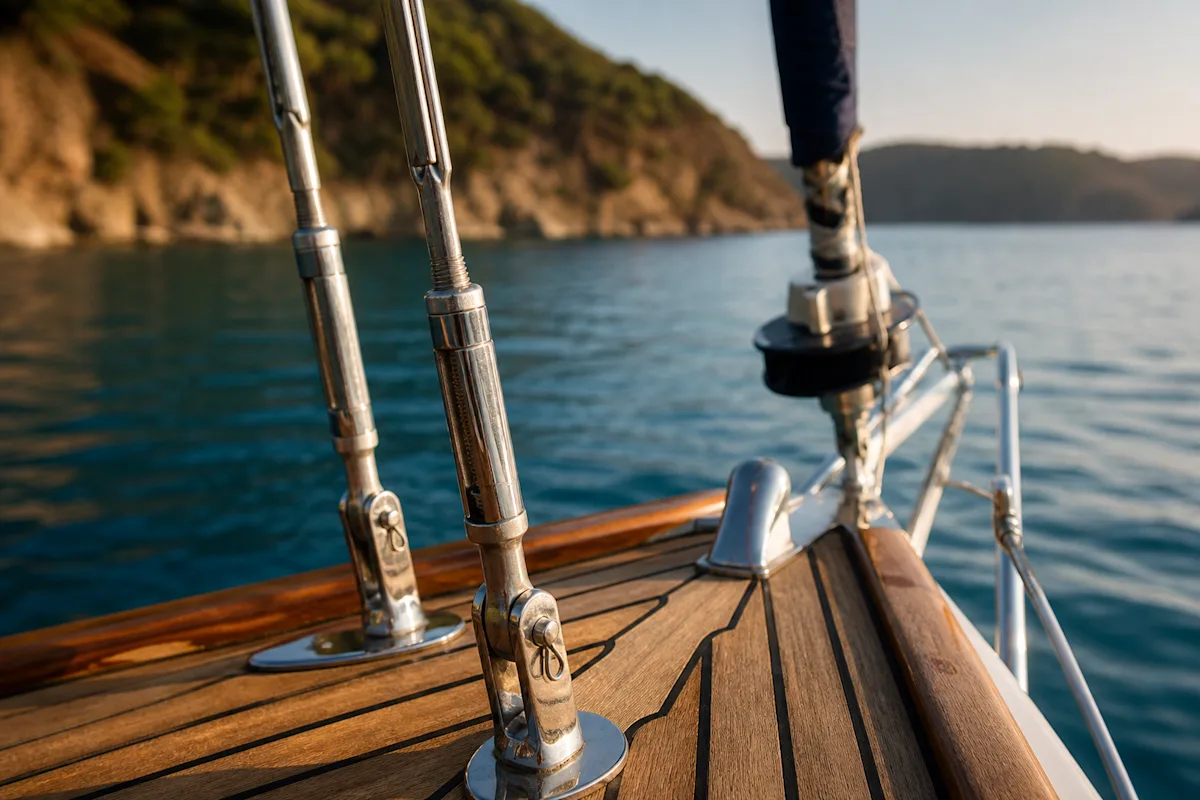
Standing rigging is the family of wires that keeps the mast upright: the forestay takes the load forward (the headsail works on it), the backstay aft, and the shrouds pull out to the sides via the spreaders. The system carries tonnes of load in total and has no back-up; failure of a wire or terminal often ends with the mast going into the water.
This is why insurers ask for a rig report on older boats: wires can look perfectly bright outside but still be fatigued inside the terminal.
Rig inspection schedule
Every season: visual check; terminals, spreader ends, and lift attachment security.
~10 years / insurer’s interval: professional rig survey and wire replacement if needed.
Finding: hairline cracking around the swage terminal collar, or a single broken outer strand on 19-wire standing rigging (‘meat hook’), is enough to justify replacement.
Excessive movement of the leeward shrouds while underway points to slack rigging; the mast pumping like a spring points to over-tension. Mast step fittings and the lift attachment’s safety pins should be inspected visually each season before being taped over.