What Are Tacking and Gybing?
Two ways to take the wind onto the other board — a tack turns the bow through the wind calmly, while a gybe brings the stern round and demands discipline.
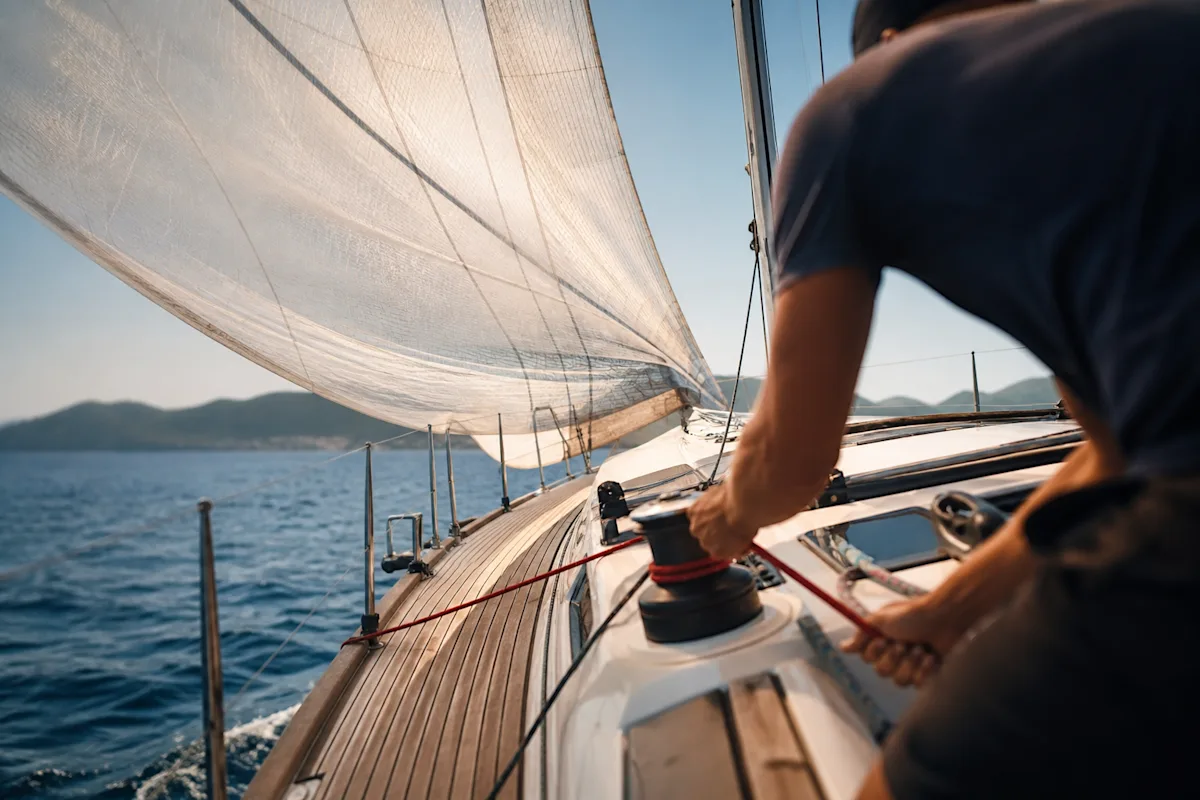
There are two ways to bring the wind onto the other side, and they are very different in feel. A tack takes the bow through the wind, while a gybe takes the stern through it. The difference lies in how the loaded sail changes sides.
The table below compares the two.
Tack - gybe
Feature | Tack | Gybe |
|---|---|---|
What turns | Bow through the wind | Stern through the wind |
Energy | The sails ease for a moment, harmlessly | A full sail changes sides in an instant |
Risk | If you go in without enough way on, you can get stuck in irons | If uncontrolled, the boom can sweep the cockpit |
'Involuntary gybe' — when the stern is swung round by a following sea or simple inattention — is a classic sailing accident. A proper gybe means bringing the mainsheet in to the centre, easing the boom across under control, then letting it out again.
In heavy weather there is a proper way to avoid gybing: the shunt, that is, instead of gybing you tack the long way round (a 270-degree turn through the wind). It may look slower, but it is always cheaper than a brutal boom slam.