What Are True Wind and Apparent Wind?
The story of the wind measured by a stationary observer versus the wind felt by a moving boat — and which one the sails are really working with.
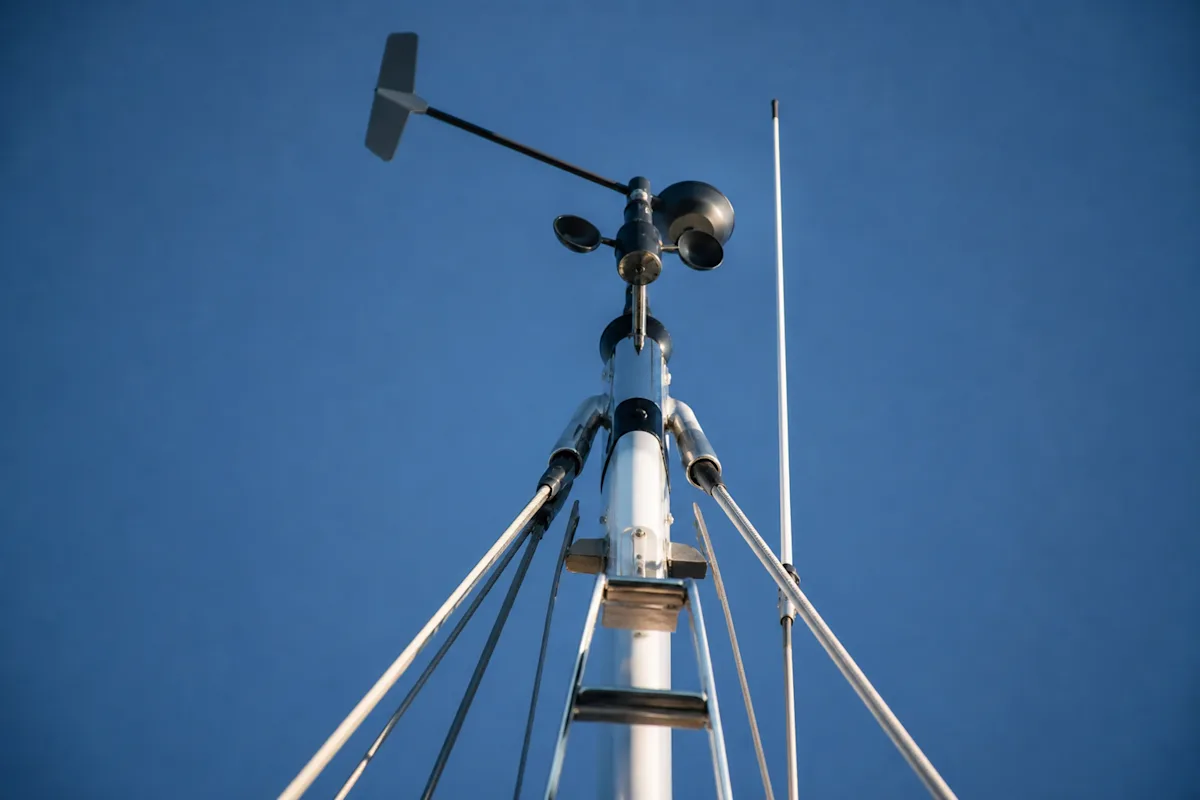
The wind measured by a stationary observer is not the same as the wind felt by a moving boat. True wind is the wind at a fixed point; apparent wind is what the boat feels, in other words the sum of the true wind and the boat’s own motion. The masthead anemometer always measures apparent wind.
Sails work with apparent wind. The table below shows how apparent wind behaves on two points of sail.
Apparent wind by point of sail
Point of sail | Apparent wind |
|---|---|
Close-hauled | Harsher and further forward than the true wind |
Beam reach | Close to the real thing, pleasant |
Running | Reduced by boat speed, feels lighter |
That is the physics of running in comfort: 15 knots true, on a boat making 7 knots, can feel like 8 knots. On a gybe, the wind has not suddenly freshened; it was already there, you simply were not feeling it. That is why setting the spinnaker and then pinching up is a classic trap.
The trim rulebook speaks in apparent wind: sails are set to apparent wind angle, while reefing decisions are made to true wind. On a boat without electronics, the apparent wind is read in your face, while the true wind is shown by the flags on boats at anchor.