What Is Ultrasonic Antifouling?
A system that emits ultrasonic vibrations through transducers bonded to the hull — a promising aid to paint, but not a miracle cure on its own.
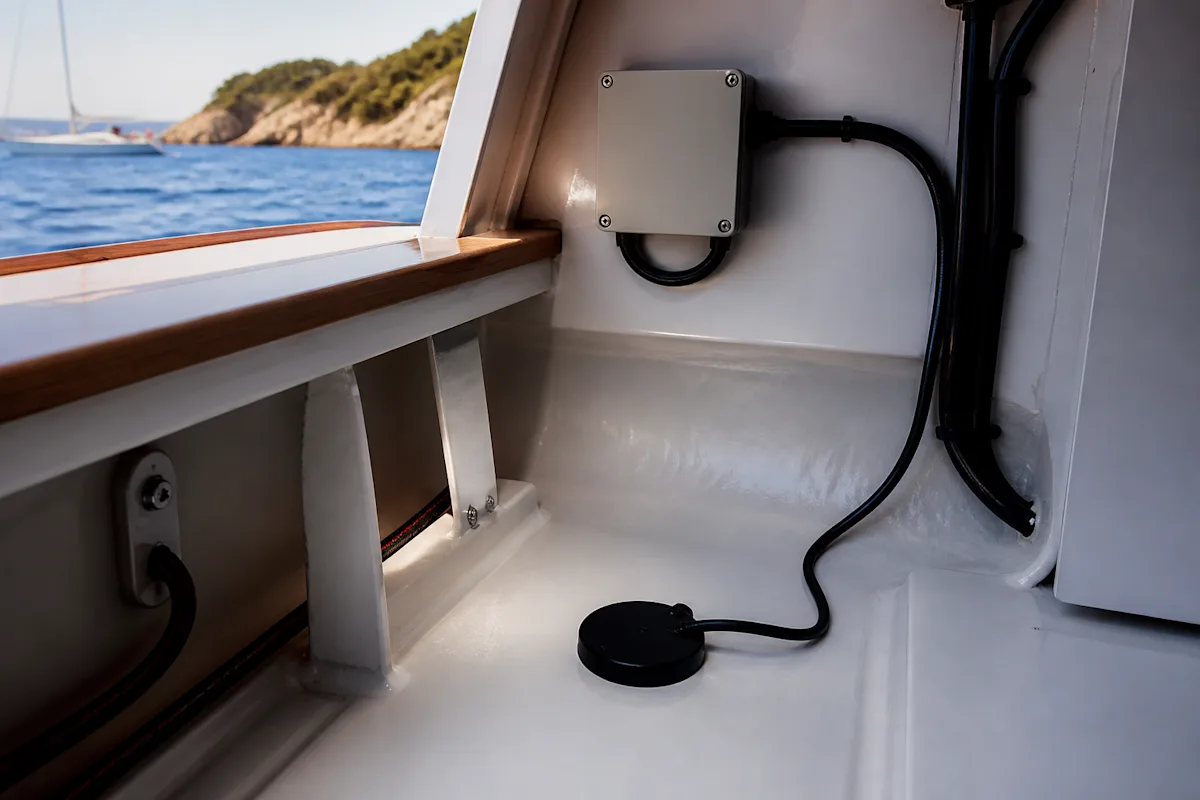
Ultrasonic antifouling works by transducers fitted inside the hull sending ultrasonic vibrations through the hull into the water: the aim is to make it harder for the first stage of fouling, the microscopic film layer (biofilm, algae spores), to take hold. It runs continuously and needs a small but constant power supply.
The honest view is this: the system is not a replacement for paint, but a support to it. User feedback suggests it can delay slime and algae growth, but on its own it is not enough against hard shell fouling.
Who it suits and how
The most suitable profile: a boat berthed in a marina on shore power, moving little (exactly the type most prone to fouling).
It needs continuity: if the system is switched off over winter, it cannot do its job; its consumption has to be included in the lay-up power plan.
Correct installation: if a transducer lands on a cored or filled area, or over a tank, transmission is lost; positioning must follow the manufacturer's layout.
Set expectations around 'extending cleaning intervals', not 'doing away with paint'. The main picture does not change: the right antifouling, plus in-season diver checks, plus an annual haul-out. Transmission is weaker on sandwich construction hulls.