What Are Wave Height and Period?
A note explaining that a forecast ‘1 metre wave’ says very little on its own, and that period is what really determines comfort.
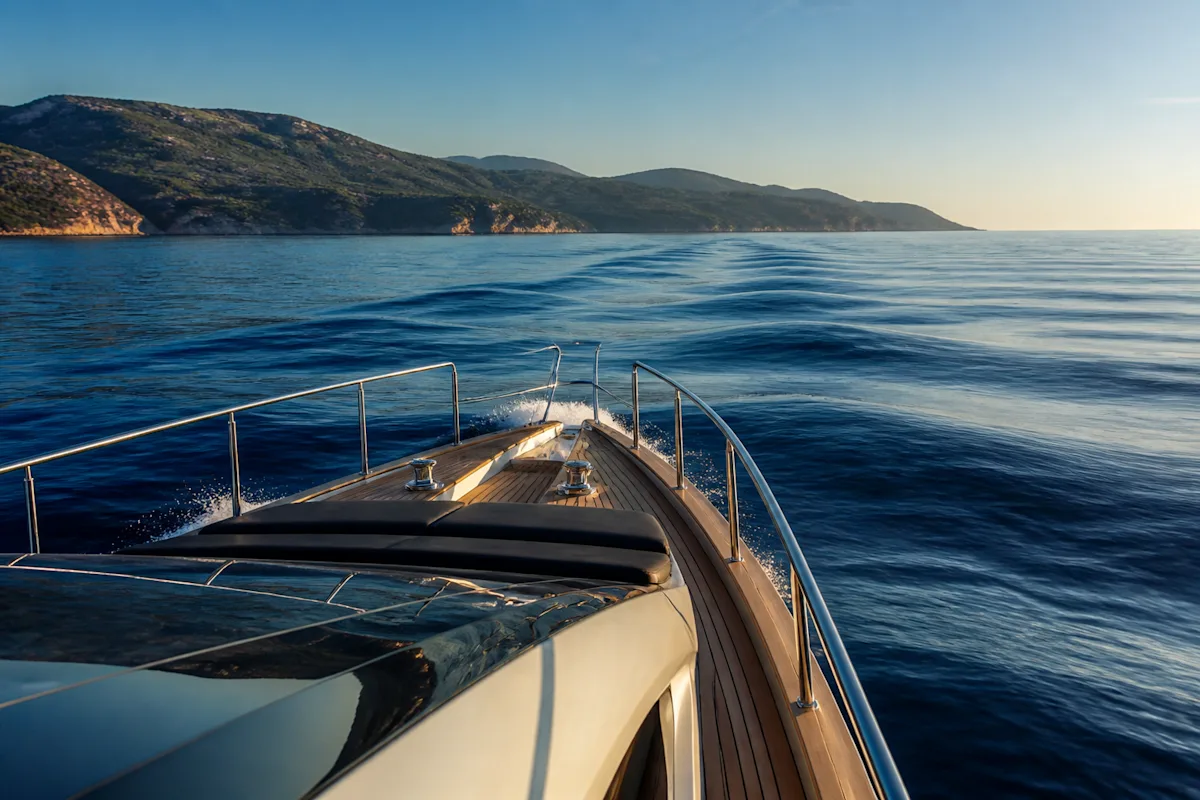
A weather report’s ‘1 metre wave’ tells you almost nothing on its own. Comfort is really determined by the period, meaning the time between two wave crests. The same 1 metre can be a gentle roll on a long period, or a hard, wall-like sea on a short one.
The height in the report is also the ‘significant wave height’ (Hs): the average of the highest third of the waves. Individual waves can reach 1.5-2 times that. The scale below shows how the sea feels according to the relationship between period and height.
Comfort scale
Period / height ratio | Sea state | Comfort |
|---|---|---|
Period, 5-6 times the height+ | Long, easy rolling | Comfortable |
3-4 times | Frequent, steep waves | Tiring |
Six | Short, hard, slamming sea | Difficult; the guest day may need to be cancelled |
The Aegean’s famous ‘short chop’ is exactly this: in shallow, confined water, wind waves build with a short period. A 1-1.5 metre sea with a 4-5 second period is more tiring than an ocean swell of 3 metres with a long period.
Practical comfort rule: if the period in seconds is at least 5-6 times the height in metres, the sea will feel comfortable. At headlands where wind runs against the current or the waves, the sea will stand up steeper than the report suggests; on a guest day, the simplest plan is to come back before the meltemi peaks.