What Is a Check Valve?
A small valve that only lets liquid flow one way — the bilge line’s best friend and its hidden suspect.
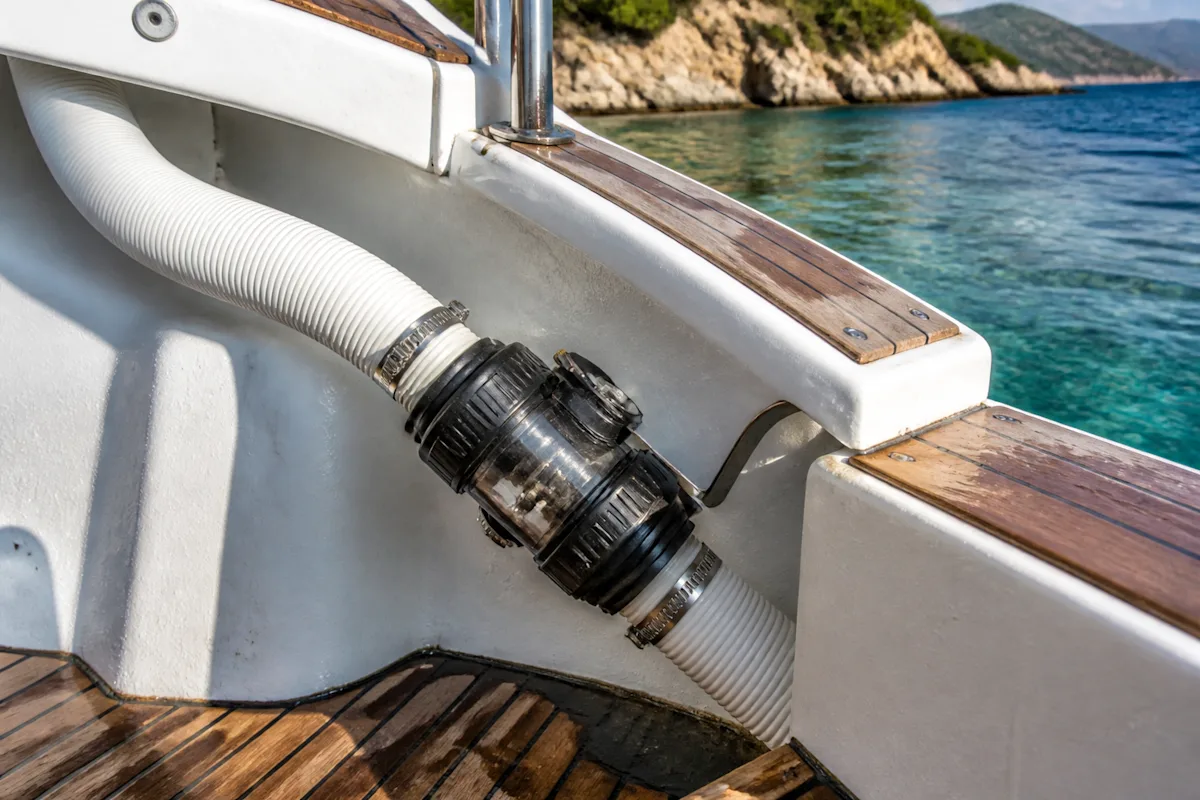
A check valve is a valve that allows fluid to pass in one direction only and shuts automatically against reverse flow. On board, it is most commonly used on bilge discharge lines: when the pump stops, it prevents water in the hose from draining back into the bilge.
Backflow makes the bilge pump cycle again and again (as if the pump has 'gone mad') and causes needless wear; a check valve stops that. But there is a trade-off: it adds flow resistance and can encourage air locks.
Problems and rule
Sticking: dirt or fibres can jam it open or shut; a valve stuck shut is a classic reason for a running pump that won’t discharge water.
Air lock: especially on vertical runs, the pump runs but cannot shift water.
Annual cleaning: useful on long, elevated runs, but it should be opened up and cleaned once a year.
Rule: on short, low discharge lines, a check valve is often unnecessary. If the complaint is 'the pump keeps running', alongside the float switch and leaks, the third suspect is always the check valve.