What Is a Sail Drive?
A system that transfers the engine’s power to the propeller through a leg that runs straight down through the hull - the standard on modern yachts, with two critical maintenance points.
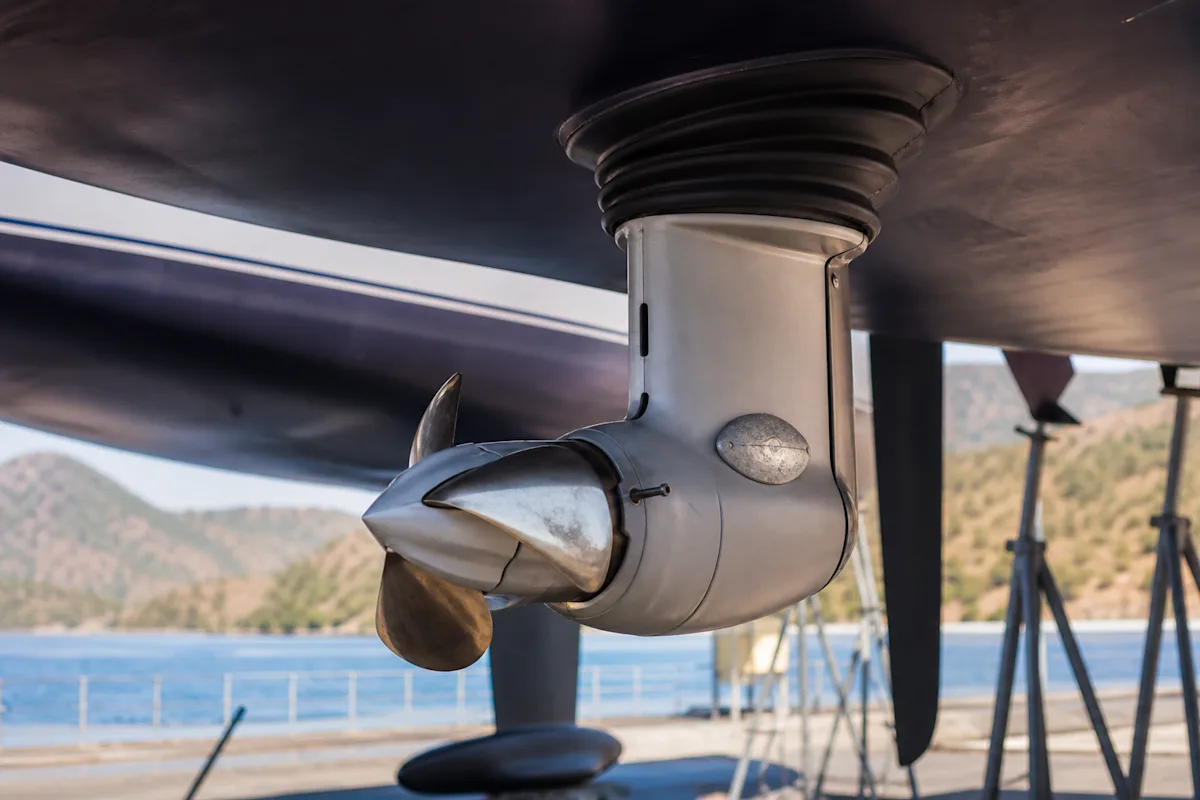
A sail drive is a propulsion system bolted directly to the engine, turning the propeller via a leg that passes straight down through the hull. It is the modern alternative to a conventional shaft and stern gland arrangement, and is standard on most new sailing yachts: less vibration, a more efficient angle, and easier engine installation.
The comfort comes with two sensitive points. The table below compares a sail drive with a conventional shaft.
Sail drive - conventional shaft
Feature | Sail drive | Conventional shaft |
|---|---|---|
Vibration | Low | More, depending on alignment |
Critical maintenance | Hull bellows (replace on schedule) | Shaft seal (stern gland) |
Galvanic | Aluminium leg, highly sensitive | Bronze, more tolerant |
Paint | Aluminium-compatible, copper FORBIDDEN | Standard antifouling |
Oil | Gearbox oil, turns milky if water gets in | Separate gearbox + seal arrangement |
There are two non-negotiables. First, the hull bellows: the rubber seal where the leg passes through the hull has a service life, and manufacturers specify replacement intervals; neglect brings a real risk of major water ingress. Second, galvanic sensitivity: an aluminium leg is one of the easiest parts of a boat for the sea to attack, and once the anode is gone the sail drive itself becomes the anode.
A sail drive owner’s three dated reminders: check the anode and paint at every haul-out, change the gearbox oil at the manufacturer’s interval, and replace the bellows when due. Oil colour tells a story too; a milky emulsion is a warning that water has got into the leg.