What Is a Vang (Boom Vang)?
A tackle or piston that pulls the boom down — the control on open reaches and runs that keeps the sail set; on many boats it is never touched.
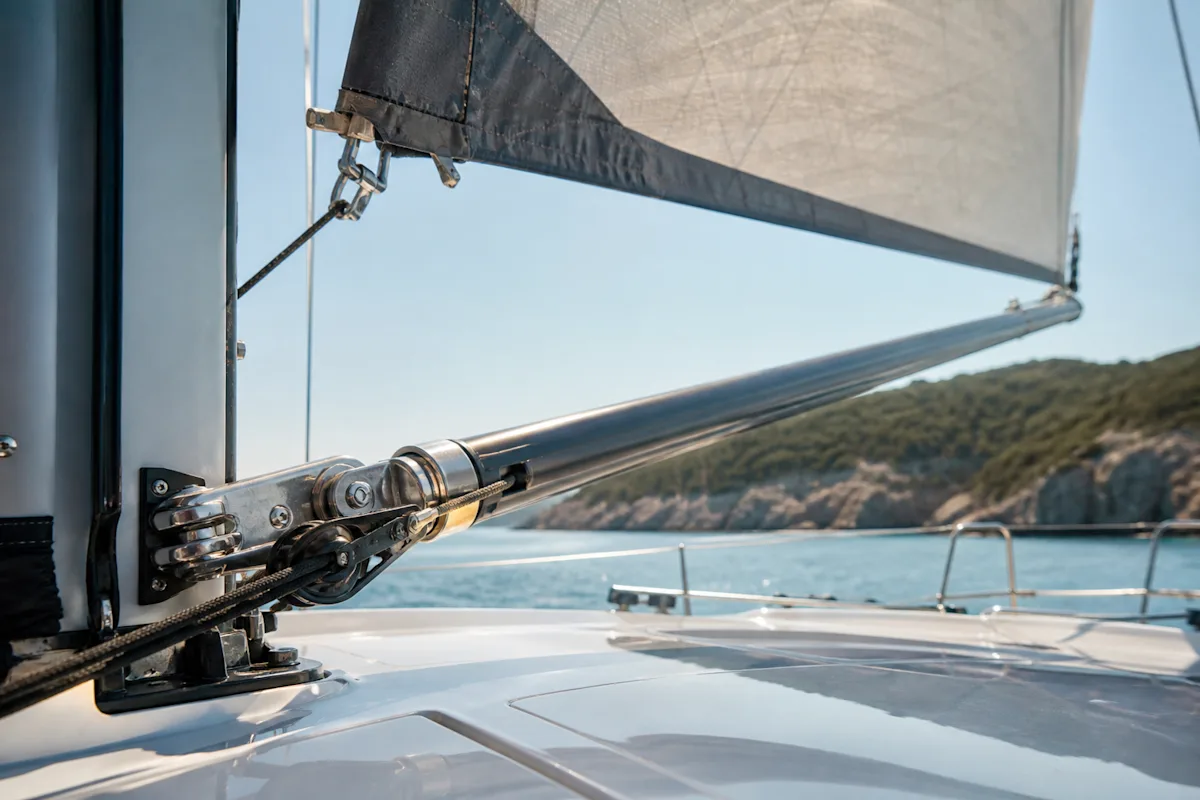
A vang is the fitting set at an angle between the mast base and the boom, pulling the boom down: traditionally a tackle, in modern form a gas or spring-loaded piston (which also supports the boom). Its job is to control sail twist when the mainsheet cannot pull the boom down, especially when sailing off the wind.
When the mainsheet is close to the boat’s centreline, it also pulls the boom down; but on beam and broad reaches it mainly pulls it inboard, and only the vang stops the boom from rising. Sailing off the wind without a vang means a mainsail with a looser leech and lost speed.
Rule of use
Close-hauled: vang eased, the mainsheet does the work.
Beam reach and running: vang on, stopping the boom from lifting.
Squall: if you are sailing off the wind, easing the vang first is the quickest way to open the top of the sail and keep the boat under control.
The most common 'fault' is not using the vang at all: it is left permanently tight or permanently eased, whereas it is a control to be adjusted as the point of sail changes. On a rod vang, a gas leak means it can no longer support the boom; without a topping lift, the boom drops.