What is AIS?
A system that broadcasts a vessel’s identity, position and course to other vessels over VHF - the most valuable second pair of eyes at night and in fog.
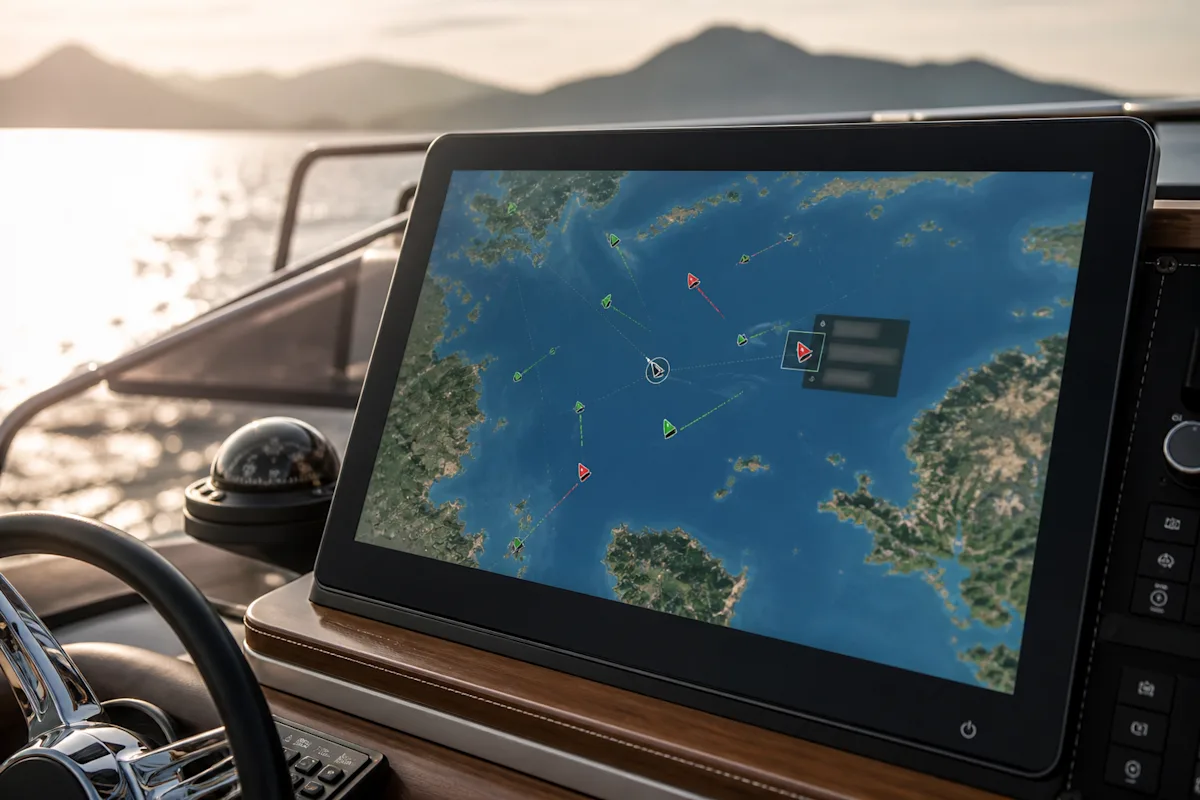
AIS is a system that broadcasts a vessel’s identity, position, speed and course to other vessels over the VHF band. Seeing the names of nearby boats, their speed and the closest point of approach on screen turns collision risk from guesswork into calculation. But there are two different devices, and the difference is crucial.
The table below compares a receiver with a transponder. In short: a receiver only listens, while a transponder both listens and transmits.
Receiver vs transponder comparison
Feature | Receiver | Transponder (Class B) |
|---|---|---|
You see others | You can see them | You can see them |
Others see you | Cannot see you | Seen by others (you become a named target) |
Cost | Low | Higher |
Best for | Tight budget, at least being able to see | Night passage / busy waters, commercial shipping lanes |
Commercial ships can easily miss a small boat on radar; a boat broadcasting AIS becomes a named target on the tanker’s screen. This is the cheapest insurance for night sailing.
One important rule must also be remembered: AIS does not show every vessel. Boats that are not transmitting, dinghies and buoys will not appear on the screen. No screen can replace a proper watch.