What Is an Autopilot?
An electronic helmsman that keeps the vessel on the set course — the most valuable crew member on a long passage, but never a watchkeeper.
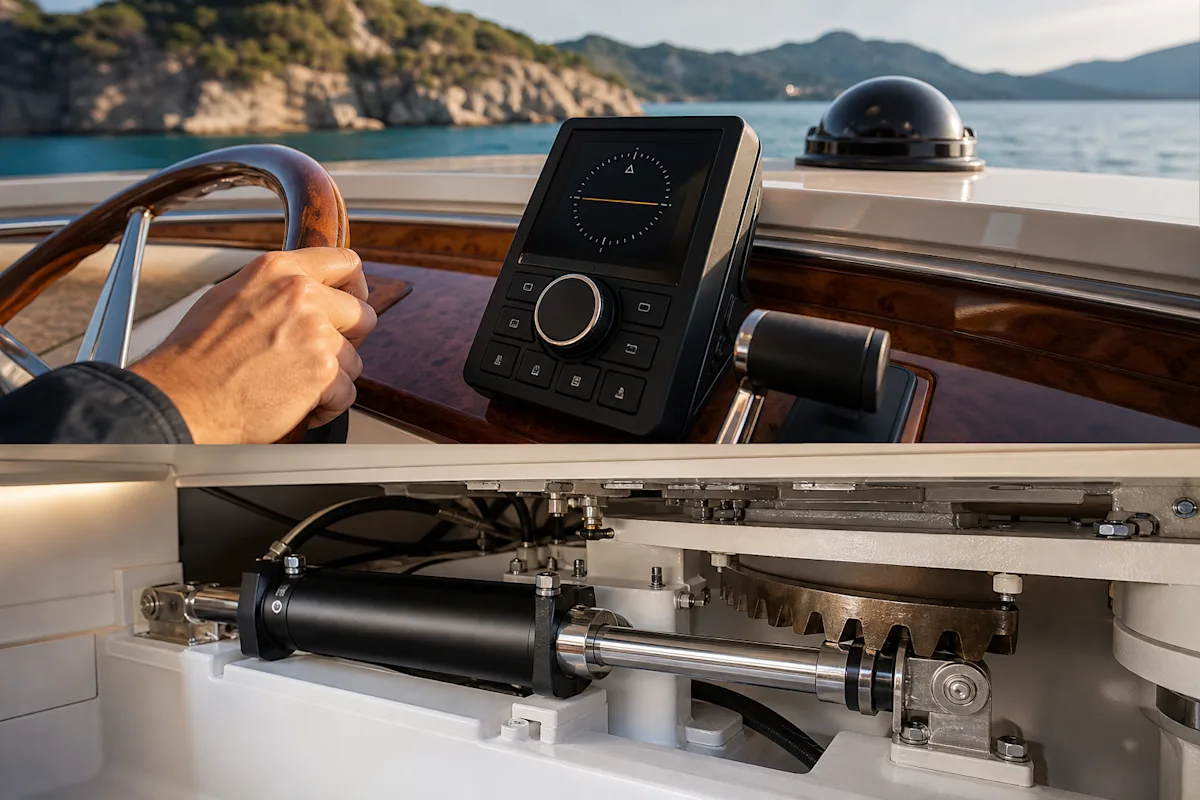
An autopilot reads compass and GPS data and steers the helm via a drive unit to keep the boat on the set course. On a long passage it is the device that cuts fatigue — and therefore the risk of error — the most, turning the helmsman into a lookout.
It works in different modes. The table below sets out the main ones.
Autopilot modes
Mode | What it does |
|---|---|
Fixed heading | Holds a set compass heading |
Wind angle (on a sailing boat) | Holds a fixed angle to the wind |
Waypoint tracking | Follows the route on the chartplotter |
Its limit is clear: the autopilot cannot see what is around the boat. Spotting a loose mooring pennant ahead, a buoy, or a vessel closing fast is still down to people. Two habits are critical: disengage the autopilot in confined waters and in traffic, and on open water stay ready to take over by hand at any moment.
Season-start calibration and checking the drive linkage will make the rest of the season trouble-free. A wandering course (S-shaped steering) is usually down to gain settings that do not suit the sea state; compass deviation may come from a speaker or other metal fitted nearby.