What Is an Inverter?
A unit that turns 12/24V DC from the batteries into 220V shore power — the source of comfort at anchor, or battery carnage if you size it wrong.
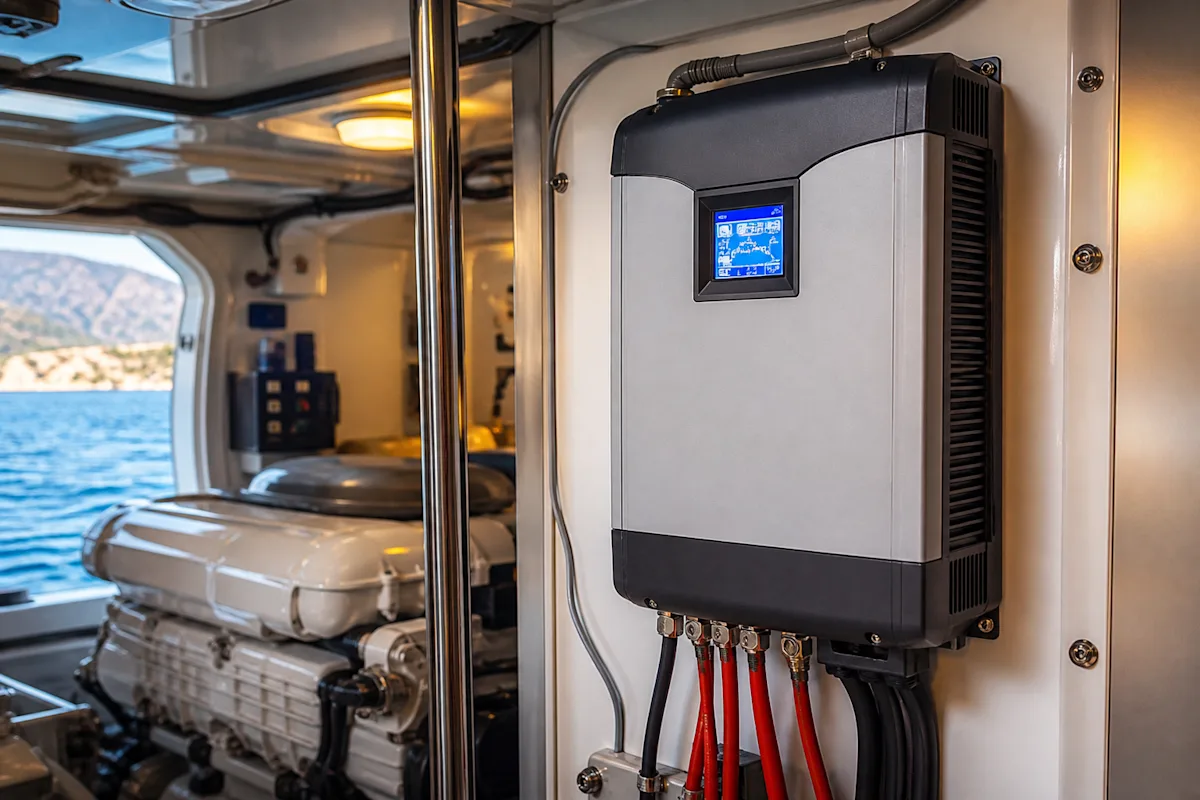
An inverter is a unit that converts the 12 or 24 volt DC from your batteries into 220 volt shore power. At anchor, it keeps the coffee machine, laptop and induction hob running. But the maths is unforgiving: every load on the 220V side turns into a much larger current on the 12V side.
The table below shows this conversion. Rule of thumb: every 100 watts on the 220V side draws roughly 9-10 amps on the 12V side.
220V load, what it draws on the 12V side
220V load | Approximate draw on the 12V side |
|---|---|
100 W (laptop, charging) | ~9 A |
500 W (small appliance) | ~45 A |
1000 W (water heater, induction) | ~90 A |
As you can see, fitting a large inverter to a small battery bank is not comfort — it is a plan for deep discharge. Pure sine models produce a mains-quality waveform; modified sine is cheaper, but it can upset sensitive equipment (induction, some battery chargers and tools).
Selection and use
Size: the total of the real loads likely to run at the same time, plus around 20%; for equipment with high start-up surges, such as compressors and pumps, check the peak rating.
Cables and fuse: the 12V side carries high current, so thin cable will heat up and cause voltage drop; correct cable size and fuse rating are essential.
Standby consumption: if left on, an inverter will still draw amps even with no load connected; switch it off at the panel at the end of every passage.